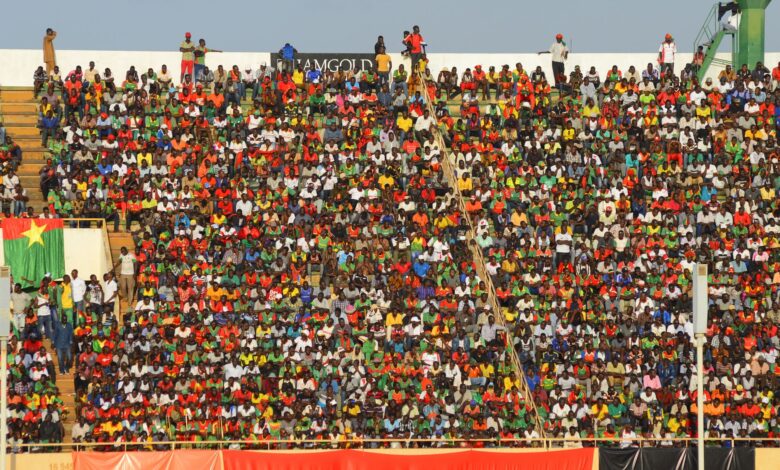
The military junta, led by Captain Ibrahim Traoré since his seizure of power in a September 2022 coup, accused France of having “neo-colonial ambitions.” The government claimed these ambitions were “made evident by its active support for subversive networks and the terrorists who are plunging our country and the Sahel into mourning.” Minister Ouédraogo described France’s actions as “ceaseless activism” against Burkina Faso’s national interests, alleging an intent to marginalize the country on the international stage.
A Break from Historical Ties
While the break in diplomatic ties is total, the junta attempted to draw a distinction between state policy and people-to-people connections. The statement specified that the decision “concerns exclusively the institutional framework of relations” and “in no way calls into question the historical, human, cultural and social ties that unite the Burkinabe and French peoples.” However, the practical implications of the split are profound, as France has not maintained an ambassador in Burkina Faso since January 2023.
The rupture follows a rapid escalation of tensions that began when Captain Traoré took power. Soon after the coup, his government expelled French troops who had been deployed in the region for over a decade to combat an Islamist insurgency. Burkina Faso, like its neighbors Mali and Niger, has faced a persistent security crisis, and French forces had previously operated alongside local counterparts. The new military leadership, which has pursued largely anti-Western policies, accused France of operating with a “secret agenda” that undermined its sovereignty.
“The government of Burkina Faso hereby informs the national and international community that it has decided to sever diplomatic relations with France with effect from today, June 26, 2026,” said the Friday statement read out on national television.
Paris reacted sharply to the announcement. The French foreign ministry characterized the decision as “hostile and unfounded,” stating that it “illustrated the troubling drift by the Burkinabe government.” In response to the heightened tensions, France urged its nationals remaining in the country to “exercise heightened vigilance.” This diplomatic standoff reflects a broader strategic realignment in the Sahel, where military-led governments are distancing themselves from Western partners in favor of closer ties with other global powers.
Strategic Realignment in the Sahel
The severance of ties is part of a wider geopolitical shift in the region. In January 2025, Burkina Faso, along with two other neighboring military-led states, Mali and Niger, officially withdrew from the Economic Community of West African States (ECOWAS). The three nations formed a new bloc, the Alliance of the Sahel States, to coordinate their political and security strategies independent of the traditional West African framework.
Since taking power, the Burkinabé leadership has pursued a policy of confronting critical voices and Western influences. The government has also consolidated domestic control, reneging on its initial pledge to restore democracy in 2024 and formally dissolving political parties in January of this year. Instead of re-engaging with Western diplomatic channels, the junta has pivoted toward establishing new alliances with China and Russia, seeking alternative sources of support and legitimacy.
The decision to cut ties removes the final layer of formal diplomatic engagement between Ouagadougou and Paris. While cultural and historical links remain, the institutional vacuum creates significant uncertainty for bilateral cooperation. The move underscores the deepening rift in the Sahel, where military governments are challenging the traditional post-colonial order and redefining their international partnerships in a rapidly changing geopolitical landscape.