
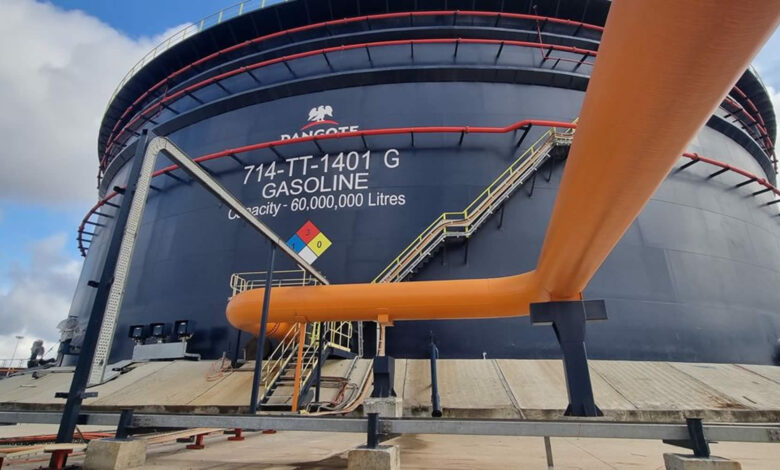
The price hike follows a period of volatility in international oil markets. Brent crude, the benchmark for Nigerian oil, was trading at approximately $107.86 per barrel on Friday after previously climbing above $108. This elevation in crude prices has directly increased the cost of replenishing petrol stocks, forcing refiners, importers, and depot operators to adjust their selling positions. Market participants reported that depot marketers across major coastal trading hubs, including Lagos, Warri, Port Harcourt, and Calabar, had already been selling at higher prices in anticipation of the refinery’s move, as rising replacement costs made it financially difficult to maintain existing price levels.
This latest adjustment is the most recent in a series of frequent price changes at the Dangote facility, highlighting the continued sensitivity of domestic petrol prices to global crude movements. In May, the refinery had raised its price to N1,350 before reversing the move. Subsequent adjustments included a cut to N1,175 in June following a de-escalation of Middle East tensions, and a raise to N1,185 in August. The repeated fluctuations have underscored how local refining capacity expansion has not yet fully insulated the market from international volatility.
Amid these market shifts, prominent energy voices have begun to scrutinize the mechanics of pricing and market structure. Professor Izielen Agbon, a petroleum engineering expert, has accused the refinery of operating as an oligopoly that unilaterally determines petrol prices in Nigeria. Agbon argued that because Dangote controls approximately 50 percent of the market, it effectively sets the price that others must follow, noting that no competitor sells below the refinery’s established rate.
Central to Agbon’s critique is the methodology used to determine these prices. He alleged that Dangote employs Import Parity Pricing (IPP), pegging its selling price in dollars at a rate of $0.799 per litre, despite purchasing crude oil in Naira. This creates a dynamic where the local selling price is tied to global dollar-based metrics rather than local production costs. Agbon further alleged the existence of a “Lome Circular Trade Route,” in which Dangote petrol is exported to Togo and subsequently re-imported by Nigerian marketers to undersell the refinery in the domestic market.
The Cost of Production vs. Import Parity
Agbon has called for a shift toward Production Cost Pricing (PCP), a model based on the actual cost of producing crude, refining it, and distributing the product within Nigeria. Under this method, the pump price would reflect the cost of crude at the refinery gate, refining expenses, distribution and marketing costs, and applicable taxes.
He noted that the cost of producing a barrel of crude oil in Nigeria ranges between $31 and $48, a figure significantly higher than the global average of approximately $12. This disparity is attributed to ageing infrastructure, insecurity, sabotage, oil theft, and the high cost of imported oilfield inputs. Agbon argued that even at an exchange rate of N1,333 to the dollar, the PMS pump price under a production-cost model should fall between N435 and N687 per litre. He described the current debate over fuel subsidies as a “mirage,” asserting that the primary issue for consumers is the high cost of petroleum products driven by the current pricing methodology.

The divergence between the N1,350 gantry price and the lower estimates derived from production costs highlights the complex forces at play in Nigeria’s energy transition. While the refinery responds to global crude benchmarks and replacement costs, critics point to domestic structural issues that inflate production expenses. As depot owners and marketers reassess their selling positions in the face of elevated crude prices, the tension between global market pressures and local economic realities remains unresolved.
The N1,350 price now serves as the latest wholesale reference point for the market. With crude prices remaining elevated, the domestic sector faces continued pressure to balance affordability against the high costs of stock replenishment, a challenge that is likely to persist as long as global oil markets remain volatile.