

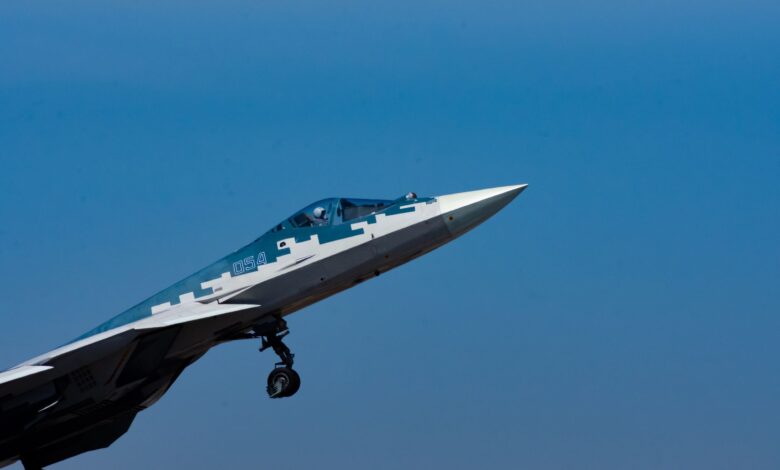
The Su-75 was unveiled at the MAKS air show in July 2021 as a full-size, non-flying demonstrator. At that time, Russian officials projected that the aircraft would take to the skies in 2023 and enter serial production by 2026, supporting a business plan for 300 aircraft over a 15-year period. These initial targets have since been repeatedly revised. By August 2022, UAC had pushed the planned flight-test start to 2024, and subsequent updates have continued to delay the schedule. The current trajectory suggests a substantial gap between the advertised launch and the actual operational readiness of the platform.
The Checkmate is designed as a lightweight, single-engine multirole fighter intended to serve as a cost-effective partner to the twin-engine Su-57. The core of the program’s economic argument is the single-engine layout, which UAC claims will substantially minimize manufacturing overhead and long-term operational costs compared to heavier, twin-engine peers. The aircraft is positioned primarily for the export market, offering nations that cannot afford or do not wish to purchase the U.S. F-35 a lower-cost option with reduced radar cross-section. Russian aerospace officials have indicated the export variant could be priced at approximately $30 million, a figure that remains a significant selling point against the F-35A.
The technical specifications published by the manufacturer remain unchanged since the initial reveal, though they have not been validated by flight testing. The Su-75 is projected to have a maximum takeoff weight of 26 tons, a maximum speed of Mach 1.8 (2,200 km/h), and an operational range of up to 2,800 to 2,900 kilometers without external fuel tanks. It is designed to carry a combat load of up to 7,400 kilograms, including the potential for internal carriage of up to five air-to-air missiles to maintain stealth characteristics. The aircraft is also equipped with a 30mm automatic cannon. Analysts note that these figures represent manufacturer projections rather than demonstrated performance, as the jet has yet to leave the ground.
The development process has involved significant design evolution. Patent filings in 2023 revealed changes to the rear fuselage, wing edges, flaperons, and leading-edge extensions, along with configurations for single-seat, two-seat, and uncrewed variants. Deputy Prime Minister Denis Manturov stated in 2023 that feedback from potential customers had led to alterations in the layout, controls, and armament. The design is expected to share significant technologies with the Su-57, including common engine technology, composite materials, weaponry, and a downsized derivative of its radar and avionics suite. This approach mirrors the “high-low” mix strategies seen in other air forces, such as the U.S. F-15/F-16 or Chinese J-16/J-10C pairings.
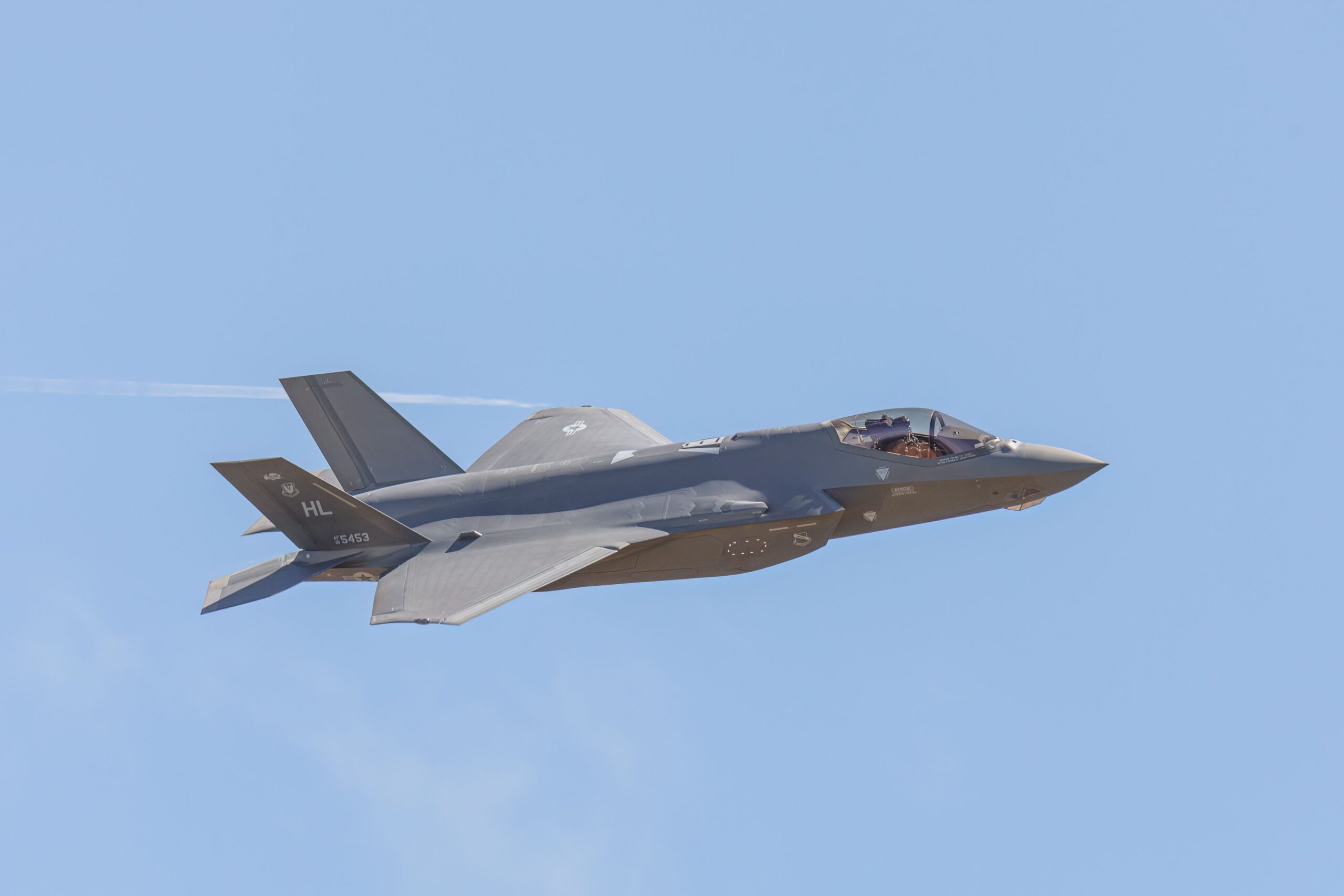
The program’s heavy reliance on export demand has created financial uncertainty. No publicly confirmed domestic or export orders followed the launch campaign, and the absence of a firm launch customer has fueled doubts about the project’s financial backing. Belarus has emerged as a key potential partner, with officials confirming talks on co-production and joint development. Belarusian defense industries are working with Rosoboronexport and UAC to broaden their partnership, viewing the Su-75 as an optimal choice given their limited defense budget and the need to counter the increasing deployment of F-35s by NATO members near their borders. Other potential interested parties have included India, North Korea, and Kazakhstan.
Despite the progress in prototype construction, the Su-75 faces strategic challenges. The Russian defense sector, while ahead of European rivals in moving past fourth-generation technologies, remains behind China and the United States in stealth capabilities and avionics maturity. The delay in the Su-75’s entry into service raises the possibility that it may not be operational before China begins fielding sixth-generation fighters in the early 2030s. Until the prototype undergoes structural testing and flight trials, the practical viability of the Checkmate’s promised cost and performance advantages remains unproven.