
Route 90 is a critical piece of national infrastructure, facilitating the movement of both passenger vehicles and commercial freight between the coastal plain and the inland regions. The area surrounding Beit She’an, known for its agricultural significance and proximity to major junctions, sees a consistent volume of traffic. Incidents on this route often draw significant emergency response attention due to the road’s design and the speed limits that allow for rapid travel, which can also contribute to the severity of collisions.
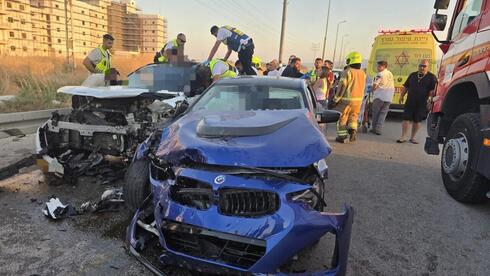
The immediate aftermath of the accident involved the deployment of emergency medical services and traffic management units to the scene. The serious injury sustained by one of the four victims required urgent medical intervention, while the remaining three individuals were treated for their respective injuries. Such incidents serve as a stark reminder of the human cost associated with vehicular accidents, even in well-maintained road networks.
Road safety remains a complex and multifaceted issue, influenced by a variety of factors including driver behavior, vehicle maintenance, weather conditions, and road infrastructure design. On major highways, the interaction between high-speed traffic and the inevitable human error or mechanical failure can lead to severe outcomes. The occurrence of this accident near Beit She’an adds to the broader statistical record of traffic incidents on Route 90, a route that has historically been a focus for safety improvements and monitoring.
In the context of regional transportation, the safety of such corridors is a priority for both public authorities and the general populace. The impact of a serious accident extends beyond the immediate victims, affecting traffic flow, potentially causing delays for commuters and commercial drivers, and straining emergency response resources. The incident serves as a poignant reminder of the need for continued vigilance and adherence to safety regulations by all road users.
The details of the specific cause of the accident, such as the exact nature of the collision or the contributing factors at the moment of impact, are typically determined through subsequent official investigations. These investigations aim to identify any underlying safety deficiencies or behavioral patterns that may have contributed to the event, with the goal of preventing similar incidents in the future. For now, the focus remains on the recovery of the injured individuals and the restoration of normal traffic conditions on this busy stretch of road.
The incident near Beit She’an serves as a localized example of the broader, global challenge of improving road safety. As vehicle numbers continue to rise in many parts of the world, the pressure on infrastructure and the need for safer driving practices become increasingly acute. The four individuals injured in this accident represent the human face of these statistics, highlighting that behind every data point is a person and a family affected by the moment of impact.

Community and official responses to such events often include renewed calls for awareness and compliance with traffic laws. While specific policy changes or infrastructure modifications are not immediately confirmed in the wake of a single incident, the cumulative weight of such events often informs long-term strategic planning for road safety. The road ahead for the injured victims will involve a period of medical treatment and recovery, while the wider community continues to navigate the daily rhythms of life and travel on one of the region’s most important highways.
The accident on Route 90 stands as a recent entry in the record of traffic events in the Beit She’an area. It reinforces the critical importance of safe driving practices and the robustness of emergency response systems. As investigations proceed and the injured recover, the incident will likely be analyzed alongside other data points to further enhance understanding of risk factors on this key national route.