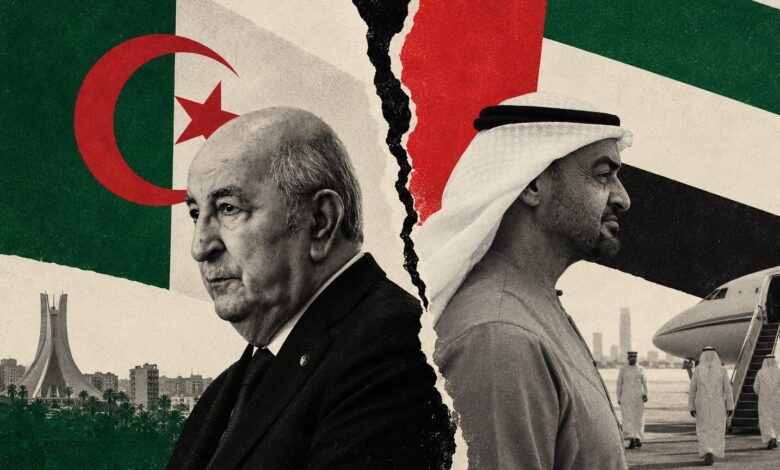
In a formal statement, the Algerian government accused the UAE of engaging in “hostile actions” and “regrettable and unjustified behavior” that could no longer be tolerated within the framework of relations between two sovereign states. Officials noted that despite significant efforts to draw the Emirati side’s attention to the grave consequences of its conduct, the UAE had persisted in its actions, rendering the relationship untenable.
The rupture follows months of intense public rhetoric from Algerian leadership. President Abdelmadjid Tebboune had previously referred to the Gulf state as a “midget state” that was interfering in North African affairs. In a widely covered speech in April 2024, Tebboune linked the UAE’s financial support to conflicts in Mali, Libya, and Sudan, stating, “Wherever there is conflict, the money of this state [the Emirates] is there.” His comments were widely perceived as a direct indictment of Abu Dhabi’s regional strategy, moving from implicit criticism to explicit identification of the source of alleged destabilization.
Analysts suggest the decision reflects a fundamental shift in how Algiers perceives Abu Dhabi’s regional role. Andreas Krieg, an associate professor of security studies at King’s College London, described the move as a long-coming conclusion. “This has been coming for a long time, and to my mind the significance is less the break itself than what it tells us about how Algeria now reads the UAE,” Krieg said. He argued that Algiers has effectively concluded that the UAE’s regional playbook, which involves cultivating an “axis of secessionists,” was being turned toward Algeria itself.
The tensions are rooted in the UAE’s growing influence across the Middle East and North Africa. In recent years, Abu Dhabi has backed military leader Khalifa Haftar in eastern Libya, a move that has contributed to instability in Libya and neighboring countries including Chad, Sudan, and Niger. The UAE has also been accused of using Libya as a base to provide support for Sudan’s Rapid Support Forces militia, a group implicated in the ongoing civil war and accused of committing genocide. These activities have drawn sharp criticism from Algiers, which views the UAE’s interventions as a direct threat to its security and sovereignty.
Local media in Algeria had already signaled the depth of the rift. In 2023, the Algerian newspaper Le Soir d’Algerie published a headline branding the UAE a “pyromaniac state,” condemning what it described as the country’s harmful role around Algeria’s borders. This editorial stance mirrored the government’s increasingly hardline posture, which had spent the better part of a year railing against a “small state” bent on stirring trouble. The final break in diplomatic relations formalizes this public stance, removing the last channels of formal communication between the two governments.
With the severance of ties, the two countries are now in a state of formal diplomatic estrangement. The immediate consequence is the withdrawal of the UAE ambassador and the suspension of all official state-to-state engagement. The next expected development will be the UAE’s official response to the Algerian declaration, which has not yet been detailed in available reports, and whether the move will trigger further diplomatic shifts in the broader North African and Middle Eastern geopolitical landscape.