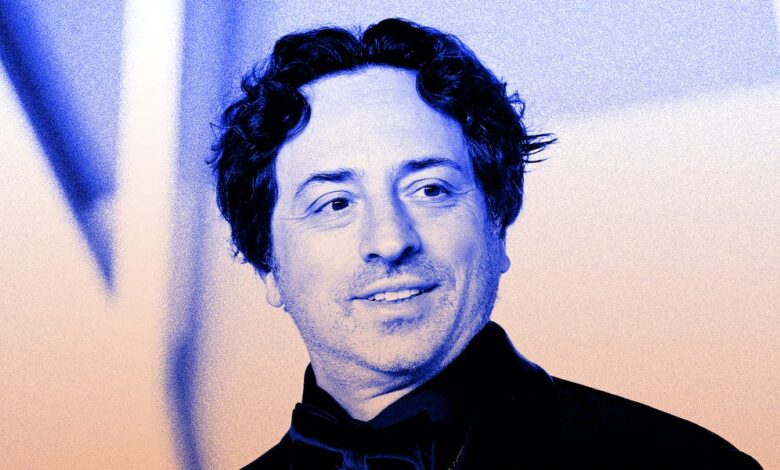
This informal setup has gained significant influence following a series of high-profile leadership changes at the top of Google’s AI division. Demis Hassabis, previously the CEO of Google DeepMind, relinquished his title to become Alphabet’s chief scientist. His role was effectively assumed by Koray Kavukcuoglu, who was appointed Senior Vice President of Google DeepMind and now oversees Gemini’s development, app, and developer teams. Meanwhile, Jeff Dean, Google’s longtime chief scientist, departed the company after 27 years. While Brin’s new role in this power structure was not formally announced, multiple current and former employees describe him as increasingly influential over Gemini. His unique ability to pull resources for critical work and cut through corporate bureaucracy has made him a central figure in the restructuring.
The shift toward this leaner, more direct management style addresses friction that emerged after the 2023 merger of Google’s two central AI labs. Insiders noted that some Mountain View leaders became frustrated with researchers in London, believing they were not pragmatic enough in making Gemini competitive against rivals. Against the backdrop of a corporate machinery that can be slow to move, the microkitchen has acted as a startup within the larger company, allowing Brin, Kavukcuoglu, and other leaders to make decisions faster. “The promise of the kitchen is that it can help you cut through the politics,” one former employee said.

Brin’s re-engagement is part of a broader effort to close the gap with competitors like OpenAI and Anthropic, whose recent releases, including GPT-5.6 and Anthropic’s Mythos model, have been widely lauded. Since the launch of Gemini 3.1 Pro, Alphabet has not released a subsequent model that has challenged these firms in the same manner. In response, Brin has urged employees to double their efforts on Gemini, focusing on closing the capability gap. This push coincides with Alphabet’s most aggressive capital investment cycle in its AI era. After two years of relatively flat capital expenditure, Alphabet raised its total capex to $52.5 billion in 2024 and guided for approximately $75 billion in 2025, a 43 percent increase year-on-year. These funds are being directed toward GPU procurement, custom TPU builds, and data center expansion required to develop and serve frontier AI models.
From Retirement to the Codebase
Brin’s return to hands-on engineering marks a notable departure from the advisory roles typically occupied by returning tech founders. He formally stepped down as Alphabet’s President in December 2019 but described his six-year retirement in a December 2025 interview as making him feel “spiraling” and “a bit less sharp.” He credited the acceleration of AI, triggered in part by the November 2022 launch of ChatGPT, as the pull that brought him back. By February 2026, reports indicated that Brin and co-founder Larry Page were active contributors to Gemini’s development, working directly in the codebase rather than in strategic or communications roles.
His most consequential public appearance since his retirement came at Google I/O in May 2025. Walking on stage after CEO Sundar Pichai completed a demonstration of Gemini 2.5, Brin broke from Google’s traditionally cautious language on AI ambition. “We’ll build the first one,” he declared regarding artificial general intelligence. This statement matched the competitive register of rivals like OpenAI and Anthropic, signaling a willingness to assert Google’s timeline for achieving AGI. The appearance coincided with an internal memo recommending employees come into the office every working day, with Brin describing 60 hours per week as the “sweet spot” of productivity—a striking standard for a co-founder who had been officially retired for five years.
The Gemini programme has shipped at an accelerating cadence, with one major model released in December 2023, four in 2024, and at least three significant releases in 2025. Google reports that Gemini models now process 22 billion API tokens per minute, and the Gemini App has reached 950 million monthly active users. Despite these metrics, the pressure remains intense. Investors remain optimistic about Google’s position, with the stock gaining over 70 percent in the past 52 weeks, though concerns about rising AI spending have caused periodic volatility. For Google, the microkitchen in Mountain View represents more than just a workplace; it is the physical manifestation of a company trying to regain its footing in a rapidly evolving technological landscape, with Brin’s hands-on leadership serving as the engine for that recovery.