
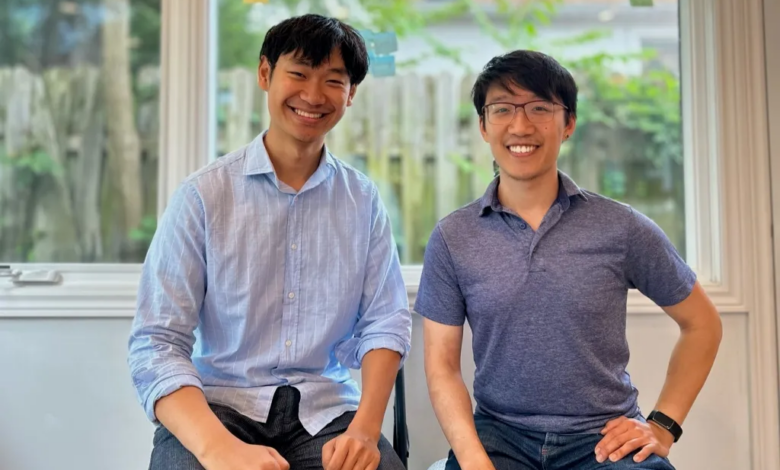
In June, Superhuman, the productivity company formerly known as Grammarly, agreed to acquire GPTZero for undisclosed terms. PitchBook data valued the startup at more than $88 million, but sources familiar with the matter indicate the deal represents at least a 10x return on the $13.5 million the company had raised in total. GPTZero now boasts more than 20 million registered users and $30 million in annual recurring revenue. Tian, now 26, and his cofounder Alex Cui, have taken the helm of a combined “authenticity” team inside Superhuman, tasked with integrating detection technology into a platform used by tens of millions of writers.
A Journalist’s Path to Tech
Tian’s journey into technology was not his original plan. A computer science major with a passion for journalism, he had worked with investigators at Bellingcat on stories involving war crimes and espionage, and spent time on the BBC Eye Investigations team reporting on disinformation. He had even accepted a fellowship with the New York Times’ visual investigations team. His pivot was influenced by his studies under John McPhee, the Pulitzer Prize-winning staff writer for The New Yorker and Princeton’s Ferris Professor of Journalism. During the pandemic, McPhee, then nearly 90, relied on Tian to help him navigate Zoom. Their conversations often turned to AI and the craft of writing. McPhee emphasized the process of drafting and editing, a lesson Tian describes as “early inspiration” for his work on detection. To Tian, GPTZero was initially an “initial response,” a band-aid for the larger questions of authorship that McPhee had devoted his life to exploring.

Combating “Slop” and Hallucinations
Cui, who met Tian at high school in Toronto and bonded over Model UN and science fairs, brings a different history to the partnership. A former Caltech undergraduate, Cui co-founded Open Mind in 2017, a browser extension designed to combat fake news and propaganda. After that project faltered, Cui was pursuing a master’s in machine learning at the University of Toronto when he saw GPTZero gaining traction. “We need to act right now,” he recalled thinking. “Drop everything, launch something.”
GPTZero has established itself as a key player in the ongoing struggle against “AI slop.” In January, its investigators reported finding more than 100 hallucinated citations in papers accepted at NeurIPS, one of the world’s top AI research conferences. Several prominent researchers publicly apologized and revised their work. The company also scanned 300 submissions to the International Conference on Learning Representations (ICLR), finding over 50 hallucinated citations; ICLR has since become a client, using GPTZero’s tools to screen submissions.
The tool has also scrutinized major corporate entities. A blog series titled “Chasing the Hallucinations” documented errors in publications by Deloitte, KPMG, EY, and PwC. Perhaps most notably, GPTZero analyzed speeches from the United Nations General Assembly’s 81st session, classifying approximately one in five words spoken as AI-generated. While the Big Four accounting firms and the academic conferences did not respond to requests for comment, Cui noted that professionals are often grateful for the exposure, as they do not want to be associated with substandard, machine-generated content.

Beyond Detection
Nikhil Basu Trivedi, a cofounder of the venture firm Footwork and GPTZero’s sole outside board member before the acquisition, argues that the company’s true product is “AI curiosity.” He notes that the startup was “basically profitable since the day we invested,” built its own foundation model, and achieved a generational financial outcome for its founders without requiring massive capital injections. Basu Trivedi marveled at the founders’ frugality, noting they stayed in a $100-a-night hostel during a celebratory trip to San Francisco after the deal closed.
Inside Superhuman, GPTZero’s roughly 30 employees are being integrated into a broader authenticity effort that spans Superhuman Go, an AI assistant operating in more than 1 million apps and websites. The company’s suite, which includes AI and hallucination detection, plagiarism checking, and writing replay, is now part of the Superhuman platform. The mission has evolved from simply preserving what is human on the internet to preserving critical thinking in humans. Tian, who still visits McPhee at his Princeton home, hopes the conversation moves beyond the binary question of whether text is AI or human. “I really hope it goes into the authorship of how something’s written, the quality of content, the source of information,” Tian said.