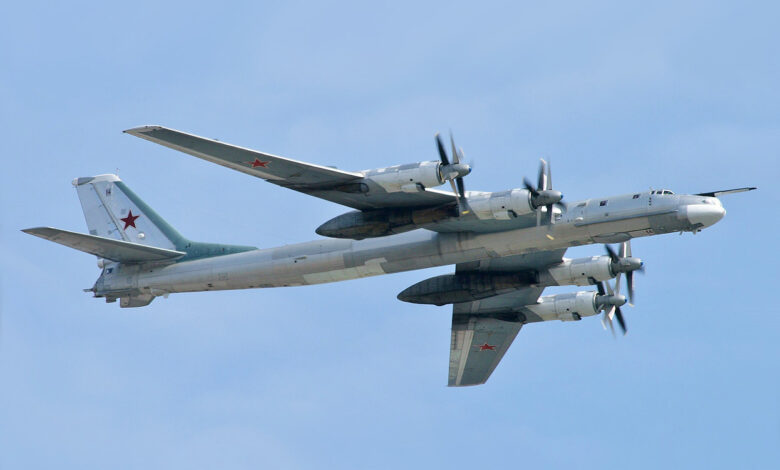
Russia’s decision to retain the Tu-95 in service is driven by its unique aerodynamic and propulsive design, which offers a balance of speed and fuel efficiency unattainable by contemporary jet bombers of the 1950s. While early turbojets consumed fuel too rapidly for intercontinental missions without excessive refueling stops, the Tu-95 combined a swept wing with four powerful turboprop engines. This configuration provides an unrefueled range of approximately 15,000 kilometers, enabling the aircraft to reach targets near the continental United States and return, a capability that defined the strategic standoff during the Cold War.
The aircraft’s powerplant consists of four Kuznetsov NK-12 engines, each producing roughly 15,000 shaft horsepower. These engines drive pairs of contra-rotating propellers, a design that recovers energy lost in single-propeller systems and allows the aircraft to approach jet-like speeds. This arrangement, however, generates significant noise and vibration, as the propeller blade tips reach supersonic speeds. The resulting acoustic signature is frequently described as one of the loudest of any aircraft ever built, a characteristic that has become synonymous with the type in military and civilian accounts.
Originally designed as a nuclear free-fall bomber, the Tu-95’s primary modern role has shifted to standoff missile delivery. The Tu-95MS variant, fielded from the 1980s onward, is equipped to carry long-range cruise missiles, including the Kh-55 and the more recent Kh-101/102 families, on internal rotary launchers and external wing pylons. This capability allows the aircraft to launch weapons from hundreds of kilometers away from defended airspace, reducing the risk of interception and allowing it to return to base without penetrating enemy air defense zones.
Since 2022, the Tu-95 has been involved in strikes on Ukraine, operating in this standoff capacity. The fleet has suffered losses on the ground during these operations, though the exact scale of these losses and the specific operational details remain subject to varying reports and verification challenges. The continued use of the platform demonstrates Russia’s reliance on legacy heavy bombers to maintain air supremacy and strategic reach in a contested environment.
The Tu-95’s design represents a successful engineering compromise between speed and range. By utilizing turboprop engines, which convert a higher percentage of fuel energy into thrust over long distances, the aircraft achieves a fuel efficiency that allows it to sustain high-speed flight over vast distances. This efficiency is counterbalanced by the intense noise generated by the supersonic propeller tips, a trade-off that has not been replicated in subsequent Western or Russian heavy bomber designs.
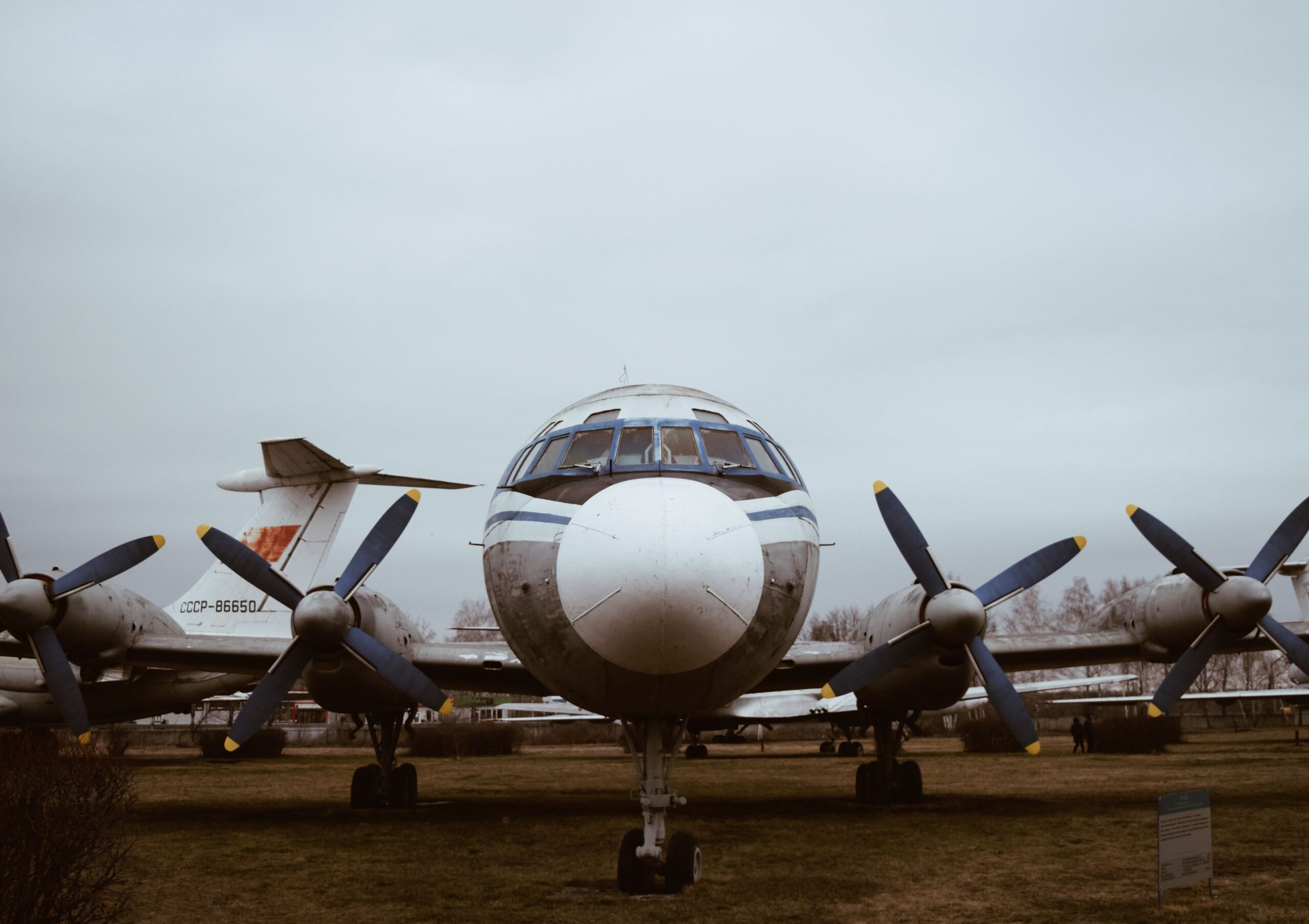
Western interceptors, including those from the RAF, US Air Force, and Norwegian Air Force, have routinely shadowed and escorted Tu-95s during their patrols. These intercepts were a standard part of Cold War military operations and continue to occur as the aircraft conducts routine sorties. The Bear’s longevity is attributed to its robust airframe and the ongoing modernization of its avionics and weapon systems, which have allowed it to remain effective against evolving air defense technologies.
As Russia continues to modernize its strategic aviation forces, the Tu-95 remains a central pillar of its deterrent. Its ability to project power over intercontinental distances without the fuel consumption penalties of jet propulsion ensures its continued operational value. The aircraft’s future will likely depend on the rate of its modernization and its ability to withstand increased threats from advanced air defense systems and fifth-generation fighter jets.