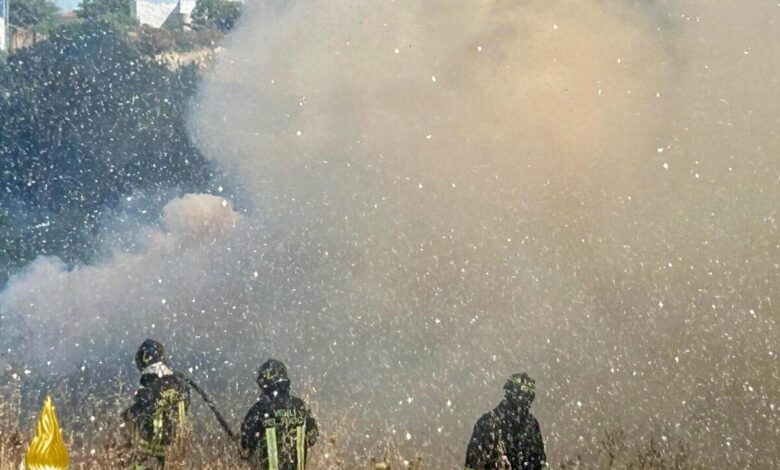
Witnesses and video footage captured the moment the right wing of the Canadair plane struck the 30-meter steel cable supporting the helicopter’s “Bambi Bucket” water container. The impact caused the cable and bucket to detach, forcing both aircraft to make emergency landings. No injuries were reported among the crews. Raimondo Piras, a 57-year-old witness with firefighting experience, stated that an operator released the cable at the precise moment the plane emerged from a dense column of smoke, preventing a catastrophic crash. The Forestry Corps confirmed the cable broke due to the impact, while smoke from the fire was identified as a potential contributing factor to the poor visibility and collision dynamics.
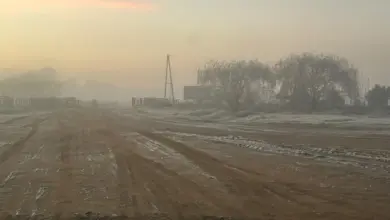
The near-miss occurred amidst a severe wildfire event that struck Sardinia over the weekend. Several major fires broke out across the island, from north to south, leading to the closure of key roads and disrupting air connections at a major airport. By the end of the day, approximately 500 hectares of land in Putzu Nieddu had been destroyed. Resources were mobilized across the island, with helicopters operating in Escalaplano, Cabras, Uras, and San Gavino Monreale. The Canadair involved in the Guspini incident, designated Can27, originated from Olbia, while the Super Puma was based in Alà dei Sardi. The Forestry Corps, firefighters, Civil Protection units, and volunteers were deployed to contain the blazes, which required significant air support due to the scale of the vegetation fires.
In a separate aviation incident, two people were killed on Wednesday, August 26, when a gyrocopter crashed in northern Italy. The two-seat aircraft struck the cables of a service cableway operated by energy utility Enel near the Campliccioli dam in the municipality of Antrona Schieranco, Verbano-Cusio-Ossola province. The crash occurred around 11:30 a.m. The aircraft caught fire after the collision and came down on a grassy area beside Lake Campliccioli. Both occupants died: Alessandro Muscinelli, a 62-year-old pilot from Premeno, and his sister-in-law, Antonella Pagliarani, 63, a resident of the Milan area.
Gyrocopters, also known as gyroplanes, are lightweight recreational aircraft distinct from helicopters in their mechanical design. In a gyrocopter, the engine provides only forward thrust, while the unpowered rotor spins freely via autorotation, driven by airflow. These aircraft are popular in mountainous regions for low-altitude sightseeing due to their ability to operate at slow speeds and their relatively low cost. Emergency services, including mountain rescue teams, responded to the scene in the Ossola Valley, but neither occupant survived the impact.
Both incidents highlight the operational risks associated with aviation in challenging environments, whether battling large-scale wildfires with limited visibility or navigating remote alpine terrain. The Sardinia investigation will focus on the spatial coordination of multiple aircraft and the impact of smoke on pilot visibility. Meanwhile, the cause of the gyrocopter crash in the Ossola Valley is under review, with early reports noting a collision with the dam’s service infrastructure. The Italian aviation authorities are treating both events as serious incidents requiring detailed technical and procedural analysis.