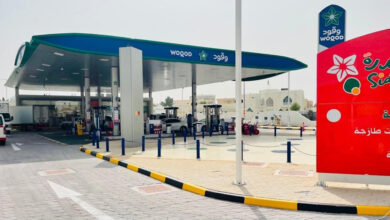

These figures place fuel costs in the UAE approximately 80 per cent higher than they were in February, prior to the escalation of the Iran war. Since the country deregulated its fuel market in 2015, prices have been linked to global oil benchmarks, though they do not always move in perfect synchronization. The current trajectory, however, mirrors the sharp volatility in international crude markets, where Brent crude has approached $110 per barrel and West Texas Intermediate (WTI) has exceeded $105.
Geopolitical Drivers of Price Inflation
The primary driver of this price escalation is the resumption of offensives between the United States and Iran, which has kept the Strait of Hormuz a critical flashpoint. This waterway is vital for global energy security, and its instability has directly influenced supply dynamics. Compounding the pressure, Yemen’s Houthi rebels have intensified attacks on Saudi Arabian facilities in the Red Sea, forcing a shift in crude transport routes. To bypass the restricted Red Sea corridor, Saudi Arabia has been compelled to route more crude oil through the contested Strait of Hormuz. Consequently, oil flows through the strait rose to their highest level this month since the conflict began, intensifying the logistical and security risks associated with regional energy exports.
In response to the rising costs, diplomatic efforts have sought to stabilize the region. Mediated talks between Washington and Tehran were held during the United Nations General Assembly in New York, aiming to establish a longer-term peace deal. While these discussions have provided some hope, leading to a slight easing of prices over the past week, a clear breakthrough remains elusive. Efforts to fully reopen the Strait of Hormuz to normal, unimpeded traffic continue to stall, leaving the market in a state of cautious uncertainty.
“So far this week, Brent, the benchmark for two-thirds of the world’s oil, and West Texas Intermediate, the gauge that tracks US crude, are both down.” — Market Observation
Despite the recent dip, the broader trend remains sharply upward. Since the beginning of July, when UAE petrol prices last decreased amid a temporary detente and crude prices near pre-war levels, Brent crude has surged by nearly 45 per cent. WTI has similarly leapt by almost a third. For the month of October, Brent has jumped by approximately 9.5 per cent, while WTI has inched up by 0.2 per cent. This sustained upward pressure in wholesale markets has made it difficult for domestic regulators to cushion the impact on consumers, resulting in the significant monthly hikes seen in the UAE.
The energy transition and market mechanics in the Gulf region are currently dominated by these immediate security and supply chain disruptions. While governments can implement measures to control pump prices, the deregulated nature of the UAE market means that consumers bear the brunt of global volatility. The reliance on the Strait of Hormuz for a significant portion of the region’s crude exports highlights the vulnerability of the energy system to geopolitical shocks. Until a durable peace agreement is reached and secure alternative transport routes are fully operationalized, fuel prices in the UAE are likely to remain elevated, reflecting the high-risk premium attached to Persian Gulf energy supplies.
For the average consumer, the cumulative effect of these three consecutive monthly increases has significantly altered the cost of living and transportation. The return to pre-war price levels appears distant, as the underlying geopolitical conflict continues to dictate market behavior. The next verified development will depend on whether the quiet engagements in New York yield a tangible framework for de-escalation, potentially allowing crude benchmarks to stabilize and offering relief to domestic fuel prices in the coming months.