
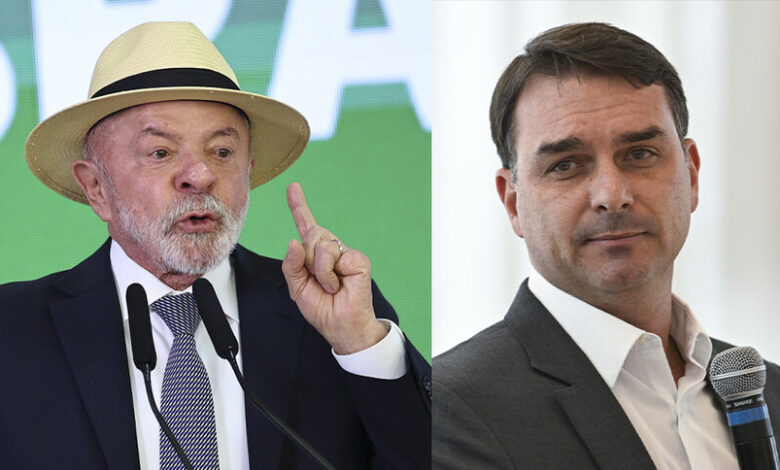
The Quaest poll, commissioned by O Globo and TV Globo, places Lula at 39% of voting intentions compared with 34% for Bolsonaro. This result expands the president’s advantage from a four-point margin recorded in the previous week. However, other surveys point to a much tighter contest. A poll by Futura/100% Cidades places Lula at 38.3% and Bolsonaro close behind at 37.7%, a difference well within the margin of error. These conflicting results underscore the uncertainty surrounding the final outcome of the first round.
The race pits the incumbent against the heir of former President Jair Bolsonaro, who is currently serving a 27-year prison sentence for plotting a coup d’état following his narrow defeat in 2022. Flávio Bolsonaro, a 45-year-old lawyer and senator, was selected as the conservative candidate by his father. Although he entered politics early, becoming a Rio de Janeiro state deputy at age 21 and a federal senator at 37, he maintained a relatively low national profile until receiving his father’s endorsement. Positioning himself as an international conservative, Flávio has highlighted his ties to foreign allies, including a private meeting with US President Donald Trump at the White House earlier this year.
Religious controversy dominates final week
In the days leading up to the vote, the campaign has been roiled by a dispute involving the patron saint of Brazil, Our Lady of Aparecida. Allegations concerning the saint have placed religion at the center of the race, intensifying the polarized nature of the election. This religious dimension adds another layer of complexity to a campaign already defined by the contrast between the current government and the conservative opposition.
Flávio Bolsonaro’s campaign has faced additional scrutiny due to legal issues. He is under investigation for alleged corruption and money laundering tied to a biographical film about his father. The film was partially funded by a banker who has been arrested for fraud. These allegations contrast with the incumbent’s focus on his track record as President, though specific policy comparisons were not detailed in the available polling data.
The next critical step in the electoral process is the first-round vote on October 4. The outcome will determine whether the election is decided in a single round or proceeds to the runoff on October 25. With the polls showing such close margins, every vote is pivotal in determining which two candidates will advance to the final stage.