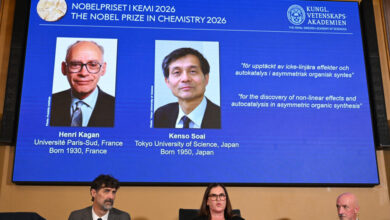
For over a century, the phenomenon of homochirality has puzzled scientists. Louis Pasteur was among the first to observe that molecules essential to life, such as the amino acids that build proteins and the sugars used for energy, are chiral. This means they exist in two versions—enantiomers—that are non-superimposable mirror images of one another. Despite the availability of both forms in chemical synthesis, living organisms are highly selective, utilizing only one specific mirror image for biological processes. The central question has been why life favors one “handedness” over the other.
Kagan and Soai’s research addresses this fundamental question by demonstrating how chemical reactions can selectively produce one mirror-image form of a molecule. Their discoveries focus on two key mechanisms: nonlinear effects and autocatalysis. Autocatalysis, in particular, refers to reactions where the product of the reaction acts as a catalyst to accelerate the formation of more of itself. This feedback loop allows a slight initial imbalance in the ratio of mirror images to amplify significantly, potentially explaining how a single-handed molecular population could emerge from a balanced mixture in prebiotic chemistry.
A Surprise Selection
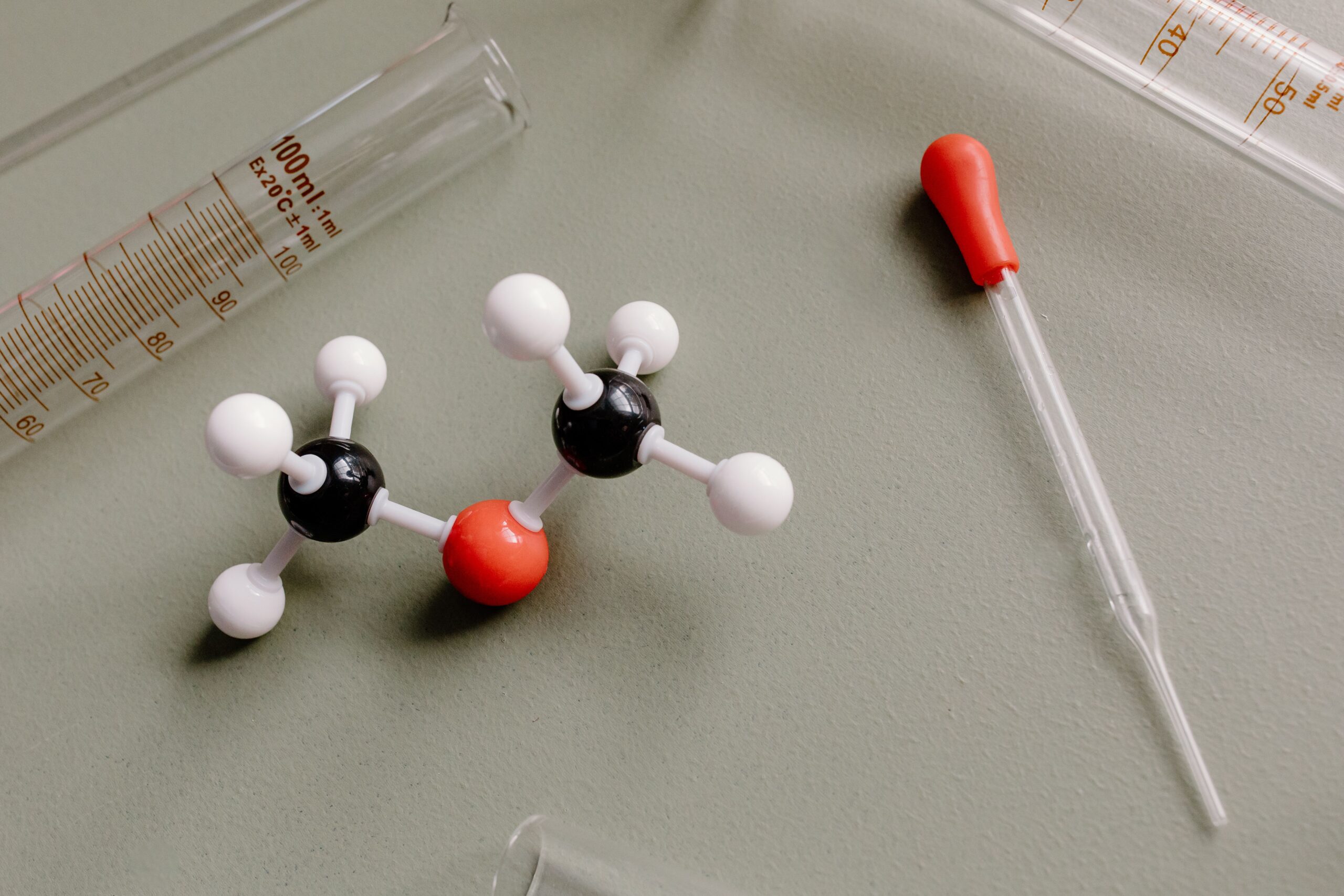
The selection of Kagan and Soai was not widely anticipated by prediction models. Neither scientist appeared on standard lists of likely nominees, such as those derived from Clarivate’s ISI citation data, which is often a reliable predictor of future Nobel recipients. Furthermore, neither was listed on comprehensive prediction dashboards maintained by scientific media outlets. While Kagan had previously received the Wolf Prize in Chemistry and the Ryoji Noyori Prize in the early 2000s, these awards recognized his earlier work on asymmetric catalysis, a field tangentially related to his subsequent Nobel-winning contributions. Soai, however, had not previously won major prizes typically associated with Nobel precursors.
The announcement also brought to light historical context regarding Kagan’s career. In 2001, the Nobel Prize in Chemistry was awarded to Barry Sharpless, Ryoji Noyori, and William Knowles for their work on asymmetric catalysis. At that time, France’s science minister wrote to the Nobel committee to complain about the omission of Kagan, suggesting that his contributions to the field were significant enough to warrant recognition. The 2026 award effectively resolves that past oversight by highlighting his later, distinct discoveries in nonlinear effects and autocatalysis.
The timing of the announcement caught Soai in an unexpected moment. He was reportedly engaged in recreational consumerism when he received the call from the Swedish Academy of Sciences, rather than waiting for the news in a professional capacity. This human detail underscores the unpredictable nature of recognition in science, where breakthroughs that solve puzzles dating back to the 19th century may only receive their highest honor after decades of quiet accumulation of evidence.
The scientific significance of their work lies in bridging the gap between synthetic chemistry and the origins of life. By elucidating how asymmetric synthesis can be driven by nonlinear dynamics and self-replication, Kagan and Soai have provided a robust chemical framework for understanding the emergence of homochirality. This does not definitively prove the exact mechanism by which life on Earth achieved its single-handed state, but it offers a chemically plausible pathway that has been experimentally validated.
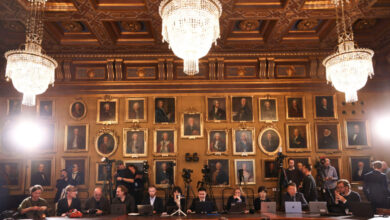
As the Nobel assembly at the Karolinska Institute concluded its announcement, the focus shifted to the broader implications of this research. The prize acknowledges that the preference for one molecular mirror image is not merely a biological quirk but a consequence of fundamental chemical principles. Future research will likely build upon these findings to explore how such autocatalytic cycles might have operated in the early Earth environment, further connecting the study of asymmetric synthesis to the broader narrative of prebiotic chemistry and the origin of life.