The British-based International Institute for Strategic Studies (IISS) has concluded that drone activity over Volkel and Eindhoven Air Bases in late 2025 was likely launched from Russian shadow fleet vessels. The assessment, which draws on 144 reported drone sightings across 13 European countries since August 2024, identifies a specific operational pattern: professional, military-style drones measuring 3 to 6 meters in width, flying at low altitudes to avoid radar detection, and disappearing quickly after observation.
Volkel Air Base is a critical strategic asset, widely presumed to be a storage site for U.S. nuclear weapons. The base was targeted three times between November and December 2025. Following the November 21 incident, unidentified drone activity over Eindhoven Air Base and the nearby civilian airport led to the suspension of air traffic operations the following evening. By December 7, the response had escalated to the deployment of F-35 fighter jets in an interception attempt after another sighting near Volkel.
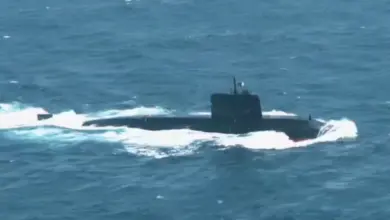
The IISS analysis points to three specific vessels as potential launch and recovery platforms for these operations: the Cgas Leopard and the Tranquil Sea, both anchored in the North Sea off the Dutch coast during the relevant period, and the Arctica, which was observed near Dunkirk, France. Satellite imagery and vessel tracking data placed these ships in proximity to multiple reported sightings in the Netherlands, Denmark, and France. The report notes that some of these vessels have been observed disabling tracking systems or utilizing support vessels, such as tugboats and salvage ships, to evade detection.
This maritime-based drone threat extends beyond the Netherlands. Similar sightings were recorded at RAF Lakenheath in Suffolk, England, where preparations were underway to host U.S. nuclear weapons, and at Île Longue in France, a base housing submarine-launched nuclear missiles. Across Europe, drone sightings peaked in September and November 2025, with dozens of incidents reported monthly near military and strategic infrastructure. The number of sightings has declined sharply in early 2026, a trend researchers partially attribute to increased European naval operations targeting suspected shadow fleet vessels.
The security implications of this activity are compounded by the limitations of current air defense systems. Small drones are notoriously difficult for radar to detect, leading the IISS to caution that not all reported sightings have been confirmed as drones, and some may involve misidentified aircraft. Attribution in individual cases remains uncertain, as the origin of the drones in all 144 incidents has not been definitively confirmed.
Meanwhile, security concerns at other Dutch military installations have persisted through different channels. Recently, a portion of Gilze-Rijen Air Base in Noord-Brabant was evacuated after a video circulating on social media appeared to show an intruder walking across the military installation. The incident prompted an immediate response from the Royal Netherlands Marechaussee, local police, and Defense Explosives Ordnance Disposal units. The situation was escalated to a “Grip 1” regional emergency, the lowest of five response levels for incidents with potential wider impact.
Investigations at Gilze-Rijen concluded within three hours, with authorities determining the footage was likely an old video, possibly several years old. Despite the false alarm, the response highlighted the heightened state of vigilance at Dutch military sites. Teams conducted extensive searches using drones and sniffer dogs, finding nothing suspicious. The base remained operational, with defense helicopters scheduled to depart for Liberation Day celebrations later in the week.
While the immediate threat at Gilze-Rijen was resolved, the strategic question raised by the IISS analysis remains open. If the shadow fleet is indeed being used to project air power over European soil, it represents a significant evolution in hybrid warfare tactics. The decline in sightings in 2026 suggests that naval interdiction may be effective, but the successful evasion of F-35s and ground-based defenses in late 2025 underscores the urgent need for improved low-altitude detection capabilities across NATO’s eastern and northern flanks. The next confirmed development will likely hinge on whether European naval forces can sustain their campaign against these vessels while simultaneously hardening air defenses against low-radar-cross-section threats.