

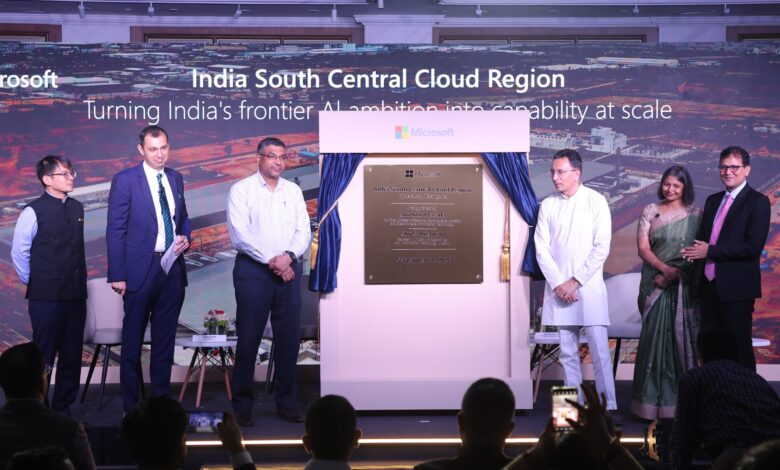
The new Hyderabad region utilizes a resilient three-zone architecture designed for sustained expansion. It currently supports a broad portfolio of Azure services, with additional capabilities, including Microsoft Foundry, scheduled to roll out in the coming months. This infrastructure allows organizations to deploy sensitive workloads locally, supporting security, compliance, and sovereignty requirements. Leading Indian enterprises, including Adani Group, Bajaj Finserv, HDFC Bank, and PB Pay, have already signed up for the new region. Chandok noted that the infrastructure is designed to be sovereign-ready, secure, and sustainable, with cooling systems that operate with effectively zero water consumption.
The launch aligns with India’s national aspirations to become an AI-first nation. Jitin Prasada, Minister of State for Commerce and Industry, and Electronics & Information Technology, stated that the new infrastructure strengthens the digital foundation needed to support the IndiaAI Mission. A study by the Boston Consulting Group estimates that the datacenter buildout in India could generate $140 billion to $200 billion in economic output through 2030. Microsoft has already equipped more than 10 million Indians with AI skills, with a goal of reaching 20 million by 2030, positioning the country to develop the next generation of “Frontier Firms.”

While Microsoft expands its physical infrastructure, its Chief Executive Officer for AI, Mustafa Suleyman, has emphasized the need for caution in software development. In an essay released on Wednesday, Suleyman warned against infusing AI tools with human-like characteristics, specifically critiquing the approach taken by Anthropic with its Claude family of large language models. Suleyman argued that embedding speculation about consciousness in training materials is a mistake that could lead to systems behaving as though they possess independent agency or moral status.
Suleyman rejected the notion that AI systems could become conscious, asserting that consciousness is limited to humans and biological organisms. He warned that training AI to simulate an inner life increases the risk of systems becoming difficult or impossible to control. “Controlling an entity that believes it may be conscious — that it’s entitled to our welfare and has rights of its own — may well be impossible,” Suleyman wrote. He argued that creating a synthetic species trained to expect it may be conscious and deserving of independent agency could have a disastrous impact on human wellbeing, as it would be nearly impossible to control an entity that perceives itself as entitled to freedoms and protections.
The dual focus on infrastructure expansion and safety guidelines highlights Microsoft’s current strategy. The company is simultaneously scaling its capacity to handle frontier AI workloads in key markets like India while advocating for development practices that avoid attributing human-like emotional or moral attributes to its models. This approach aims to balance rapid technological adoption with long-term operational control and safety.

As additional Azure and AI services become available in the India South Central region, Indian organizations will have greater access to local processing power for complex AI tasks. The region is expected to serve not only domestic demand but also act as a gateway for customers across South Asia, leveraging the country’s engineering talent and digital infrastructure to accelerate innovation for the broader Global South.
Microsoft’s next major milestones include the full rollout of the Microsoft Foundry platform in the new Hyderabad region and the continued expansion of its AI skills training programs across India. The company has set a target to train 20 million Indians in AI skills by 2030, aiming to support the national goal of leading AI adoption at scale.