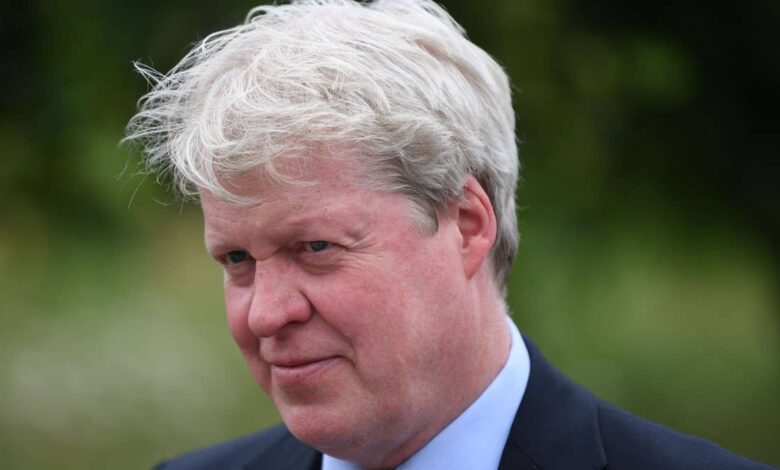
The claim has ignited a fierce public dispute with Buckingham Palace. In a statement that has been noted for its unusually strong language, the Palace rejected the depiction of the King as insensitive. “While we do not comment on books as a matter of principle, His Majesty is mindful that the pain of fraternal grief can cloud reason, affect judgment and colour memory in ways others do not recognise, even many years after such a loss,” the spokesperson said. This response drew comparisons to the “recollections may vary” statement issued in 2021 regarding Harry and Meghan, though Spencer dismissed the Palace’s current wording as a “poor imitation” and “astonishingly provocative.” In an interview with The Mail on Sunday, Spencer stated he felt “gaslit” by the King, arguing the Palace was attempting to suggest he had lied without the King directly denying the exchange.
Spencer’s account centers on the decision to have Princes William and Harry, then aged 15 and 12, walk behind their mother’s coffin. Spencer, who spoke at the 1997 funeral, has long maintained that Diana would not have wanted her young sons subjected to such public scrutiny. In his New York interview, he reiterated this stance, noting that while he did not intrude on his nephew Harry’s current decisions, he believed the decision was wrong in 1997. “The point is that this is a man with a temper, and I was very even that day,” Spencer told Brown. “I was just saying she wouldn’t want it, and it’s wrong.” He recalled telling the Prince that while William had walked in Lord Mountbatten’s procession at age 30, “he wasn’t your mother.”

However, the credibility of Spencer’s specific recollections has faced challenges from multiple directions. Prior to the New York event, the Earl admitted to a factual inaccuracy in the book regarding Piers Morgan, leading Morgan to launch legal action. Furthermore, courtiers and allies present at the time have publicly contradicted the memoir’s portrayal of Charles. These witnesses state that the King was “distraught with grief,” a stark contrast to the “giddily elated” demeanor Spencer describes. The Palace’s rebuttal appears designed to cast doubt on the Earl’s memory rather than engage directly with the specific quote, a strategy that has left some analysts questioning whether the feud is a genuine attempt to clarify history or a calculated effort to damage the King’s reputation just as the monarchy began to recover from the scandal surrounding Andrew Mountbatten-Windsor.
Despite the controversy, the royal family has continued with its public duties, a move seen as an attempt to prevent the book narrative from overshadowing the institution. During the height of the dispute, King Charles, Prince William, and Prince Harry all attended separate events. Charles also hosted a high-profile meeting with executives from AI companies including Nvidia and Google DeepMind at Dumfries House in Scotland, urging them to ensure technology remains “in the service of humanity.” Meanwhile, Harry, whose relationship with his brother and the Palace has remained strained, made a notable public appearance in the UK. His connection to his maternal family remains significant; in July, he and Meghan Markle stayed at Althorp, the Spencer family estate where Diana is buried. Spencer described himself as an “elderly uncle who’s there if needed,” noting that Harry’s stay was a matter of public record and that he is happy to be of use to his nephew, while emphasizing that he does not offer unsolicited advice on matters such as property searches or relocation.
As the 30th anniversary of Diana’s death approaches, the tension between the Spencer and Windsor families shows no sign of abating. While Spencer maintains his book is a celebration of his sister rather than a “hit piece,” the Palace’s firm stance suggests that the institution is prepared to push back against narratives it views as damaging. For now, the focus remains on the King’s continued engagement with global issues, even as the shadow of his wife’s death continues to dominate the public conversation.