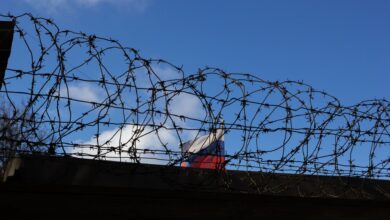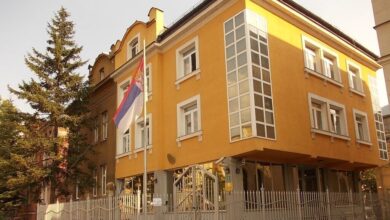
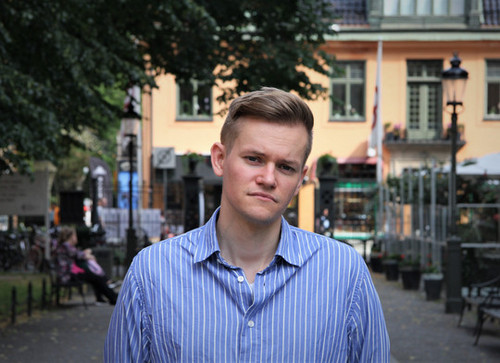
Medin, a special correspondent for the Swedish daily Dagens ETC and a member of the Swedish Union of Journalists (SJF), was detained at Istanbul Airport on 27 March 2025. He had arrived in Türkiye to cover widespread demonstrations that erupted following the arrest of Ekrem İmamoğlu, the Istanbul Mayor and presidential candidate for the opposition Republican People’s Party (CHP). Turkish authorities officially confirmed his arrest three days later, accusing him of producing anti-Türkiye content and alleging connections with the Kurdistan Workers’ Party (PKK), a group designated as a terrorist organization by Turkey and its Western allies.
The legal charges against Medin are twofold. He was first sentenced to 11 months and 20 days in prison for “insulting the President,” a charge frequently used to silence critics of the Turkish government. However, it is the second indictment that poses the most severe threat: Medin is charged with “membership of an armed terrorist organization” and “disseminating terrorist propaganda.” Prosecutors claim that his journalistic work, including social media posts, news articles, and his book The Kurdish Revolution and the Fight Against ISIS, served to legitimize the PKK and its affiliated structures, such as the YPG in northern Syria. The indictment also cites his frequent travels to Kurdish regions and interviews with organization leaders as evidence. If found guilty on these terrorism charges, Medin faces a potential prison sentence of over 27 years.
Despite his release from Silivri Prison after 50 days of pretrial detention, the legal threat remains immediate. Medin has consistently denied the accusations, stating in court and to prosecutors that he was acting in the public interest as a journalist. His defense, led by the Media and Law Studies Association (MLSA), argues that the charges are politically motivated and part of a broader crackdown on press freedom. MLSA lawyers have requested that the court wait for a response from Swedish authorities to take Medin’s statement in his home country, a move the court has accepted, delaying the trial further.
The delay has significant implications for Medin’s future as a foreign correspondent. Victoria da Silva, International Secretary of the SJF, who attended the recent hearing, warned that the court is likely to issue an arrest warrant. This would complicate his ability to travel, as many countries have extradition treaties with Türkiye. “This would cause him real problems as he is a foreign correspondent and wouldn’t be able to travel and report abroad,” da Silva noted. Medin himself has acknowledged the uncertainty, stating in a recent interview that the lack of clarity regarding the trial’s outcome is a source of worry for him and his family, who welcomed their first child shortly after his return to Sweden.
International pressure has been a consistent feature of the case. Organizations including the International Federation of Journalists (IFJ), the European Federation of Journalists (EFJ), and Reporters Without Borders (RSF) have campaigned for his acquittal and the withdrawal of all charges. They argue that criminalizing journalistic activities through “insult” and “terrorism” laws disregards international human rights standards. Meanwhile, Turkish officials maintain that the charges reflect legitimate national security concerns regarding the PKK.
As the court awaits the Swedish judicial response, the case serves as a stark indicator of the deteriorating environment for international reporters in Türkiye. Medin’s career, which began by chance during the 2009 Honduras coup, has been defined by tenacious on-the-ground reporting. Now, his legal fate hangs in the balance, with the next hearing scheduled for October. For Medin, and for the broader community of foreign press operating in the region, the outcome will signal whether journalistic independence can withstand the weight of state prosecution.