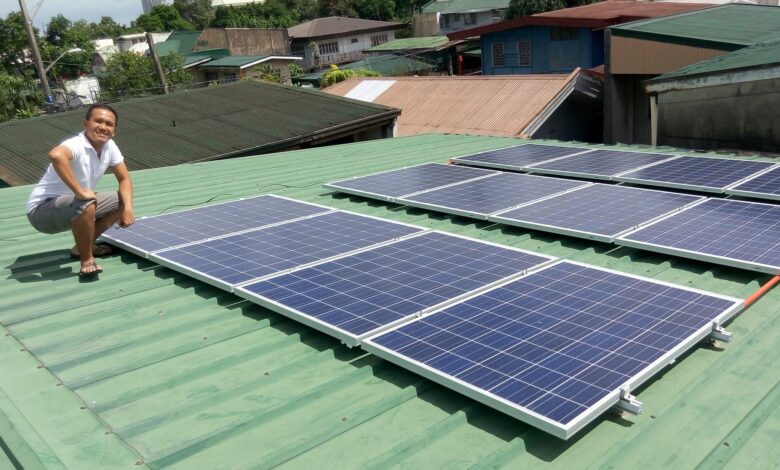
The loans carry a fixed annual interest rate of 5%, payable over five years, with no service fee. GSIS President and General Manager Wick Veloso stated that the initiative is a response to persistently high electricity prices and growing interest in distributed energy solutions. By lowering the financial barrier to entry, the program seeks to expand the addressable market for residential solar, which has previously been driven largely by private installers, corporate users, and higher-income households able to absorb upfront costs.
Eligibility for the GSEL requires members to have at least three years of service and hold permanent or regular employment. Qualified individuals can apply through the GSIS Touch platform. To ensure the funds are used for their intended purpose, borrowers must submit supplier quotations or proof of installation. This structure ties financing directly to the deployment of solar hardware, distinguishing the program from general-purpose personal loans.

A key component of the package is the inclusion of three years of insurance coverage for the installed systems. GSIS has allocated an additional ₱60 million ($1.07 million) to fund this insurance, addressing a primary hesitation point for first-time adopters in a country prone to typhoons, earthquakes, and lightning. By bundling risk mitigation into the loan structure, the agency reduces the perceived financial exposure for households investing in exposed assets.
The program also aligns with the Philippines’ existing net metering framework, which permits households to export excess electricity back to the grid. This creates a secondary economic incentive: beyond reducing direct consumption from the utility grid, households can generate energy credits that partially offset loan repayments. This dual benefit of cost reduction and revenue generation aims to improve the return on investment for participating members.
While the loan size is modest compared to utility-scale projects, the systemic implications are significant. If adoption accelerates, the program could reshape demand patterns, reduce pressure on the grid during peak hours, and complement large-scale solar developments already underway in the country. The initiative signals that the Philippine energy transition is expanding beyond large developers and power plants to reach individual consumers.
However, the rollout faces structural constraints. The speed at which the ₱12.5 billion facility translates into actual rooftop systems will depend on local installation capacity, equipment supply chains, and permitting processes. Additionally, awareness among eligible members regarding the technical and financial aspects of solar adoption remains a factor. The loan window is set for three years, after which GSIS will evaluate uptake and performance. This timeline effectively functions as a pilot at scale, intended to inform broader policy or potential replication by other government financial institutions.