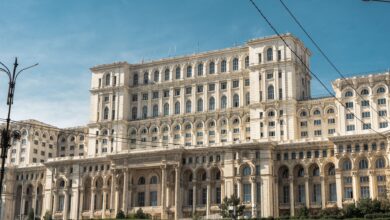
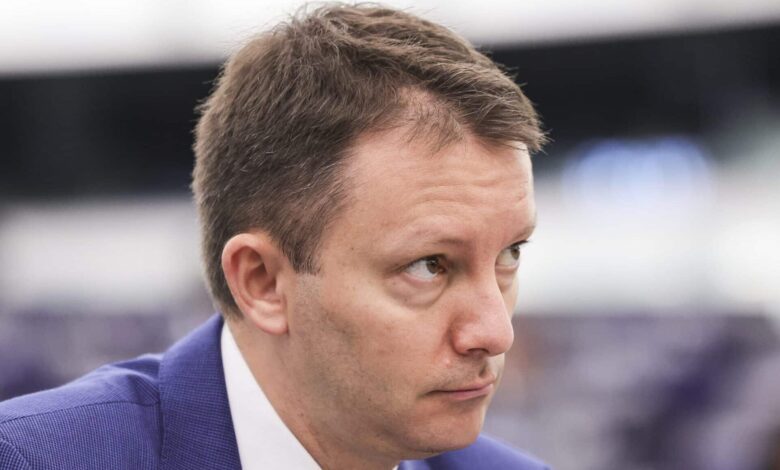
Announcing the decision at the Cotroceni Palace in Bucharest, President Dan acknowledged the severity of the impasse. “More than four months have passed since we have had a government … and despite hundreds of hours of negotiations with the political parties, we have failed to reach a viable formula,” Dan stated. He explained that Mureșan was selected because he received the most support during recent consultations with parliamentary parties, describing him as a candidate with the “greatest parliamentary support” and the necessary expertise from his tenure in Brussels.
Mureșan, 44, has served in the European Parliament since 2014 and currently holds the position of vice-president of the centre-right European People’s Party group. He is a key figure in EU budget discussions and serves as a co-rapporteur for the Multiannual Financial Framework for 2028 to 2034. Upon accepting the nomination, Mureșan posted on social media that he would take up the challenge, stating that “Romania needs a credible government as soon as possible.” His political platform includes reducing the budget deficit, continuing reforms initiated by the previous interim administration, and establishing a pro-European cabinet.
However, political analysts and opposition leaders have expressed significant skepticism regarding Mureșan’s ability to secure the necessary majority. Romania’s lower chamber requires 233 votes for a confidence vote to pass, yet the parties backing Mureșan—the PNL, the Save Romania Union (USR), and the Democratic Alliance of Hungarians in Romania (UDMR)—are estimated to control no more than 190 seats. This leaves a deficit of roughly 43 votes that Mureșan must bridge within the next ten days.
The two largest parties in Romania’s lower chamber, the Social Democratic Party (PSD) and the far-right Alliance for the Union of Romanians (AUR), have reacted with hostility. Sorin Grindeanu, president of the PSD, expressed “surprise and disappointment” via Facebook, criticizing the choice of an EU lawmaker. “It is difficult to understand the reasoning behind the head of state’s choice of someone like Mureșan. Romania is in an extremely difficult situation,” Grindeanu wrote, accusing Mureșan of campaigning in Brussels against Romanian interests regarding European funds. Similarly, AUR leader George Simion dismissed the candidate, writing that the party was “not voting Germany, nor France, nor [the Social Democrats]. Only Romania.”
The current political stalemate stems from the collapse of the previous pro-European governing coalition in April. The coalition, led by then-Prime Minister Ilie Bolojan, was toppled by a joint motion of no confidence brought by the PSD and the AUR over disagreements regarding austerity measures and budget deficit reduction. Bolojan currently serves in an interim capacity.
President Dan’s previous efforts to form a government have also failed. In June, the first nominee, independent politician Eugen Tomac, withdrew from the process before facing a parliamentary vote. Three weeks later, parliament rejected the cabinet proposal put forward by liberal politician Adrian Vestea. These failures have prolonged the crisis, leaving Romania without a fully functional executive branch for several months.
Political consultant Cristian Andrei doubts that Mureșan can gather sufficient support, predicting a continued stalemate. The arithmetic of the parliament places the PSD in a pivotal position; their votes may be essential for any new government to survive. Some reports suggest that ongoing power-sharing dynamics could influence negotiations, with discussions potentially linking the formation of a new cabinet to future political arrangements, including the rotation of the premiership. Mureșan now faces a tight ten-day deadline to present his governing programme and cabinet to parliament, a hurdle that many observers consider insurmountable without a breakthrough in negotiations with the opposition.