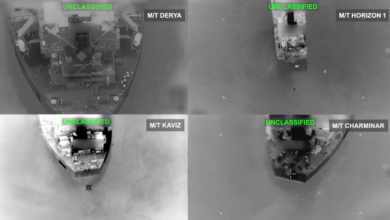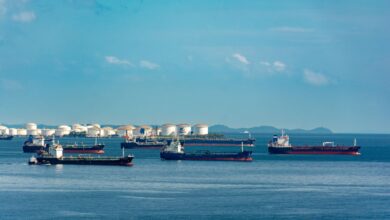
Romania is not currently experiencing a fuel shortage, but its supply chains are under significant strain. The country’s refineries cover only about a quarter of their feedstock needs from domestic production, with the remainder imported from Kazakhstan, Azerbaijan, and other suppliers. Roughly half of this imported crude originates in Kazakhstan and travels via the CPC to Novorossiysk, from where it is transported by tanker to the Port of Constanța. With threats to infrastructure in the Black Sea intensifying, the reliability of this primary route is in question. For Romania, the most sensitive product in this equation is diesel fuel, upon which the trucking, agriculture, construction, and industrial sectors depend heavily. Any prolonged interruption or price spike in diesel could ripple through the economy, raising transportation and production costs and contributing to broader inflation.
The broader European context amplifies these regional risks. As the continent approaches the autumn-winter period, energy markets are already under pressure. Underground gas storage facilities are currently around 55% full, the lowest level for this time of year since 2021. Simultaneously, competition for liquefied natural gas (LNG) is intensifying as Asian buyers return to the global market with greater strength. Because Europe increasingly relies on LNG to compensate for the reduction of Russian pipeline gas, any additional disruption in global shipping or LNG production can quickly translate into higher energy prices. Energy security is no longer determined solely by the volume of resources a country possesses, but by whether those resources can reach consumers safely, reliably, and at an affordable cost.
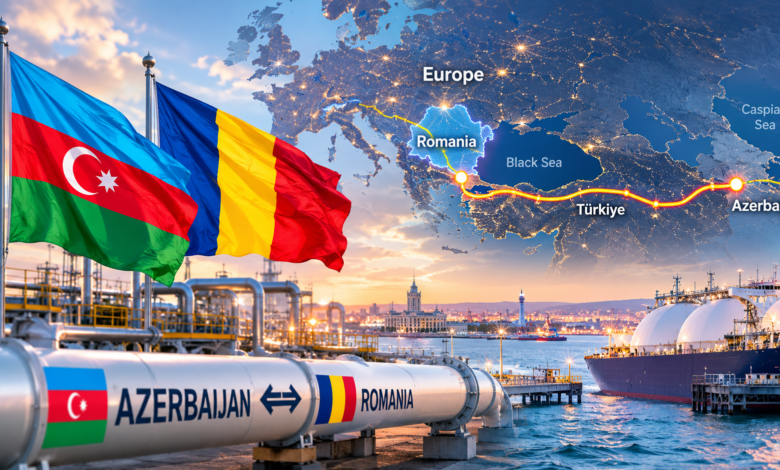
In response to these vulnerabilities, European policymakers are turning to alternative routes that bypass Russian territory entirely. Azerbaijan has emerged as a pivotal partner in this effort, leveraging its geographic position between Central Asia and European markets. One proposed alternative involves transporting Kazakh oil across the Caspian Sea to Azerbaijani ports, followed by onward transportation through the Baku-Tbilisi-Ceyhan pipeline toward Türkiye’s Mediterranean coast. This route would allow crude to reach European markets without transiting through Russia, thereby reducing exposure to disruptions connected to Russian infrastructure or geopolitical tensions.
Securing the New Infrastructure
The strategic importance of these new routes is underscored by the European Union’s approval of the Black Sea Connectivity Submarine Electricity Cable. Designated a Project of Mutual Interest, the initiative is backed by €2.3 billion ($2.6 billion) in funding and is set to become operational in 2029. The 1,195-kilometer cable, the longest of its kind, will carry renewable energy generated in Azerbaijan through Georgia and across the Black Sea, integrating into the electricity grids of Romania and Hungary. While this project advances Europe’s green transition and reduces dependence on Russian energy, it also introduces a new layer of vulnerability.
The cable’s route runs close to the Russia-Ukraine theater of war, traversing a seabed that Moscow claims. Analysts warn that the growing frequency of suspected sabotage incidents in contested waters, from the Baltic to the South China Sea, suggests that resilience in these areas is a strategic imperative. The EU’s current Black Sea Strategy and proposed Maritime Security Hub are recognized as insufficient to match the defense capacity required to protect such a critical asset. NATO is now being urged to establish a dedicated “Black Sea Sentry” mission, similar to the Baltic and Arctic Sentry initiatives, to provide permanent surveillance and protection. The aim is to ensure that the alliance does not allow the Black Sea to become a blind spot in its efforts to track and deter aggression, ensuring that the billions invested in strategic infrastructure are not rendered useless by a single successful act of sabotage.
For Romania and the wider European region, the path forward requires more than just diversifying energy sources. It demands the hardening of the routes through which that energy flows. As the winter season approaches, the ability to secure these logistics corridors will determine whether Europe can maintain economic stability amidst an increasingly volatile geopolitical landscape.