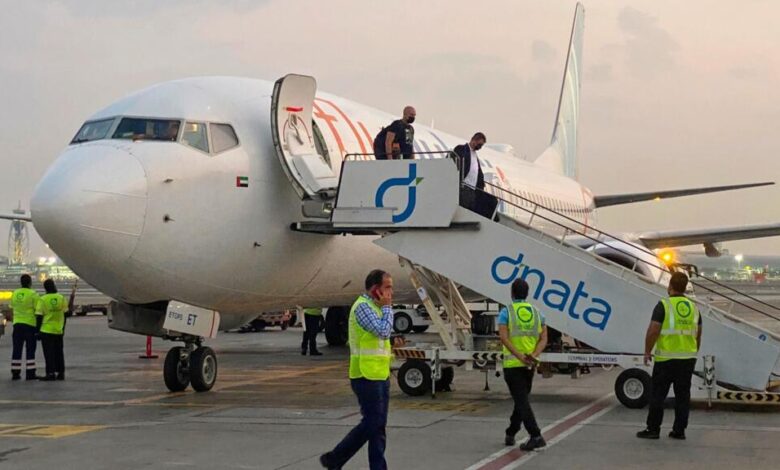
The sequence of events began minutes after the aircraft departed Dubai. According to airline statements, the plane experienced an “incident” en route that necessitated an emergency landing. The aircraft transmitted an emergency signal, a standard aviation protocol used to indicate a state of distress, which caused air traffic control and security authorities to become immediately alert. The nature of the distress signal, combined with the sudden change in flight path toward Saudi territory, briefly created uncertainty regarding the safety of the 100-plus individuals on board. However, the aircraft landed safely at Tabuk, a regional hub in the northwestern part of Saudi Arabia, effectively neutralizing the immediate physical threat to the passengers.
While the airline’s official communication focused on the mechanical or operational “incident” and the safe landing, investigative reports indicate a more complex human factor is at play. Evidence suggests that a physical altercation occurred between the two pilots in the flight deck. This confrontation is believed to have precipitated the emergency response. Further scrutiny has revealed that authorities are now investigating whether one of the pilots attempted to deliberately crash the aircraft. This allegation, if substantiated, would shift the classification of the event from a standard operational emergency to a potential act of aviation sabotage or a severe mental health crisis within the cockpit.
The operational details of such an incident are critical for global aviation security. In modern commercial aviation, the “sterile cockpit” rule and standardized emergency procedures are designed to manage crises, but a hostile or incapacitated pilot presents a unique and difficult threat. The fact that the plane was diverted to a third country—Saudi Arabia—rather than its destination in Israel highlights the rapid decision-making required by air traffic control and the pilot(s) still in command. The proximity of Tabuk to the conflict zone has made this diversion a significant geopolitical event, though the primary focus remains on the internal dynamics of the cockpit rather than external military or security threats.
Security protocols following such an event are stringent. The immediate priority is the welfare of the passengers and the safety of the aircraft. Once the plane is secured on the ground, the focus shifts to preserving evidence. Flight data recorders, cockpit voice recorders, and security footage from the cabin (if available) are essential for determining the exact sequence of the confrontation and the state of the controls. The investigation into the pilot’s actions is likely to involve both civil aviation authorities and law enforcement agencies, given the potential criminal nature of attempting to hijack or crash a commercial airliner.

The discrepancy between the airline’s initial characterization of the event as an “incident” and the subsequent reports of a pilot altercation and potential crash attempt underscores the gap between external operational data and internal cockpit reality. For aviation regulators worldwide, this event serves as a stark reminder of the vulnerabilities inherent in the two-person rule for long-haul and international flights. The ability of a single individual to threaten the lives of everyone on board remains a persistent challenge for the industry, despite decades of security enhancements aimed at preventing unauthorized access to the flight deck.
As the investigation progresses, the specific details of the confrontation and the pilot’s intentions will be clarified. For now, the confirmed facts are that the flight was diverted, an emergency was declared, and an investigation is underway regarding the conduct of the crew. The safe landing in Tabuk prevented a potential tragedy, but the incident has exposed critical questions about pilot mental health assessments, cockpit security, and the resilience of emergency response systems in the face of internal threats. The next steps will involve a thorough forensic analysis of the flight recorders and the legal proceedings against the implicated pilot, with the aviation community watching closely for any changes to safety protocols that may result from this case.