

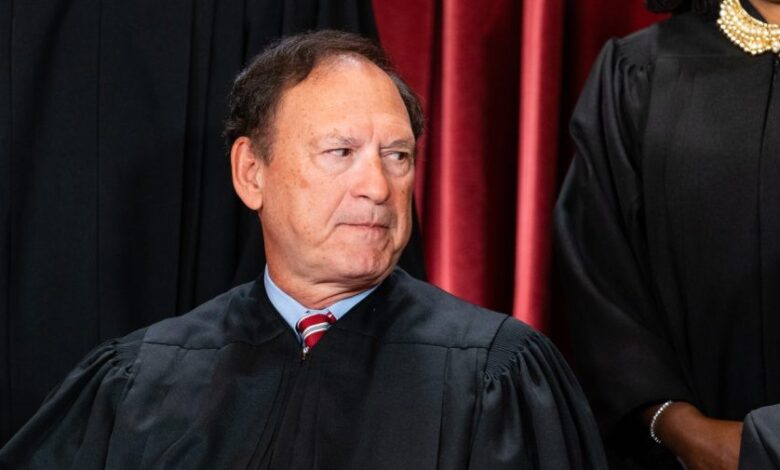
The recusal is notable because Alito had previously participated in the initial vote to take up the case. In the Supreme Court’s process, justices first vote on whether to grant a petition for a writ of certiorari, a discretionary order that allows the Court to review a lower court’s decision. By voting to grant certiorari, Alito signaled an interest in the legal questions presented by the dispute. His subsequent removal from the merits of the case creates a procedural shift, meaning the final decision on the litigation will rest with the remaining eight sitting Justices, unless another Justice also recuses.
The decision to step aside comes against a backdrop of intense public and legal scrutiny regarding the financial interests of the Court’s members. Alito has long held financial interests in the oil and gas sector. He is recognized as one of the only justices who owns individual stocks in energy companies, a practice that distingu him from his colleagues who generally hold their wealth in diversified mutual funds or index funds that do not allow for specific stock selection.
The case involves significant legal questions at the intersection of environmental law and federal power. While the specific statutory or constitutional grounds for the dispute are central to the upcoming oral arguments, the recusal introduces an element of institutional sensitivity. In the U.S. legal system, a justice’s recusal is typically grounded in constitutional requirements of impartiality or specific rules of judicial conduct. A recusal can be mandatory if a justice has a personal financial interest in the outcome, or voluntary if the justice believes a reasonable person might question their impartiality.

Alito’s holdings in the energy sector have been a subject of previous debate regarding potential conflicts of interest in cases involving environmental regulation. While the possession of such stocks does not automatically constitute a conflict of interest, it often prompts calls for recusal in litigation that could impact the profitability or regulatory landscape of the fossil fuel industry. The lack of a stated reason for the recusal leaves the precise legal basis for the withdrawal to institutional interpretation, though it is widely viewed as a preemptive measure to insulate the Court’s judgment from challenges based on financial bias.
The procedural implications of the recusal are limited to the composition of the panel hearing the case. The remaining justices will proceed with the standard briefing and oral argument schedule. The case was granted certiorari to resolve specific legal uncertainties that have divided lower courts. By removing himself from the deliberation, Alito ensures that the final opinion will not be authored or influenced by a Justice with direct financial exposure to the industries at the heart of the dispute.
This development underscores the ongoing tension between the financial practices of federal judges and the public expectation of absolute judicial neutrality. While the Constitution does not explicitly prohibit justices from holding individual stocks, ethical guidelines and public perception have increasingly pressured the Court to adopt stricter standards of transparency and recusal. The recusal does not affect the lower court rulings that are the subject of the appeal, nor does it change the legal questions the Court agreed to answer. It merely alters the number of voting members for the final disposition of the case.

The Supreme Court is expected to hear oral arguments in the case next week. With Alito’s recusal, the final decision will require a majority of the eight participating Justices. The outcome of the case is likely to have significant implications for future climate litigation and the scope of federal regulatory authority. The Court will issue its written opinion at a later date, a process that can take weeks or months following the conclusion of oral arguments.
The recusal does not halt the litigation or delay the hearing. The case remains on the Court’s docket, and the parties will proceed with their scheduled presentations. The legal community will closely watch whether the recusal influences the tone of the oral arguments or the final reasoning of the Court. By stepping aside, Alito has removed a potential ground for appeal based on bias, ensuring that the Court’s ruling is focused solely on the legal merits of the climate dispute.