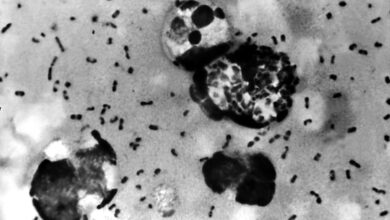

The case involved a young adult male who presented to a hospital with symptoms that led clinicians to initially suspect hantavirus disease or bacterial pneumonia. Despite intervention, the patient died eight hours after admission. Post-mortem testing subsequently confirmed the presence of *Yersinia pestis*, the bacterium responsible for plague, in both his blood and lung tissue.
The investigation identified a likely source of infection: the patient had occupational exposure to two ill cats. Cats are particularly susceptible to plague, and the animals exhibited respiratory symptoms and other signs of systemic illness consistent with pneumonic plague. However, because the cats were euthanized before laboratory testing could be performed, definitive confirmation of infection in the animals was not possible. The CDC notes that in such scenarios, the clinical presentation of the animals serves as a critical epidemiological clue for human cases.
Understanding Pneumonic Plague and Its Risks
Plague, caused by the bacterium *Yersinia pestis*, manifests in several forms. While bubonic plague is the most common form—characterized by painful, swollen lymph nodes known as buboes—pneumonic plague is the most dangerous. This form affects the lungs and is transmitted through the inhalation of respiratory droplets from an infected host. The disease carries a nearly 100% case-fatality rate if left untreated, making rapid diagnosis and immediate antibiotic treatment vital for survival.

The incubation period for plague is short, ranging from one to seven days, meaning symptoms can appear as little as 24 hours after exposure. This rapid progression underscores the urgency for clinicians in endemic areas to consider plague when evaluating patients with acute respiratory failure, particularly those with a history of contact with sick animals or rodents. The distinction between association and causation remains a challenge in cases where the vector or reservoir animal cannot be tested, as seen in the recent Arizona case, but the temporal and clinical alignment provides a strong basis for the CDC’s advisory.
Historical Context and Current Prevalence
Although plague has infected humans for millennia, its presence in the United States is a more recent phenomenon. The bacterium was introduced to the country in 1900 via rat-infested steamships. The last major urban plague epidemic in the U.S. occurred in Los Angeles between 1924 and 1925. Since then, plague has remained primarily a rural disease, concentrated in the western United States.
Data from the CDC indicates that between 1970 and 2023, there were 502 reported cases of plague in the United States. The distribution of these cases is heavily skewed toward specific states. New Mexico reported more than half of all cases during this period. Colorado and Arizona together accounted for more than a quarter of the remaining infections. This geographic clustering reinforces the need for heightened clinical vigilance in these regions.

The recent fatality serves as a reminder that while plague is rare, it is not extinct. It persists in wildlife reservoirs and can spill over into the human population through direct contact with infected animals or their fleas. For clinicians, the key takeaway is not alarm, but awareness. In the Southwest, a patient presenting with severe pneumonia and a history of exposure to sick domestic animals, particularly cats or rodents, should be evaluated for plague immediately. Early recognition allows for the initiation of appropriate antibiotic therapy, which is effective in preventing the otherwise high mortality rate associated with pneumonic plague.
As the CDC continues to monitor plague activity, the focus remains on educating healthcare providers in endemic areas to recognize the subtle early signs of the disease. The integration of clinical history, specifically regarding animal exposure, into the diagnostic process is essential for improving patient outcomes in these rare but serious cases.