

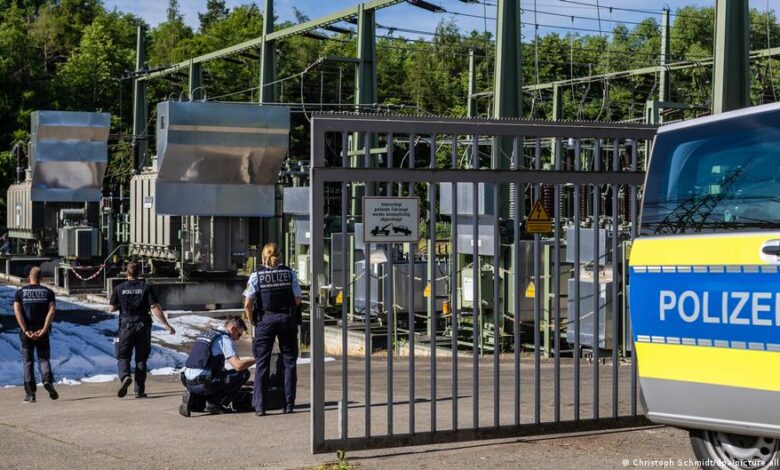
The incident has drawn immediate comparisons to a series of recent far-left arson attacks on energy infrastructure in Berlin. While the specific motives and perpetrators in Reutlingen have not yet been publicly identified, the pattern of the attack aligns with the trend of targeted sabotage against critical energy assets observed in other major German cities. The outage highlights ongoing vulnerabilities in regional power distribution networks.
In a separate development concerning Germany’s energy and industrial policy, the Franco-German Next-Generation Combat Aircraft (FCAS) project has officially collapsed. German government officials confirmed in off-the-record comments that Chancellor Friedrich Merz and French President Emmanuel Macron reached a shared evaluation that the project could not proceed. The two leaders acknowledged that the primary contractors, Dassault and Airbus, were unable to find common ground on the technical and commercial terms of the joint venture. The project had been under significant strain for several months prior to this final decision.

The termination of the FCAS project represents a significant shift in European defense and industrial cooperation, though its direct impact on the immediate energy crisis in Reutlingen is tenuous. The focus in southwestern Germany remains on the recovery of power supply to the affected residents and the completion of the forensic investigation into the grid damage. Authorities are working to determine the extent of the sabotage and whether additional infrastructure was targeted during the attack.
The Reutlingen incident underscores the security challenges facing Germany’s energy sector, where critical infrastructure is increasingly viewed as a target for politically motivated violence. As police continue their inquiry, the regional power utility is working to restore full service to the 10,000 affected households. The investigation into the “double sabotage” suggests that multiple points of failure or multiple attackers may have been involved in the disruption, a detail that could complicate the forensic analysis of the site.
Meanwhile, in an unrelated local news story from Bavaria, police are investigating the recovery of a 1970s Opel Manta sports car from the Danube River. A fisherman hooked the vehicle at the end of May, and divers recovered it from a depth of approximately five meters. Witnesses have identified the car as having been stolen from a woman’s former husband in 1972, who subsequently moved to the United States. The vehicle is being held by the Schwaben Süd/West police precinct until ownership issues can be definitively resolved, marking the potential resolution of a 54-year-old unsolved crime.
The collapse of the FCAS project and the Reutlingen power outage illustrate the complex challenges facing German institutions, ranging from high-level international industrial partnerships to local infrastructure security. As the investigation into the grid sabotage continues, officials have not yet announced when full power will be restored to all affected areas, nor have they released further details on the specific nature of the sabotage devices used.