
The electrical failure impacted 14 of Chile’s 16 administrative regions, leaving eight million households without electricity. In response to the scale of the outage, President Gabriel Boric addressed the nation in a late-night television broadcast, pledging to hold responsible parties accountable for the disruption to daily life. Boric stated that the event was “outrageous” and emphasized that it is unacceptable for private companies to negatively impact the lives of millions of citizens, asserting that the state has a duty to enforce responsibility.
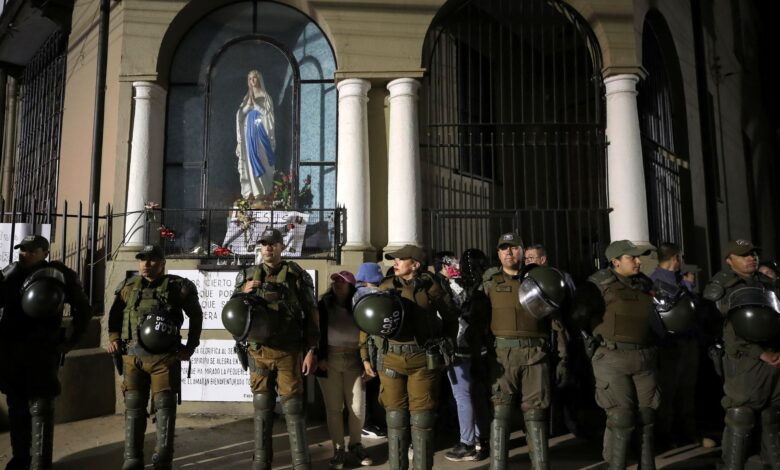
Immediate security measures were implemented to maintain public order during the period of darkness. The government established a nationwide curfew from 10:00 pm to 6:00 am on Wednesday (01:00 to 09:00 GMT). This restriction applies across the entire country, stretching from the northernmost port of Arica to the southern region of Los Lagos. The Ministry of the Interior confirmed the deployment of armed forces across the nation to support civil authorities and ensure stability throughout the 4,300-kilometer-long territory along the southern Pacific coast.
The outage highlights vulnerabilities in Chile’s electrical grid infrastructure, which relies on long-distance transmission lines to distribute power across its geographically diverse and elongated geography. The failure in the north propagated through the system, resulting in a cascading loss of power that affected the majority of the population. While the specific technical details of the line failure were not detailed in immediate official statements, the identification of the transmission infrastructure as the root cause points to critical dependencies within the national grid network.
The incident has drawn sharp criticism toward the private entities involved in energy distribution and transmission. President Boric’s comments reflect a broader political and social frustration with the reliability of essential services managed by the private sector. By imposing a state of emergency, the government has invoked special legal powers to coordinate the response, manage resource allocation, and enforce public safety measures that exceed normal operational protocols.

As the immediate crisis unfolds, the focus shifts to the restoration of power and the subsequent investigation into the cause of the transmission line failure. The deployment of military forces and the enforcement of the curfew are expected to remain in effect until the situation stabilizes and normalcy is restored. The next phase will involve a detailed technical audit of the infrastructure to determine how the failure occurred and to assess the necessary upgrades to prevent similar large-scale outages in the future.