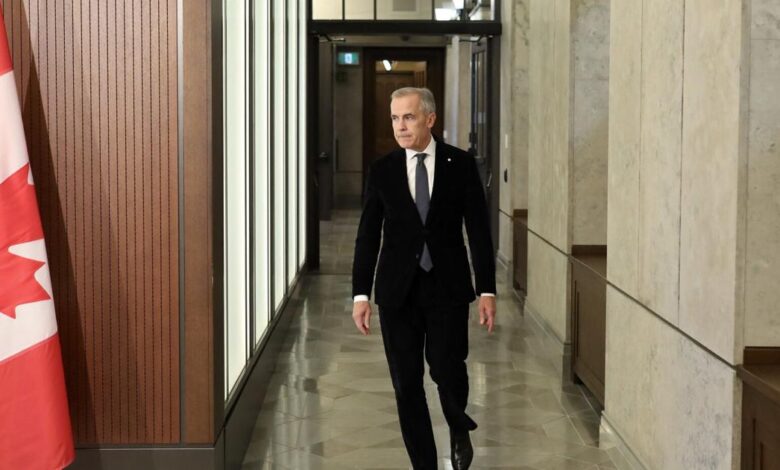
Carney specifically addressed calls to abolish the unelected Senate, a long-standing demand among Alberta separatists. While acknowledging the argument that the Senate is unelected, he argued that Alberta’s representation is secured through the elected House of Commons, where the province has gained seats due to population growth. “The constitution is not unamendable, to be clear,” Carney stated. “But it requires building a real consensus around what’s necessary to change and why it should change.”
The prime minister emphasized that his government is already working with provinces on immigration reform and investment rules. He described the federal approach as “cooperative federalism,” citing progress made with Quebec, Newfoundland and Labrador, Ontario, and Atlantic provinces. Carney urged Albertans to vote “no” to nine specific demands for more provincial power over immigration and judicial appointments, as well as to the broader question of independence. “I get the point about an unelected Senate,” he said, “but I’m not open to it without laying the groundwork for consensus.”
The constitutional amending formula, developed by former Alberta Premier Peter Lougheed, requires a unanimous vote by all provinces, the House of Commons, and the Senate for major changes, such as altering the Senate itself. For other changes, it requires the support of seven out of 10 provinces representing more than 50 per cent of the population. Alberta Premier Danielle Smith stated on Friday that she believes this latter threshold can now be met, given conservative-leaning governments in eight provinces.
Separatist leaders have criticized Carney’s approach. Lawyer Keith Wilson, a leader of separatist voices, described the prime minister’s gestures as “temporary and relationship-based” rather than structural or statutory. Wilson argued that without actual structural reforms, Albertans remain vulnerable to federal policies such as a national energy program or export taxes.
In a separate speech in Calgary on Thursday, Carney urged voters to reject separatism, warning that “the world has become more dangerous and divided.” He referenced external pressures, noting that some outside Canada are “working to break us,” though he did not name U.S. President Donald Trump, who suggested on Wednesday that Canada should become the 51st state. A Leger poll from early October indicates 70 per cent of Albertans wish to remain in Canada. Carney highlighted the government’s commitment to the province, including the promotion of the Pacific Link pipeline, which he said will create 140,000 jobs and reduce dependence on the United States.
Former Progressive Conservative deputy premier Thomas Lukaszuk, who campaigned for the “remain” side, stated that a decisive victory is necessary to send a clear signal of unity. “Certainly, (a) 50 per cent plus one vote would not do it, but in the realm of 70 per cent and higher would definitely send a very clear signal,” Lukaszuk said. The outcome of the vote will determine the political momentum for both the separatist movement and federalist efforts to secure Alberta’s place in Confederation.