
The government cited financial constraints as the primary reason for the pullout, stating that hosting the continental tournament is not currently a national priority. This stance contradicted the position of the Botswana Football Association, which had argued that the financial guarantee was not mandatory at the initial stage of the bidding process. Football authorities expressed disappointment, noting that the original three-country structure was designed to share the financial and logistical burden of hosting a 24-team tournament.
“There is disappointment because this was a good opportunity to host, given that the hosting load would have been shared among three countries,” a source told Mmegi. The original proposal envisioned matches being staged in Gaborone and Francistown. The plan included utilizing Francistown’s existing stadium infrastructure while renovation work was carried out at the National Stadium in Gaborone, an arrangement intended to reduce travel costs between venues.

The withdrawal comes against a backdrop of significant economic pressure on Botswana, a major global producer of rough diamonds. Diamonds typically account for approximately one-third of government revenue and three-quarters of the country’s foreign-exchange earnings. A prolonged downturn in the global diamond market has weakened the country’s growth and fiscal balances, contributing to widening deficits and rising public debt.
Production figures illustrate the scale of the industry’s slowdown. Botswana’s rough-diamond production fell by 16% in 2025 to 15.1 million carats, down from 17.9 million carats in the previous year. Production in the fourth quarter plunged 56% year-on-year to 1.88 million carats, partly due to maintenance shutdowns at the Jwaneng and Orapa mines. Finance Minister Ndaba Gaolathe noted in September that while the projected budget deficit had been revised down to P9.26 billion, or 3.1% of GDP, from an earlier forecast of P26.35 billion, or 8.9% of GDP, containing expenditure remains critical as structural fiscal pressures persist.
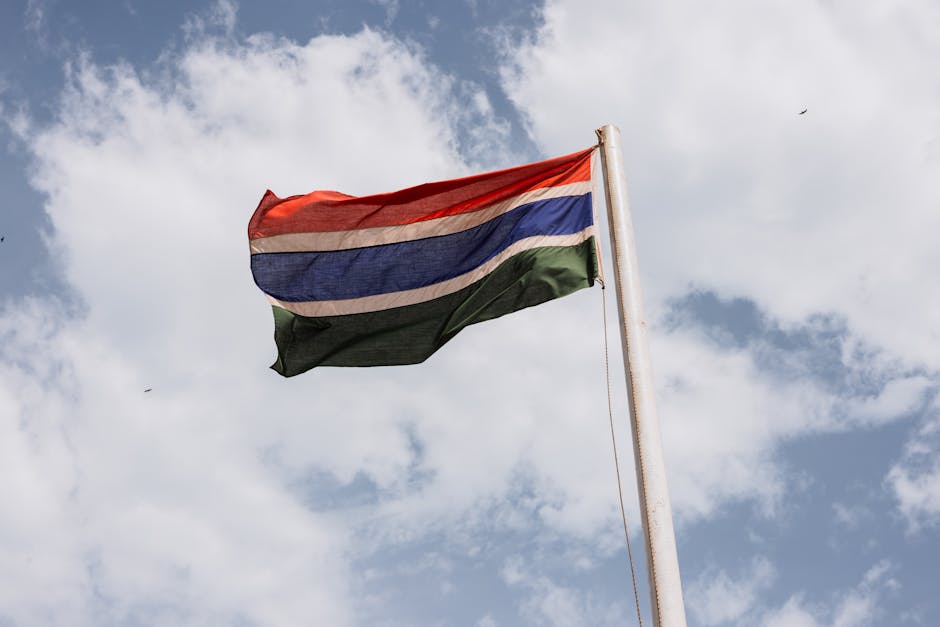
Botswana’s exit represents a second setback in its recent efforts to host the tournament. The country had previously expressed interest in hosting the 2027 AFCON, but CAF awarded those rights to a joint bid from Tanzania, Kenya, and Uganda. While hosting even a portion of the 2028 tournament could have generated tourism and hospitality revenue, the country’s role would have been smaller compared to the full host nation. The 2023 tournament in Côte d’Ivoire, for instance, generated an estimated $1.52 billion in local economic impact.
With Botswana’s departure, South Africa and Zimbabwe will now continue the hosting process with CAF as a joint bid. CAF will ultimately determine which country or combination of countries is awarded the rights to host the 2028 edition. Further details regarding the remaining bids and the next stages of the qualification process are expected from the confederation.
