
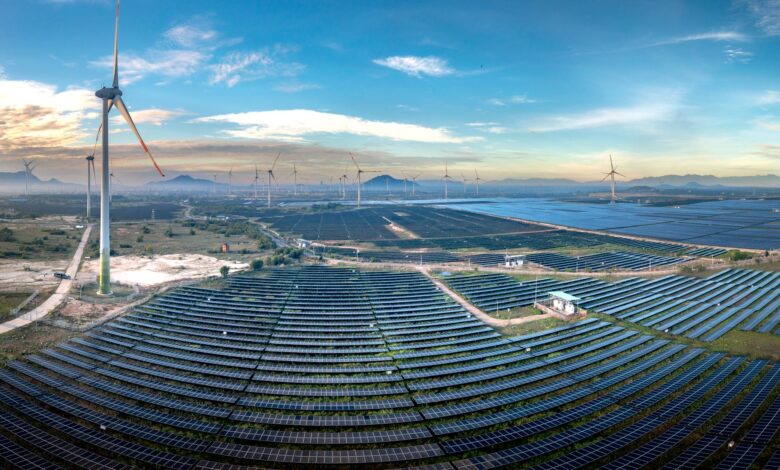
The statement, made by President Tharman, underscores a strategic alignment between Singapore and Malaysia, two of the region’s most economically integrated and technologically advanced economies. By framing this ambition as a collective ASEAN goal rather than a bilateral initiative, the leaders are positioning the broader region to compete in the emerging global market for renewable energy infrastructure, clean technology, and sustainable industrial processes. The core of this vision is not merely environmental policy but economic statecraft, aiming to capture the substantial investment flows and trade advantages associated with the global green economy.
Economic Implications of a Regional Green Pivot
For an organization of ten diverse member states, the push to become a “green energy powerhouse” carries profound economic implications. Currently, ASEAN nations are heavily integrated into global supply chains for electronics, manufacturing, and logistics. A shift toward green energy requires massive capital investment in solar, wind, and potentially hydrogen infrastructure, as well as the modernization of power grids to handle decentralized energy sources. This transition offers an opportunity for the region to reduce its long-term energy costs, which have historically been volatile due to reliance on imported fossil fuels.
Malaysia and Singapore, in particular, possess complementary strengths that could drive this initiative. Singapore, with its limited land area but advanced financial and technological sectors, is well-positioned to serve as a hub for green finance, research and development, and high-value clean tech manufacturing. Malaysia, with its vast land area, existing energy infrastructure, and significant natural gas reserves, offers the physical space and current energy base necessary for a gradual and manageable transition to renewables. Together, their collaboration can model a pathway for other ASEAN members with varying levels of development and resource endowments.
Strategic Positioning in the Global Energy Market
The timing of this shared vision is critical. As major economies in Europe, North America, and Asia implement stricter carbon regulations and demand lower-carbon supply chains, ASEAN nations face both pressure and opportunity. By proactively positioning the region as a green energy leader, ASEAN aims to attract foreign direct investment (FDI) from corporations seeking to decarbonize their operations. This could lead to the establishment of new industrial clusters focused on battery storage, solar panel manufacturing, and green hydrogen production, creating high-skilled jobs and boosting export revenues.

However, the path to becoming a green energy powerhouse is not without challenges. The transition requires substantial upfront capital, technical expertise, and policy coordination across ten different national jurisdictions. Disparities in economic development within ASEAN mean that some member states may struggle to finance the necessary infrastructure upgrades, potentially creating a two-tiered regional market. Furthermore, the speed of the global energy transition is influenced by external factors, including technological breakthroughs, global commodity prices, and the pace of climate policy implementation in major economies. While Singapore and Malaysia have aligned on the vision, the execution will depend on the ability of all ASEAN members to collaborate on standards, trade rules, and cross-border energy trading mechanisms.
The shared vision for ASEAN to become a green energy powerhouse represents a strategic bet on the future of the global economy, leveraging regional strengths to drive sustainable growth.
For businesses operating in the region, this signals a shift in risk and opportunity. Companies in the energy, manufacturing, and logistics sectors will need to adapt to new regulatory environments and consumer preferences for low-carbon products. Investors may see increased interest in green bonds and sustainable infrastructure projects, while traditional fossil fuel industries may face greater pressure to diversify or face declining demand. The alignment between Singapore and Malaysia provides a stable anchor for this transition, offering a clear signal to global investors that the region is committed to a long-term green strategy.
As the Asian market continues to grow in importance, the green energy transition is no longer just an environmental imperative but a core economic driver. The shared vision articulated by President Tharman and Malaysian leaders sets the stage for a decade of intense investment, innovation, and policy development across Southeast Asia. The success of this endeavor will be measured not only by the gigawatts of renewable capacity installed but by the region’s ability to create a competitive, sustainable, and resilient economic ecosystem for the 21st century.