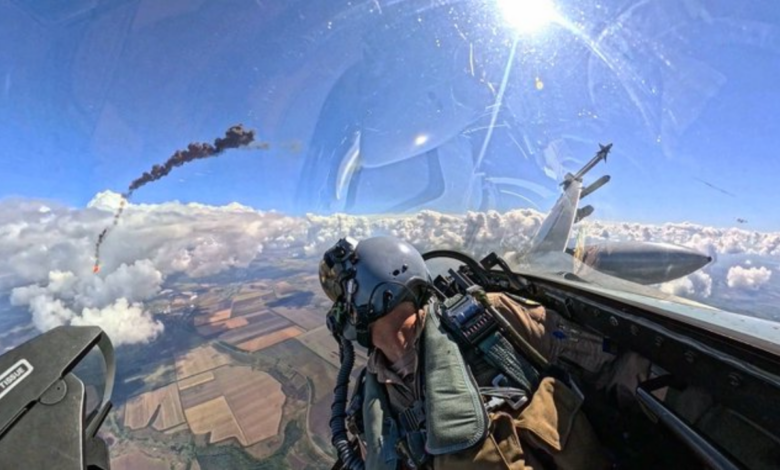
The Geran series drones are reported to possess characteristics that differentiate them from earlier iterations, specifically regarding their velocity and operating ceiling. While specific technical specifications remain limited in public domain, the operational impact is described as a strain on Ukraine’s existing air defense resources. The use of F-16s indicates an effort to leverage agile, multi-role aircraft to engage these threats in the air, potentially reducing the dependency on costly surface-to-air missiles for drone interception. This development underscores the evolving nature of the conflict, where drone warfare is forcing the rapid adaptation of both offensive and defensive military doctrines.
In a separate development highlighting parallel advancements in military aviation technology, India’s Defence Research and Development Organisation (DRDO) has announced the development of a turbojet engine for future military applications. This domestic engine capability is a critical component for increasing self-reliance in military aviation and missile systems. The development is directly linked to the Agniveg loitering munitions, which demonstrate India’s capability to strike high-value targets with efficiency. The integration of domestically produced propulsion systems with advanced munitions reflects a broader strategic objective to reduce reliance on foreign technology for critical defense platforms.
The Agniveg loitering munitions are designed for precision strikes, allowing for extended loitering times over target areas before engagement. The underlying turbojet engine technology developed by DRDO supports these capabilities by providing the necessary thrust and efficiency for sustained flight. This advancement positions India to enhance its long-range strike capabilities and offers potential export opportunities in the field of unmanned combat aerial vehicles and cruise missiles. The focus on turbojet engines specifically suggests a move toward higher-speed, longer-range platforms compared to earlier propeller-driven or rocket-powered prototypes.
Both developments illustrate a global trend toward the integration of advanced unmanned systems and the rapid adaptation of air defense strategies. For Ukraine, the immediate challenge is the effective interception of a growing variety of drone types that exploit vulnerabilities in layered defense systems. The deployment of F-16s is a tactical response to this specific threat vector, though the long-term sustainability of this approach depends on the availability of fuel, maintenance support, and pilot proficiency. For India, the successful development of a military-grade turbojet engine marks a significant milestone in its defense industrial base, enabling the production of more capable and independent military hardware.
Future deployments of F-16s in Ukraine are expected to be closely monitored for their efficacy against high-speed drone threats. Meanwhile, India is likely to proceed with testing and refinement of its turbojet engines for integration into various military platforms, including the Agniveg series. These parallel developments in Eastern Europe and South Asia highlight the increasing importance of unmanned systems and indigenous propulsion technology in modern military strategy.