
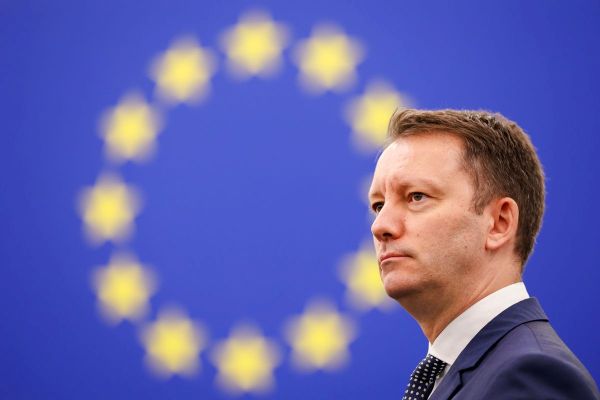
The crisis deepened following the nomination of Siegfried Mureșan, a member of the European Parliament and representative of the centre-right National Liberal Party (PNL), as prime minister by President Nicușor Dan on September 17. Mureșan was selected after two previous nominees failed to secure a parliamentary majority. However, leaders from both the Social Democratic Party (PSD) and the right-wing extremist Alliance for the Union of Romanians (AUR) have explicitly stated they will not support his candidacy. This bipartisan opposition creates a significant hurdle for forming a stable administration, raising the prospect of early elections rather than a functional government capable of implementing necessary reforms.
The political turmoil follows the removal of Prime Minister Ilie Bolojan from office in May via a no-confidence motion jointly submitted by the PSD and AUR. Bolojan had been leading a pro-European coalition focused on fiscal consolidation, including tax increases, freezes on public-sector wages and pensions, and reductions in state spending. Despite the political friction, his administration achieved tangible results, notably receiving a favorable preliminary assessment from the European Commission on May 14 for Romania’s fourth payment request of €2.62 billion under the Recovery and Resilience Facility (RRF). The Commission recognized that Romania had satisfactorily fulfilled 38 milestones and 24 targets outlined in the Council Implementing Decision, a testament to the substantial fiscal reforms implemented during Bolojan’s tenure.

However, the momentum for fiscal progress has stalled. Fitch notes that Romania requires an additional deficit adjustment of approximately 1.5 percentage points of GDP to stabilize public debt growth. The drafting of the 2027 budget and the outlining of a credible plan to meet the European Union’s 3% deficit target are now critical to avoiding a downgrade. The agency maintains Romania’s rating at BBB-, the lowest investment-grade tier, with a negative outlook. This assessment was reaffirmed in July after the government challenged the initial evaluation. Romania had narrowly avoided a downgrade two months prior, but the failure to appoint a prime minister with a stable majority has rekindled concerns among investors.
The economic stakes are high. Romania is currently striving to avoid recession while combating the highest inflation rate within the European Union. The political crisis introduces a new layer of uncertainty into the EU’s economic fabric, particularly as the country works to align its economic framework with its obligations as a member state. The PSD and AUR appear more focused on their respective political agendas than on the country’s broader economic interests, a dynamic that has complicated the implementation of austerity measures necessary for long-term stability.
President Dan has emphasized the urgency of establishing a credible government, citing Mureșan’s extensive experience in the European Parliament, where he has served since 2014 and currently acts as vice chair of the European People’s Party group. Despite this, the lack of a clear majority leaves the new administration with a difficult mission. The government’s ability to present a credible fiscal plan will be the primary determinant of its creditworthiness in the upcoming review cycle.

Investor sentiment remains fragile. While Fitch’s next full rating review is scheduled for January 2027, the immediate outlook is clouded by the political standoff. Standard & Poor’s is set to announce its own rating review results on October 2, adding another layer of scrutiny to Romania’s fiscal position. The convergence of political paralysis, high inflation, and debt sustainability concerns means that any further delay in forming a stable government could accelerate the loss of investor confidence, potentially pushing the country into non-investment grade territory before the formal review date.
The resolution of this crisis hinges on whether political actors can set aside partisan agendas to prioritize economic stability. Without a stable government capable of enforcing fiscal discipline, Romania risks not only a credit downgrade but also a deeper economic slowdown, with significant implications for borrowing costs, public investment, and consumer confidence across the region.