
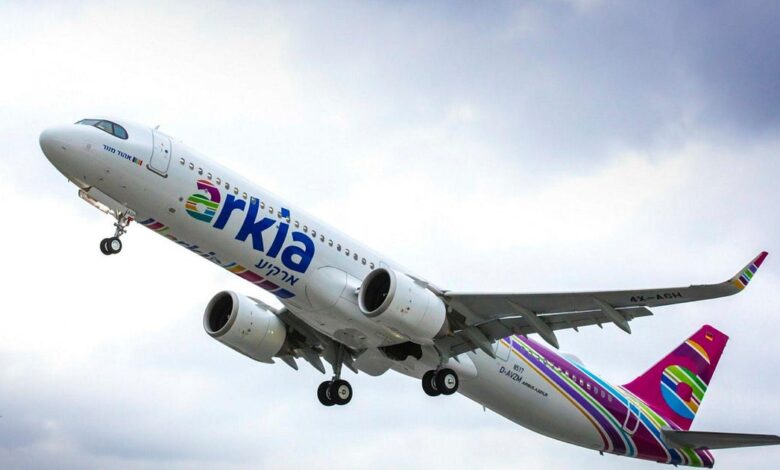
The incident, which concluded without any reported disruptions to general airspace operations, has now entered a phase of internal review by the airline. While the immediate threat to the safety of the passengers and crew was non-existent, the event highlighted the rapid response protocols in place between NATO’s Combined Air Operations Center and national air forces. Hungarian Prime Minister Péter Magyar stated that the system operated efficiently throughout the incident, noting that standard air policing procedures were followed from the moment the loss of contact was detected until the aircraft exited Hungarian airspace at approximately 8:10 p.m. local time.
Arkia, the Israeli carrier operating the flight, issued a statement confirming that the flight crew operated in accordance with the approved flight plan and predetermined routes. The airline described the lapse as a temporary technical malfunction, specifically citing a “frequency fluctuation” as the likely cause. “At a certain stage during the flight, communication between the aircraft and the Hungarian air traffic control unit was lost,” the airline said. “To the best of our understanding, following the loss of communication, the Hungarian authorities decided to deploy a military aircraft that approached the plane, after which contact with the flight crew was restored.”
The deployment of military assets in response to a civilian aircraft is a standard procedure under NATO air policing mandates, designed to identify and secure any aircraft that becomes unresponsive or deviates from its expected trajectory. In this case, the alert status was raised to its highest level, a precautionary measure to ensure the safety of the aircraft and the surrounding airspace. Once the Gripen jets established visual confirmation of the Arkia flight, the alert was effectively resolved, and the aircraft was guided safely out of the controlled zone.
Authorities have not yet determined the precise root cause of the initial communication breakdown, though the preliminary assessment points to equipment-related issues rather than any external threat or security violation. No additional operational disruptions were reported during the event, and the flight proceeded to its destination in Prague without further incident. The airline emphasized that at no point during the flight was there any danger to the aircraft, its passengers, or its crew.
The incident is now under joint examination by Arkia and Hungarian authorities. The airline’s internal review will scrutinize the circumstances surrounding the loss of contact, aiming to determine if any preventive measures could have been taken or if the technical malfunction was an isolated event. This collaborative investigation is standard practice for such aviation anomalies, ensuring that all technical and procedural aspects are thoroughly documented to prevent recurrence.
For the passengers and crew of the Arkia flight, the event likely manifested as a brief period of uncertainty followed by the sight of military jets in close proximity. However, the outcome remained uneventful, with the aircraft landing safely at its final destination. The episode serves as a reminder of the complex coordination required between civilian aviation and military air policing structures within European airspace. While the loss of contact was brief and resolved through established protocols, it underscores the critical importance of reliable communication systems in modern air travel.
As the investigation proceeds, attention will turn to the technical findings regarding the frequency fluctuation. The partnership between the airline and Hungarian authorities will be crucial in verifying the technical parameters of the incident. Until the final report is released, the event remains categorized as a technical anomaly rather than a security breach. The swift and coordinated response by NATO and Hungarian forces ensured that the airspace remained secure and that the flight was able to complete its journey without deviation from its intended path.