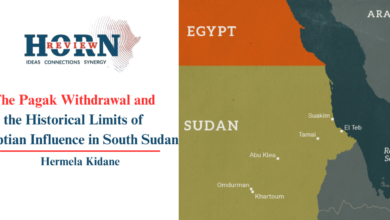

The decision comes in the wake of a rapid deterioration in relations between Khartoum and Addis Ababa. Following drone attacks that Sudanese authorities traced to Ethiopian territory, Ethiopia revoked the accreditation of Sudan’s ambassador-designate. Senior Sudanese military sources indicated that Khartoum’s responses could extend beyond interception operations to include strikes on the platforms launching the attacks. Wary of this widening cross-border drone war, South Sudanese security officials concluded that the risks posed by potential spillover outweighed the political costs of straining ties with Cairo. By forcing the withdrawal, Juba aims to ensure its territory is not viewed as part of hostile operations against either neighbor.
For Egypt, the closure carries substantial strategic implications. The base served as a key intelligence foothold for Cairo, which has long been engaged in a complex diplomatic and technical dispute over the Grand Ethiopian Renaissance Dam (GERD). As Ethiopia launches tenders for new dams on the Blue Nile, the loss of this proximity limits Egypt’s ability to monitor developments directly on the ground. Cairo has been actively maneuvering within the Nile Basin, recently seeking to pull Uganda out of Ethiopia’s orbit and accelerate ongoing projects in Sudan. The removal of the military station removes a tangible instrument of Egyptian influence in a region where water security remains a primary driver of geopolitical tension.

Despite the hardening of security postures, diplomatic channels between Juba and Cairo remain open, particularly regarding humanitarian issues. South Sudanese Ambassador to Egypt, Kuol Nyok Kuol Arop, recently met with Pope Tawadros II of the Coptic Orthodox Church in Cairo to discuss support for South Sudanese refugees and vulnerable families. During the audience, the ambassador conveyed the government’s gratitude for the Church’s humanitarian efforts, which have provided critical support to communities facing difficult circumstances in Egypt. The meeting highlighted enduring bilateral bonds, with both sides reaffirming commitments to cooperation in social development and people-to-people engagement.
However, underlying social tensions could complicate these diplomatic efforts. Growing reports of arrests, detention, and deportations of South Sudanese citizens in Egypt have raised concerns within affected communities. For many South Sudanese, Egypt has been a destination for safety, education, and economic opportunity over the years. Incidents of family separation, where parents are detained or deported while children remain behind, have generated significant anxiety and potential public anger. Human rights advocates warn that if such incidents intensify, they could become a source of friction, pressuring the South Sudanese government to take stronger diplomatic action to defend its citizens abroad.
International organizations are likely to play a mediating role in both the security and humanitarian dimensions of this unfolding situation. Agencies focused on refugee protection and child welfare are expected to encourage transparency and facilitate dialogue to prevent further escalation. For now, the immediate pressure point remains the military withdrawal. If implemented, the move will strip Egypt of its last major intelligence presence in the immediate vicinity of the GERD, forcing Cairo to rely more heavily on long-range surveillance and diplomatic leverage. The next critical development will be whether Egypt complies with the closure order and how Juba manages the resulting diplomatic chill while simultaneously navigating the humanitarian needs of its diaspora in Cairo.