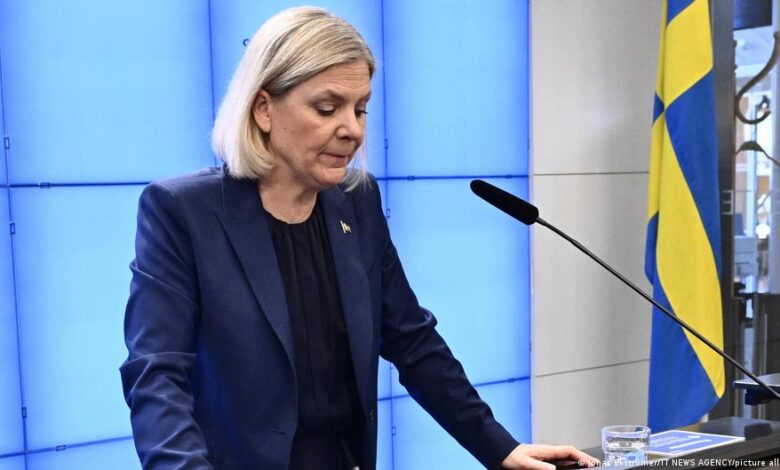
Andersson stated that discussions with potential coalition partners made it impossible to form a stable government. “Based on the discussions I have had, I can conclude that, as things currently stand, it is not possible for me to form a government,” she told reporters. Her return of the mandate comes after the Left Party, a key partner in her proposed coalition, decided to support a center-right candidate for the position of Parliament Speaker in a vote scheduled for Monday. This procedural move effectively blocked the center-left bloc from securing the necessary control over the legislative agenda.
The center-left alliance, comprising the Social Democrats, the Greens, the Center Party, and the Left Party, won 176 of the 349 seats in the Riksdag. This gave them a slim majority over the outgoing right-wing alliance, which secured 173 seats. The popular vote difference between the two blocs was approximately 50,000 votes. However, deep ideological divisions within the bloc, particularly between the centrist Center Party and the socialist Left Party, proved insurmountable for coalition building.
With Andersson’s attempt concluded, the Speaker of Parliament is expected to invite another party leader to attempt government formation. Ulf Kristersson, the leader of the center-right Moderate Party and current caretaker Prime Minister, is the likely next candidate. Kristersson’s bloc, which includes the far-right Sweden Democrats, did not achieve an absolute majority in the election. Consequently, any new government led by the right-wing alliance would likely require support from the Center Party to pass legislation.
Center Party leader Elisabeth Thand Ringqvist has already ruled out supporting a government that grants influence to either the Sweden Democrats or the Left Party. This stance creates a significant hurdle for Kristersson, as his party has indicated a willingness to bring the far-right Sweden Democrats into the governing coalition. The political deadlock leaves Sweden without a new formal government more than two weeks after the vote, a situation that, while protracted, is not unprecedented in the country’s history.

Sweden has experienced significant delays in government formation in recent cycles. It took 37 days to establish a government following the 2022 election and a record 134 days after the 2018 vote. The current impasse underscores the difficulty of building coalitions in a highly fragmented parliament where no single bloc holds a comfortable majority.
Andersson’s decision does not definitively end her chances of becoming Prime Minister. If subsequent attempts by other party leaders fail, she could be asked to return to the negotiating table. However, the immediate outcome of her mandate’s return is a renewed focus on whether the right-wing bloc can secure the necessary cross-party support to remain in power, or if the political stalemate will extend further into the new parliamentary term.