
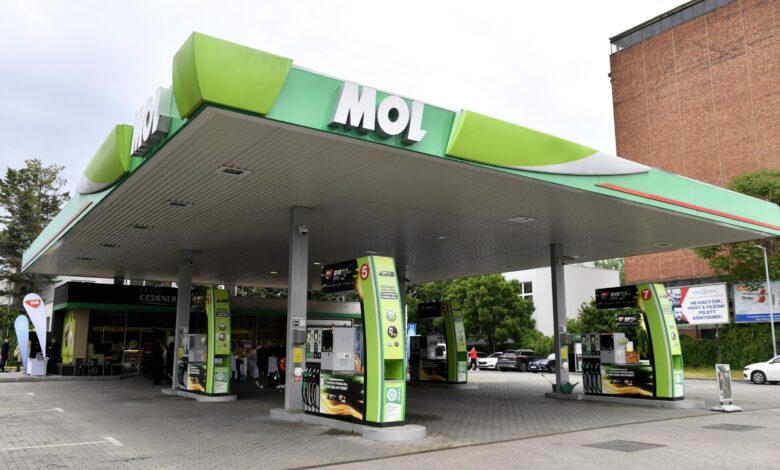
Under the proposed arrangement, retailers would receive diesel at a fixed official price and be permitted to resell it only at that same rate, eliminating any room for profit. László Gépész, President of the FBSZ, warned that many independent stations may restrict sales once current inventories are low, while others could temporarily close as reserves are exhausted. He cautioned that such a scenario could trigger a cascade of closures, potentially replicating the fuel shortages seen in Hungary in 2022. The association argues that the sector’s business model has become unsustainable, noting that independent stations generate approximately 400 billion forints in annual tax revenue while absorbing losses, with previously promised government support failing to materialize.
MOL has rejected suggestions that the country’s fuel supply is under threat. In a statement, the company confirmed that diesel volumes from state strategic reserves could be depleted by midnight on Wednesday but stressed that it would continue supplying partners using its own production capacity to ensure uninterrupted nationwide availability. MOL maintained that the supply of both petrol and diesel remains stable, directly contradicting the FBSZ’s assessment of an impending crisis. The Ministry of Economy and Energy has also emphasized that energy security is its top priority, citing efforts since the end of March to double strategic reserves compared to their spring low point.

Logistical Constraints and Reserve Depletion
Despite official reassurances, market participants report deep cracks in the supply chain. The FBSZ notes that purchase prices for imported fuel have surpassed domestic retail prices, closing the window for economically viable imports. This economic pressure is compounded by significant logistical obstacles, including persistently low water levels on the Danube, which have disrupted inland waterway transport of diesel. Simultaneously, major railway reconstruction projects in neighboring countries are causing significant delays in rail transport. Data indicates that strategic diesel reserves fell by 58,800 metric tons between June 30 and July 9, a reduction whose specific beneficiary and necessity remain unclear to market observers. Several wholesalers have reportedly begun rationing diesel allocations, further tightening the available supply.
The situation arises against a backdrop of rising wholesale fuel costs. Following a recent increase in international crude oil prices, the wholesale price of 95-octane petrol in Hungary is set to rise by HUF 8 per litre, while diesel will increase by HUF 9 per litre from Tuesday. While retailers determine their own pump prices, these wholesale hikes are expected to be reflected at the station level in the coming days. The price increases have renewed debate over potential government intervention. In late June, the Hungarian Parliament approved legislation that phases out the previous price-cap system but allows for the reintroduction of temporary caps in extraordinary circumstances if market conditions or supply security require it. No such measures have been announced, though the legal framework is now in place.
Hungary previously capped fuel prices between November 2021 and December 2022, limiting the price of petrol and diesel to HUF 480 per litre. That measure was eventually abandoned after supply shortages emerged and several filling stations struggled to obtain sufficient fuel. While the government points to strengthened energy security, with strategic crude oil reserves now sufficient for 87 days—almost double the 44-day level recorded in previous years—the immediate concern remains the viability of the retail network. The FBSZ has called for urgent professional consultations and the swift removal of temporary market regulations that it argues distort competition and threaten supply security. The next critical milestone is the transition from strategic reserve supplies to fixed-price distribution scheduled for Thursday.