

Emergency Response and Containment
Initial reports indicated that the train “split apart” before derailing. The force of the crash ignited a fire that engulfed several tankers and the locomotive. Eyewitnesses described flames reaching heights of up to 20 meters, while a massive plume of dense black smoke was visible for several kilometers. Drone footage released by the Czech fire service showed badly charred and destroyed tankers, some of which were still emitting thick smoke during the initial containment efforts.
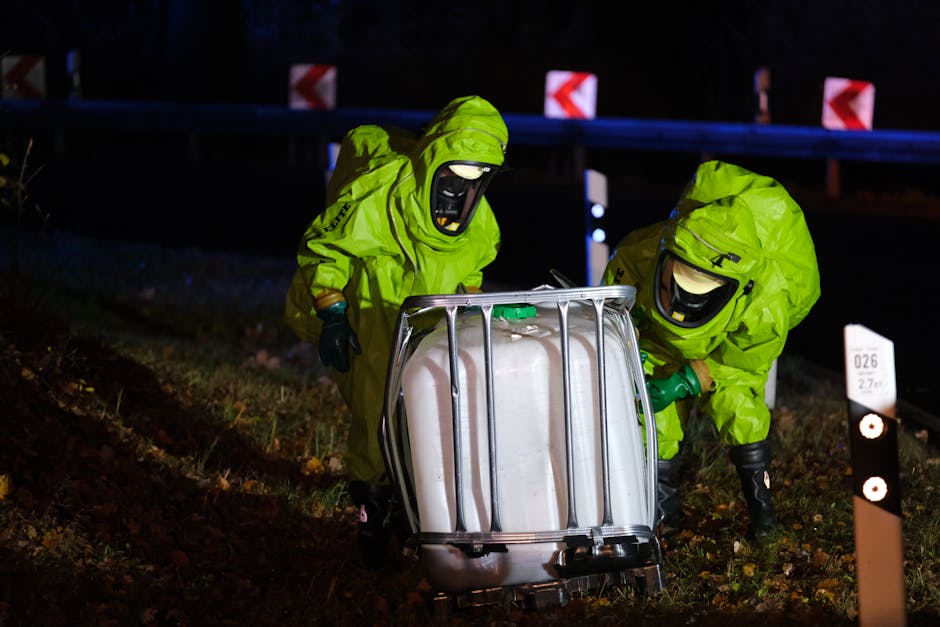
Firefighters from multiple regions were deployed to the scene, accompanied by a mobile chemical laboratory to monitor air quality. To prevent the fire from spreading to the remaining cargo, crews used heavy foam suppression systems and hosed down intact tankers to mitigate the risk of further explosions. A helicopter was also utilized in the operation. It took several hours for emergency services to bring the fire under control.
The incident caused a secondary disaster when a nearby electric substation caught fire, cutting power to Hustopeče. As a precaution, residents in the area were instructed to stay indoors and keep windows and doors closed. Although the fire produced significant smoke, officials stated that air quality levels had not yet exceeded established pollution limits.
Cargo and Environmental Implications
The train was transporting 17 tankers of benzene. According to a fire department spokesperson, Lucie Balážová, the fire affected approximately 15 of these tanks. Each tanker holds an estimated 60 tonnes of the substance. Balážová noted that while the volume is significant, not all of the chemical necessarily burned or leaked, and the exact quantity released is still being specified.
Benzene is a colourless or light-yellow liquid with a sweet smell that evaporates rapidly. It is a known carcinogen to humans and is highly flammable. The chemical is a component of aircraft fuel and is widely used in the production of plastics, resins, nylon, certain dyes, pesticides, and detergents. Due to its toxicity and volatility, the release of benzene into the environment poses specific health risks, necessitating the immediate evacuation of nearby residents and the deployment of specialized monitoring equipment.

Impact and Investigation
The financial impact of the derailment has been estimated at 125 million Czech koruna (approximately £4.1 million). The damage includes the destruction of the locomotive, the charred tankers, and the adjacent electric substation. Police have launched an investigation to determine the cause of the derailment. The incident highlights the risks associated with the transport of hazardous materials by rail, particularly when failures result in the rupture of multiple containment units simultaneously.
Regulators and emergency services are expected to assess the long-term environmental impact of the benzene release. While immediate air quality readings remained within legal limits, monitoring will likely continue for several days to ensure that residual vapors or ground contamination do not pose ongoing health hazards to the local community.
