

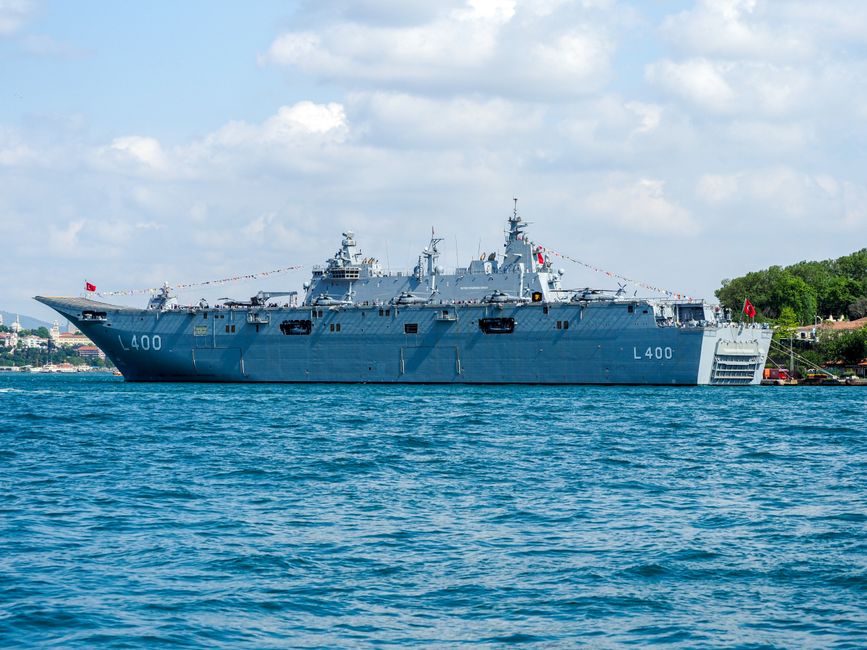
Spectators gathered along the strait’s banks, while several Bosphorus commuter ferry lines were temporarily suspended to accommodate the event. The parade, commanded by War Fleet Commander Baybars Küçükatay, included submarines, frigates, and assault boats. The Defense Ministry announced that 13 of the participating ships would subsequently visit 13 ports to open for public tours, extending the celebration to broader civilian audiences.
The commemoration serves as a bridge between historical narrative and contemporary military capability. The Battle of Preveza, fought in late September 1538, pitted the Ottoman navy against the Holy League, a coalition of the Papal States, the Republic of Venice, the Knights of Malta, and Spain. The alliance was formed in response to Ottoman expansion, with Venice seeking to protect its commercial interests after losing several islands. Genoese admiral Andrea Doria led the Holy League’s 262 ships, while Barbaros Hayreddin commanded the Ottoman fleet. Despite being outnumbered, Ottoman forces exploited the weather and the maneuverability of their galleys to sink numerous enemy vessels, forcing Doria to retreat to Corfu. This victory secured Ottoman dominance in the eastern Mediterranean for centuries.
In the modern era, this historical legacy is increasingly tied to Türkiye’s growing local defense industry and its “Blue Homeland” maritime doctrine. President Recep Tayyip Erdoğan issued a statement describing the 1538 victory as a turning point that “turned the Mediterranean into a Turkish sea,” referring to current naval personnel as “defenders of the Blue Homeland.” The concept of the Blue Homeland refers to Türkiye’s defined maritime borders and interests, which have become a central pillar of national security policy.
Energy Minister Alparslan Bayraktar linked the historical victory to contemporary energy independence efforts, noting that Türkiye has developed a significant energy fleet in recent years. He stated that the country now possesses six drill ships and two seismic research vessels, including new ships named after historical admirals, positioning Türkiye as having the world’s fourth-largest energy fleet. This expansion of maritime infrastructure underscores the strategic importance of sea control not only for defense but also for resource exploration and energy security.
Defense Minister Yaşar Güler hosted Navy Commander Admiral Ercüment Tatlıoğlu and senior officers during the ceremony, asserting that the Turkish fleet “has become one of the most powerful naval forces in the world.” The Ministry released media highlighting the modern navy’s diverse capabilities, including frigates, submarines, amphibious assault vehicles, and unmanned aerial systems. These platforms reflect a shift toward a multi-domain naval force capable of operating in both littoral and blue-water environments.

The timing of the celebration coincides with ongoing diplomatic and military developments in the broader region. While the parade focused on historical continuity and domestic pride, Turkish Cypriot President Tufan Erhürman noted on September 26 that the Greek Cypriot side had submitted a request to the United Nations and the Security Council to prevent the Turkish Cypriot delegation from meeting international representatives in New York. This diplomatic friction highlights the continued relevance of maritime and territorial disputes in the Eastern Mediterranean, where Turkish naval presence is a key variable in regional security calculations.
The Bosphorus parade thus functions as both a historical ritual and a demonstration of current strategic intent. By showcasing the TCG Anadolu and other modern assets alongside the commemoration of Barbaros Hayreddin, the Turkish military reinforces the narrative of an unbroken maritime tradition. As the fleet continues to expand its operational reach and technological sophistication, the legacy of Preveza remains a foundational element of Türkiye’s identity as a dominant Mediterranean power.
