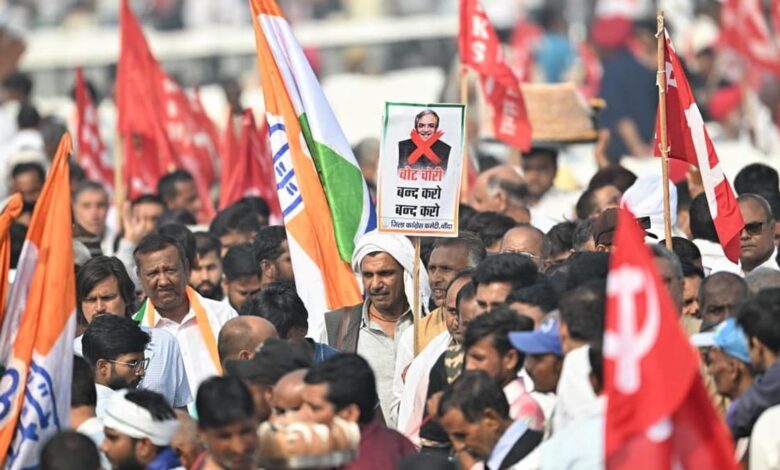
The central political dispute revolves around a voter list revision exercise that the Election Commission of India (ECI) states is necessary to update the rolls by purging the names of deceased individuals or those who have relocated. However, opposition parties allege that the exercise has removed 130 million names from the draft rolls, a move they argue systematically disadvantages them by eliminating eligible voters. The INDIA bloc accuses the CEC and the ruling Bharatiya Janata Party (BJP) of “vote chori” (theft), claiming the process is designed to benefit Prime Minister Narendra Modi’s government. Both the BJP and the ECI have firmly denied these allegations, with the Commission stating that wrongly deleted voters can re-enroll and that the process does not favor any political party.
The controversy was intensified in September by an investigation from The Indian Express, which reported that CEC Gyanesh Kumar made key decisions regarding the revision exercise without the agreement of the other two election commissioners. According to the report, the other commissioners had raised objections on more than a dozen occasions. The Election Commission responded by asserting that differences of opinion are normal within any institution and do not affect its functioning. Despite this official reassurance, the opposition has maintained that the lack of consensus highlights a procedural breach that undermines the integrity of the electoral process.
The current rally is the culmination of a sustained campaign of pressure that has included near-daily demonstrations in Delhi and other Indian cities since last month. These protests have been supported by the INDIA alliance, student groups, and the youth-led Cockroach Janta Party (CJP). The intensity of the movement was further underscored on the Saturday preceding the main rally, when opposition leaders staged a symbolic impeachment of Kumar at the residence of Congress President Mallikarjun Kharge. In this mock parliamentary session, presided over by former Lok Sabha Speaker Meira Kumar, leaders accused the election chief of “conspiring to steal elections.” Kharge, who serves as the Leader of the Opposition in parliament’s upper house, moved a symbolic motion seeking Kumar’s removal. While the event was a metaphorical gesture without legal standing, it signaled the depth of the opposition’s commitment to holding the electoral authority accountable.
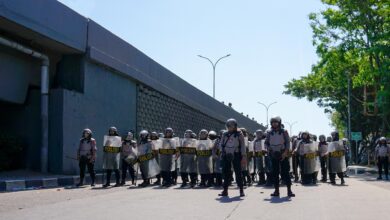
On the day of the rally, the scale of the opposition’s mobilization was evident in the logistical preparations and the public messaging. Posters announcing the “Chalo Delhi” march dominated the area outside Ramlila Maidan. Opposition leaders claimed that up to a million people could attend, while authorities and police officials described the gathering as “large” and implemented traffic regulations to manage the flow. Senior police officer Rohit Rajbir confirmed that arrangements had been made for the venue and the route of the 1.5-kilometer march from Central Delhi to the maidan. The presence of riot control vehicles and the explicit warnings to the public to cooperate with police highlighted the government’s preparedness for potential unrest, even as the opposition framed the event as a peaceful show of strength.
Analysts view these developments as constituting the most significant crisis for Prime Minister Modi since he came to power in 2014, driven by the resonance of the protests with the youth demographic and growing support for the opposition. However, the political landscape remains stable in the short term, with the next general election not due until 2029. The BJP has countered the opposition’s narrative by accusing rivals of attempting to undermine democracy through unjustified questioning of legitimate electoral processes. The divergence between the two camps is stark: for the opposition, the SIR is a mechanistic tool for electoral manipulation; for the government and the ECI, it is a standard administrative update essential for the health of the electoral roll.
As the rally proceeded, the focus remained on the institutional legitimacy of the Election Commission and the potential for long-term electoral disaffiliation. The demand for Kumar’s resignation is not merely a personal attack but a challenge to the perceived neutrality of the institution that manages India’s world’s largest democracy. The outcome of these protests will likely shape the political narrative for the remainder of the legislative term, with the opposition seeking to keep the issue of electoral integrity at the forefront of public discourse while the government strives to maintain stability and dismiss the allegations as politically motivated. The next significant development will depend on whether the Election Commission takes further steps to address the concerns of the dissenting commissioners or if the opposition escalates its legal and political challenges in the courts and parliament.