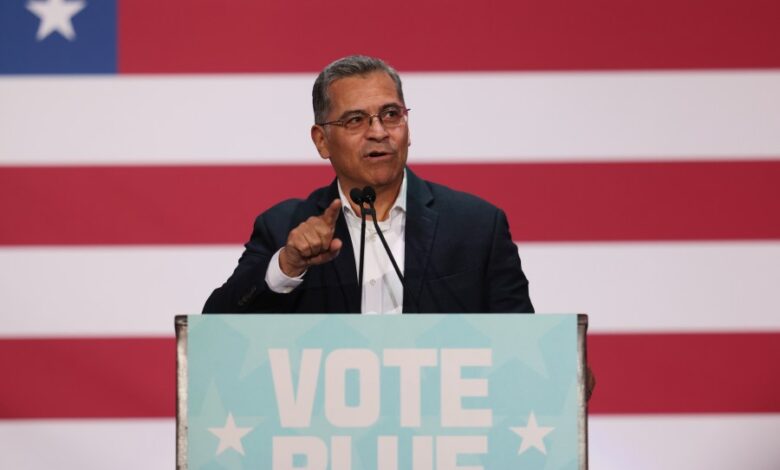
The election result extends a long-running pattern of Democratic dominance in California, where a Republican has not won the governorship since Arnold Schwarzenegger’s re-election in 2006 and has not held the office since January 2011. Becerra will succeed Gavin Newsom, who is term-limited after being first elected in 2018 and is reportedly weighing a presidential run. As the incoming governor, Becerra inherits the world’s fourth-largest economy and a political landscape defined by persistent challenges, including a housing shortage, homelessness, high cost of living, wildfire risk, and widening wealth inequality.
The path to the November ballot was fraught with volatility. Under California’s nonpartisan top-two primary system, which advances the two candidates with the most votes regardless of party, Becerra initially struggled in a crowded field, languishing in the low-single digits of approval. His prospects were deemed so dim that party officials reportedly encouraged him to exit the race to prevent a split vote that could allow a Republican lockout. However, his fortunes changed when former congressman Eric Swalwell’s campaign collapsed amid sexual assault allegations. Becerra subsequently edged past billionaire progressive Tom Steyer to secure the top spot, with roughly 28% of the vote, while Hilton advanced in second with about 25%. More than 9.4 million Californians cast ballots in the primary, according to certified results from the California secretary of state’s office.
Becerra’s campaign centered on restoring the “California Dream,” focusing on affordability through a larger role for state programs and enforcement. He proposed accelerating housing construction, expanding childcare assistance and early education, strengthening Medi-Cal, and cracking down on landlords accused of price gouging. Drawing on his tenure as U.S. Health and Human Services (HHS) Secretary from 2021 to 2025, he highlighted efforts to lower prescription drug costs and expand access to health coverage. Becerra also reaffirmed his support for protecting access to transgender medical procedures, including for transgender youth, a stance he championed during his time in the Biden administration.
In contrast, Hilton, a former Fox News host and policy advisor to British Prime Minister David Cameron, campaigned as a change candidate, arguing that years of Democratic control in Sacramento had contributed to California’s high cost of living, homelessness, and regulatory burdens. He proposed cutting taxes and state spending, rolling back regulations and climate mandates, and expanding energy production to lower costs for housing, electricity, and gasoline. Hilton received the endorsement of President Donald Trump, though he stated during the general election that he would work with the administration while disagreeing with the president when necessary. Hilton argued that Californians were “sick of all this” Democratic leadership, pointing to high taxes and soaring living costs as reasons for a potential shift.
A central theme of the general election was the relationship between the state and the federal government. Becerra campaigned on protecting California policies and programs from federal challenges, referencing his record as state attorney general, where he sued the first Trump administration 122 times. He positioned himself as a defender of state autonomy against what he viewed as overreach by the current federal administration, which has targeted California’s environmental policies and university system. The majority of California’s residents are described as deeply dissatisfied with the Trump administration, particularly amid immigration raids and policy threats.
The incoming administration will also face significant questions regarding the regulation of artificial intelligence, a major engine of California’s economy. Silicon Valley’s technology companies and investors have increasingly challenged Sacramento’s regulatory ambitions around AI safety, labor protections, and datacenter construction. How the next governor navigates this tension between state regulatory power and the interests of the tech sector will be a defining governance challenge.
While the election results are projected, the political landscape remains fluid with the final certification of votes and the transition of power. Becerra’s victory solidifies California’s status as a bastion of liberal resistance, but it also sets the stage for continued legal and political friction with the federal government. As Newsom prepares to leave office, the focus shifts to how Becerra will implement his agenda of affordability and state autonomy in a state that relies on, yet increasingly reviles, its billionaire class.