This legal standoff has not occurred in a vacuum of public indifference. A new poll conducted by the UC Berkeley Institute of Governmental Studies, co-sponsored by The Times, reveals that 63% of California voters worry that the federal government may attempt to stop the counting of votes in California and other states in the days following Tuesday’s election. Around half of voters—49%—expressed a lack of confidence that the state’s election will be free of federal interference. Matt Barreto, director of the UCLA Voting Rights Project, stated that these two metrics together raise alarms for threats against democracy in California.
The political significance of this development lies in the direct confrontation between federal executive power and state electoral integrity. The Department of Justice has sued California, requesting the state set aside the flagged ballots and threatening criminal actions against election officials who refuse to comply. This threat follows years of baseless claims of widespread election fraud made by the Republican president. In response to these escalating federal actions, Governor Gavin Newsom sent a letter to U.S. District Court judges across California over the weekend. Newsom expressed “grave concerns” that federal agents might seek search warrants to seize ballots and ballot materials before election results are certified, urging judges not to comply. He cited the president’s history of weaponizing the Department of Justice to carry out a partisan agenda as the basis for “legitimate concerns about further attempts to disenfranchise voters and undermine election integrity.”
The institutional process at play involves the interplay of federal immigration enforcement claims and state-level election administration. Historically, state officials manage voter rolls and ballot certification. However, the current administration has escalated its efforts to discount the flagged ballots, taking the matter to the Supreme Court on Monday, only to have its request rejected. Federal judges have repeatedly dealt blows to the administration’s efforts to intervene in the state’s voting process, yet the distress over election integrity remains extremely high.
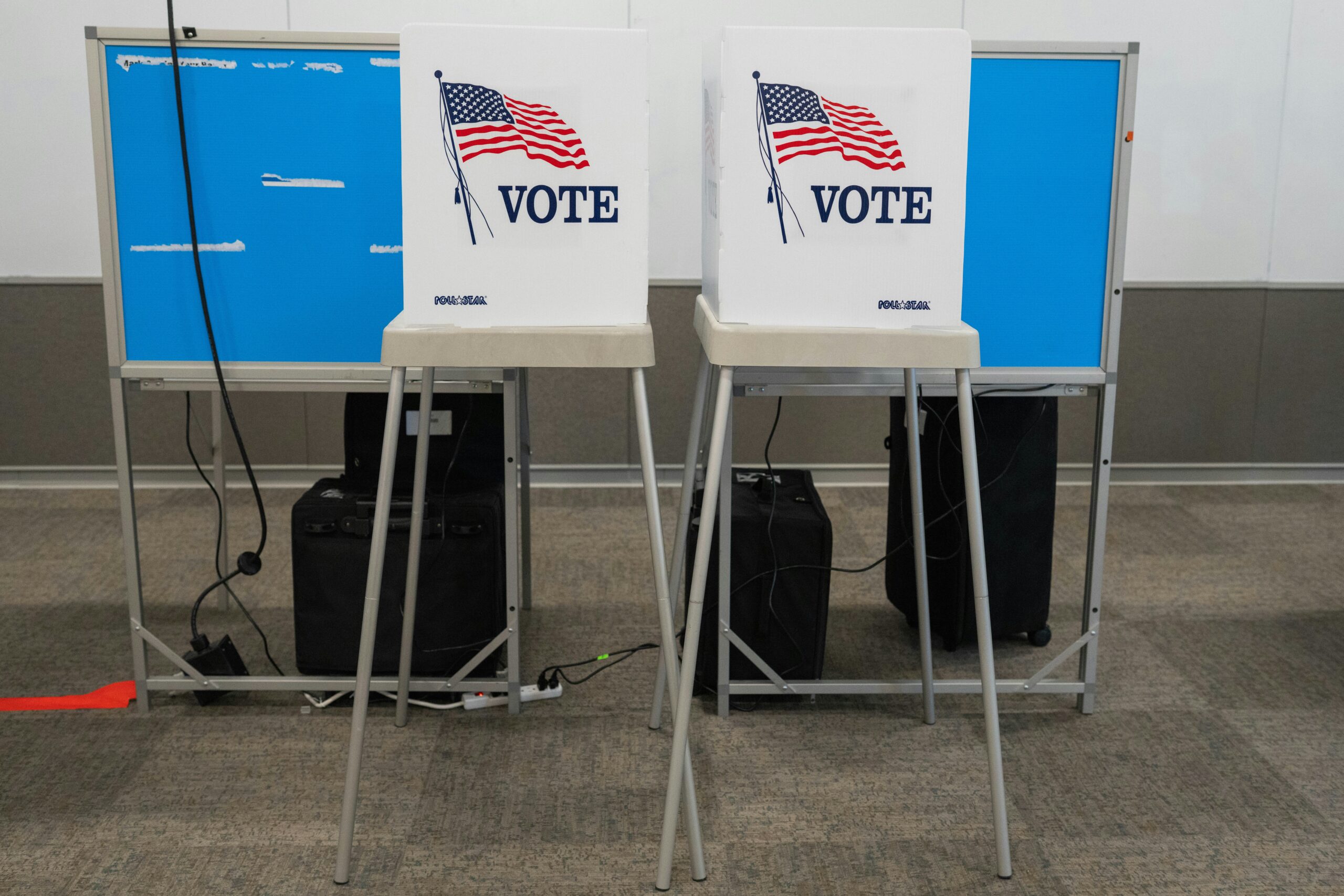
The impact on governance and the public is evident in the polarization of fear. The high level of anxiety in the state reflects the demographic reality that registered Democrats outnumber registered Republicans by nearly two to one. Among Democrats, 85% are worried about the vote count being halted, compared with 22% of Republicans. Similarly, 58% of Democrats are not confident the election will be free of federal interference, while 27% of Republicans share that view. These fears are not strictly partisan; a majority of California voters not affiliated with either party also expressed fears of interference by the Trump administration.
Disparities in anxiety levels are also visible along racial lines. Fears of federal meddling are slightly higher among voters of color. Specifically, 64% of Black voters and 54% of Latino voters said they are not confident the election will be free of interference, compared with 44% of white non-Hispanic voters. Barreto noted that while voters of color tend to lean more liberal, historic and ongoing efforts to disenfranchise minorities likely contribute to this disparity. He pointed to the history of voter suppression from the post-Civil War Reconstruction era through the Voting Rights Act of 1965, and more recently, the Trump administration’s singling out of Latino Californians with accusations of illegal voting.
Opposing positions frame the issue through distinct lenses. The administration and its supporters focus on allegations of fraudulent voting by noncitizens, viewing the 20,000 flagged ballots as evidence of systemic illegality. Conversely, Democrats and state officials view the federal actions as an attempt to overturn legitimate results and intimidate local election workers. Professor Eric Schickler, co-director of the UC Berkeley Institute of Governmental Studies, described the current level of alarm as without precedent, noting that both parties are distrustful of different things: Republicans focus on fraudulent voting allegations, while Democrats fear the federal government may attempt to overturn results. Schickler compared this dynamic to the Reconstruction era in the late 19th century, when widespread accusations of voter suppression in the South and illegal voting in the North created a similar climate of policy uncertainty and political fracture.
Uncertainty remains regarding the post-election period. While the Supreme Court has rejected the bid to set aside the ballots, the Justice Department’s threats to prosecute uncooperative officials persist. Additionally, concerns have been raised about the presence of immigration agents around voting centers, performing door knocks and street stops to identify voter fraud. These actions, combined with the recent court rulings, have created a complex environment where legal victories for state officials have not fully alleviated public fear.
As the election concludes, the central decision of the Supreme Court to reject the federal bid serves as a temporary check on the administration’s immediate legal strategy, but it does not resolve the underlying conflict. The next political development will hinge on the certification of results and whether the Department of Justice moves from litigation to the threatened criminal prosecutions of state election officials, a scenario that would test the limits of federal-state relations in American democracy.