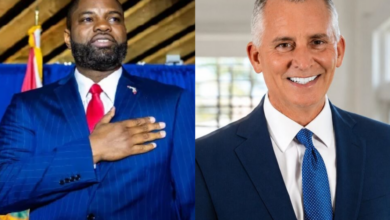

The decision was not a gradual shift, but rather a reaction to direct exclusion from the Democratic campaign. According to reports from FOX 2 Detroit and statements from colleagues, Stevens’ endorsement was tied to an order from the Abdul El-Sayed campaign instructing her to stay away from his events through Election Day. El-Sayed, who defeated Stevens in the June primary, sought to unify the party after a bitter contest. However, sources indicate that the campaign’s decision to distance itself from Stevens—framed by Rogers as an effort to avoid distraction—became the catalyst for her defection.
Representative Debbie Dingell (D-Mich.), a senior Democratic figure in the state, described the sequence of events as “one of the most painful interviews I’ve ever watched,” referring to Stevens’ appearance on CNN’s *Anderson Cooper*. Dingell revealed that Stevens had contacted her late Saturday night to assert that reports of a Rogers endorsement were inaccurate. “Haley Stevens told me at midnight last night this was all a rumor and was not true,” Dingell told FOX 2. By 7:45 a.m. Sunday, Dingell noted, Stevens had sent a text indicating her support for Rogers, just hours before the public church appearance.
The political mechanics of this shift highlight the fragility of post-primary unity in close races. Stevens had previously won significant support from Black voters, a demographic El-Sayed sought to consolidate. The Detroit church event was originally intended to be a unifying moment for the El-Sayed campaign. Instead, it became a site of division after Stevens was told to skip the event. Stevens, in a social media video, stated, “I don’t belong in Abdul’s campaign,” signaling a break with the nominee’s strategy. Her fiancé, Jason Turkish, a Democratic donor and Jewish lawyer, had earlier raised concerns within the party by stating he intended to vote for Rogers, adding to the pressure on the El-Sayed campaign.
Mike Rogers, the Republican nominee, welcomed the endorsement as a result of “boiling over” tensions. “Abdul discarded Haley Stevens, was rude to Haley Stevens, has been rude, I think, to many in the African-American community,” Rogers told FOX 2 Detroit. He characterized the endorsement as a spontaneous decision by Stevens, who reportedly called Rogers’ team to ask if she could join them at the church service. “We were very welcome for her,” Rogers said. For the GOP, the move is a strategic gain in a race that has been closely watched as a bellwether for national control of Congress.
For the Democrats, the endorsement presents a challenge in the final days of the election. Dingell, expressing her distress, said, “I’m just upset. I’m very concerned. It’s sad, but I don’t want to be distracted anymore.” The incident underscores the difficulty of managing intra-party dynamics when a defeated primary candidate remains a powerful figure in the state. While El-Sayed’s campaign sought to present a united front, the public exclusion of Stevens has created a narrative of division that opponents are likely to exploit in final appeals to voters.
Contextual factors also played a role in the tension. Stevens had called on El-Sayed to condemn an outside group’s advertisement that she said blamed Israel for high grocery prices. This dispute, combined with the “stay-away” order, contributed to the breakdown in communication. The endorsement does not guarantee a victory for Rogers, but it changes the calculus for undecided voters who may perceive the Democratic candidate as isolating a prominent state representative.
As the midterm elections approach, the Michigan Senate race remains a pivotal contest. The outcome will influence the balance of power in the U.S. Senate, with implications for legislative priorities and oversight of the executive branch. The last-minute endorsement by Stevens adds a layer of complexity to the final hours of campaigning, forcing both parties to address the rift while making their last appeals to voters. The political significance of this event extends beyond Michigan, serving as a case study in the challenges of post-primary coalition building in highly competitive districts.
The next political development will be determined on Tuesday, November 5, when voters cast their ballots. The impact of Stevens’ endorsement on the final vote count remains uncertain, but it has undeniably altered the tone and strategy of the closing days of the race. Both campaigns are now focused on containing the fallout and maximizing their reach in the final push toward Election Day.