
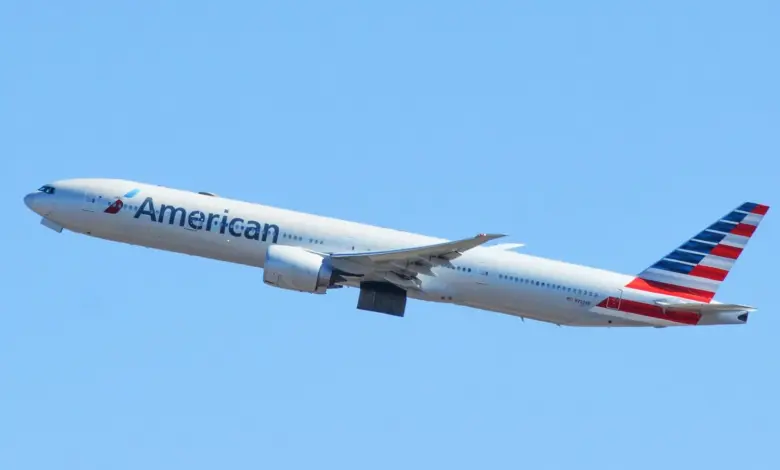
The retrofit significantly alters the cabin configuration, increasing total capacity from 304 to 366 seats. Most notably, American is eliminating its Flagship First class product. For travel beginning November 19, Flagship First sales will cease on the 777-300ER, with the product also being removed from the premium transcontinental network by March 28, 2027. In its place, business class expands from 52 to 70 Flagship Suite seats, each featuring a privacy door. Premium Economy increases from 28 to 44 seats, and Main Cabin Extra adds 30 seats with additional legroom. American states this configuration offers more business and premium economy seats than any aircraft operated by a US airline.
The technical changes are primarily interior-focused, with no modifications to the aircraft’s airframe or engines. However, the airline estimates that spreading fuel consumption across 62 additional passengers will improve fuel efficiency per seat by almost 8%. The retrofit aligns the 777-300ER’s onboard product with newer aircraft in the fleet, such as the premium-configured Boeing 787-9 and Airbus A321XLR, ensuring consistency on key long-haul routes including London, Tokyo, São Paulo, and Sydney.
This program was originally announced in 2022, with initial plans to begin deliveries in 2024; the first completed aircraft entered service two years later than initially projected. The decision to invest in existing aircraft runs parallel to American’s search for future widebody replacements. CEO Robert Isom confirmed in June that the airline has issued a request for proposals to Airbus and Boeing for a future order. While the 777-300ERs are expected to remain in service until the late 2030s, the airline anticipates retiring its older 777-200ER fleet earlier, as those aircraft average 25.8 years of age. Currently, American has no orders for the Airbus A350 or Boeing 777X, relying instead on outstanding commitments for additional Boeing 787s.
The retrofit addresses the operational need to maintain competitive cabins on aircraft that have only partially consumed their commercial lifespan. By upgrading the interiors, American aims to bridge the gap between current operations and the arrival of future widebody aircraft, which face long production lead times. The program will eventually cover all 20 777-300ERs, while the 47 777-200ERs will undergo a separate, less extensive refurbishment.