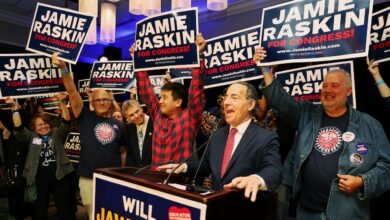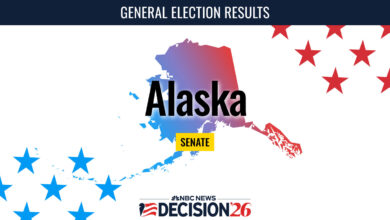
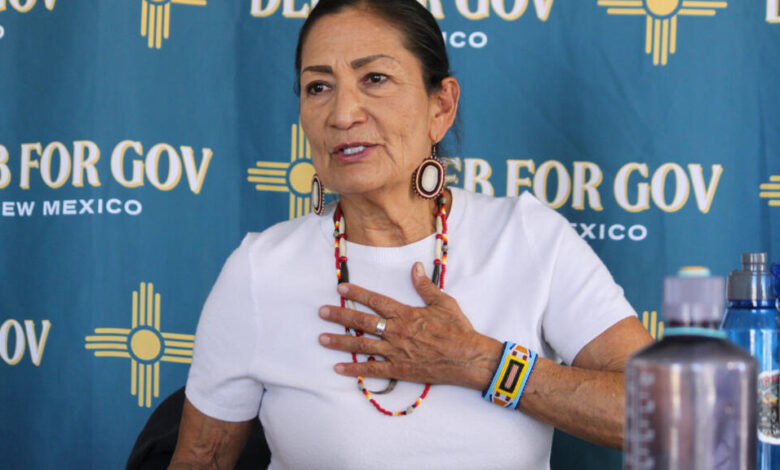
The political significance of this victory extends far beyond domestic governance, directly impacting ongoing international conflicts and trade relationships. Foreign leaders, who typically observe U.S. midterm elections with caution, reacted immediately to what they perceived as a rejection of the administration’s current foreign policy trajectory. The central development is the transfer of legislative power to a party that opposes many of President Trump’s key initiatives, including the recent military engagement with Iran and the suspension of substantial aid to Israel.
The conflict with Iran has been a focal point of the election’s aftermath. President Trump acknowledged that the war, which he had promised would be brief, likely impacted his party’s performance, suggesting voters were unprepared for the “short-term consequence of the price of gasoline.” The prolonged conflict had sent oil prices soaring, contributing to an affordability crisis that affected daily life for many Americans. In Tehran, Iranian Parliament Speaker Mohammad Bagher Ghalibaf, who serves as the chief negotiator in talks with the U.S., stated that American voters had sent a clear “NO TO WAR” message. “If the US govt betrays their public will to serve international paymasters and blackmailers, it will learn our NO comes with a Nightmare,” Ghalibaf wrote on X. However, Iran’s Supreme Leader, Mojtaba Khamenei, maintained a more skeptical stance, asserting that partisan shifts in Washington would not alter the U.S.’s inherent “hostility” toward Tehran. He warned that any hope that the behavior of the “hegemonic system” could change through factional shifts was “gravely mistaken.”
In the Middle East, the election results have complicated the political environment for Israeli Prime Minister Benjamin Netanyahu. The U.S. victory for Democrats coincided with Trump’s announcement that the United States would halt $3.8 billion in aid to Israel. This decision, coupled with the election of Abdul El-Sayed, a Muslim candidate who pledged no funding for what he termed “apartheid, genocide,” has drawn sharp criticism from Israeli opposition figures. Yair Golan, whose party is part of a coalition seeking to replace Netanyahu, argued that the U.S. vote reveals “just how toxic Netanyahu has become” among both Democrats and Republicans. Golan warned that if Netanyahu’s far-right government remains in power, Israel faces a “path toward international sanctions, global isolation, and a confrontation with the United States.” Similarly, Israeli opposition leader Yair Lapid, also part of the anti-Netanyahu coalition, highlighted the shifting dynamics of the alliance. Notably, Netanyahu himself offered no immediate reaction to the U.S. results, even as his own coalition had recently lost its majority in Israel’s parliament in elections held the previous week.
The election was also characterized by demographic firsts, with a surge of historic candidates including the first Muslim U.S. senator, alongside significant representation for women, LGBT, Black, and Native American candidates. These shifts suggest a broader realignment in the electorate, particularly in battleground states that traditionally leaned Republican. The victory of Abdul El-Sayed in the Michigan Senate race was widely noted in Israel, with headlines in Haaretz stating that opposition to Israel is “no barrier to winning battleground states.” This development challenges the long-held assumption that pro-Israel stances are a prerequisite for electoral success in key swing states.

Reactions from other nations reflected their specific geopolitical interests. In Ukraine, The Kyiv Independent viewed the Democratic win as a “potential boost,” suggesting a possible shift in U.S. support for the country against Russia. Conversely, Russian state-run daily Rossiyskaya Gazeta framed the results as a blow to Ukraine, predicting that “Trump’s wrath will fall on Europe” following the Republican defeat. In Europe, where the U.S. is engaged in a contentious trade war, the Toronto Star and other outlets described the outcome as a “rebuke” to the administration. In Latin America, El Universal in Mexico simply labeled it a “setback for Trump.”
President Trump has stated he will accept the results, though he has blamed the candidates themselves for the losses. The incoming Democratic leadership in Congress now faces the task of navigating a divided government, with the president retaining executive power while losing legislative support for his foreign policy agenda. The immediate uncertainty lies in how the new congressional leadership will engage with the ongoing Iran conflict and the suspended aid to Israel. Whether this “blue wave” translates into a tangible shift in U.S. foreign policy or remains a domestic political correction remains the central question for global observers. The next political development will likely be the formal confirmation of congressional leadership and the initial legislative responses to the administration’s executive actions on trade and foreign aid.