
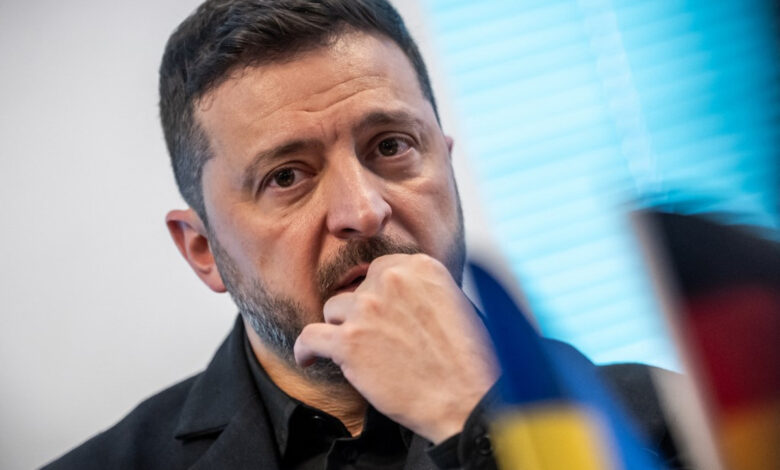
“We need to raise the issue that, under past agreements and decisions, $16 billion was put on hold, and $16 billion was not provided,” Zelensky stated. “Be that as it may, we are grateful for everything that has been provided, but, at the very least, Ukraine must fight for this money.” While the president did not specify the exact military or economic needs these funds were intended to address, he framed the recovery of this aid as an imperative for national survival, noting that Ukraine has no choice but to strengthen its defenses for as long as Russia’s full-scale war continues.
The assertion of a $16 billion shortfall aligns with data from open-source researchers and Pentagon oversight reports. Shrike News, citing reports from the Pentagon inspector general, indicated that under the Ukraine Security Assistance Initiative (USAI), approximately $19.2 billion worth of weapons out of a total $33.5 billion program were delivered by March 2026. By August of the same year, reporting still placed deliveries at roughly 57% of the total, effectively confirming that no significant new deliveries occurred between those dates. This stagnation in delivery, despite the total approved amount, underscores the administrative or political hurdles that have stalled the flow of resources to Kyiv.
As the US political landscape shifts following the midterm elections, in which the Democratic Party won a majority in both chambers of Congress, Zelensky emphasized the need for Ukraine to adapt its approach to Washington. He described the necessity of moving toward a “new political infrastructure” in the United States and doing so quickly. “Given the shift in the balance of power, we must structure our dialogue correctly,” he said, adding that Kyiv must consolidate the bipartisan support it already possesses. Zelensky suggested that the changing environment could improve Ukraine’s chances of securing further assistance, but only if the dialogue is calibrated to the new congressional dynamics.
The diplomatic strategy Kyiv is pursuing involves maintaining pressure without alienating potential US partners. Zelensky acknowledged that Kyiv’s insistence on military assistance might cause irritation in Washington, but he rejected the notion that Ukraine should remain silent. “Ukraine must fight – let no one in the US take offense,” he stated. European leaders, he noted, had advised Ukrainian officials not to apologize for requesting military assistance, framing such demands as essential to the country’s defense rather than a burden on allies.

This stance reflects a broader geopolitical tension where Ukraine seeks to convert the electoral shift in the US into tangible support. Reports from Reuters indicated that Democratic control of both chambers would allow lawmakers to vote to restore direct financial and military aid to Ukraine. With enough Republican defectors, a two-thirds majority could even override a potential veto by President Donald Trump. This legislative pathway presents a strategic opportunity for Kyiv, provided it can navigate the complex interplay between the executive branch’s contracting plans and the legislative branch’s funding authority.
Contextualizing the current flow of aid, it was reported that the Trump administration planned to contract all $400 million in military aid under the USAI program by September 30, 2026, with arms deliveries potentially continuing until 2029. However, the gap between contracted amounts and delivered goods remains a point of contention. Zelensky’s call to action is not merely for new funds, but for the fulfillment of existing commitments, which he views as a baseline for continued survival. The president’s remarks suggest that Ukraine’s future security architecture will depend heavily on its ability to engage with the new US Congress, leveraging the bipartisan consensus that has existed up to this point while navigating the inevitable friction of a protracted war.
As the US enters a new phase of political power, the unresolved tension over the $16 billion in withheld aid serves as a test of the durability of US-Ukraine relations. Whether Washington will prioritize the fulfillment of these past decisions or focus exclusively on new legislative packages will define the next chapter of this geopolitical partnership. For now, Kyiv’s position is clear: gratitude for past support does not negate the right to demand what was promised.




5 Comments