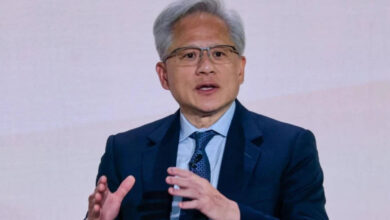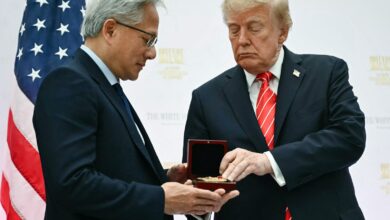
The crisis began with reports in October 2025 linking Huang to Alice Huang, a former executive at Megaspeed, a Singapore-based firm that serves as an official Nvidia cloud partner with access to the company’s chips. According to reports cited by Reuters and The New York Times, US intelligence officials suspect Alice Huang was working for Chinese intelligence. The allegations raised immediate security concerns: whether her business connections with Nvidia potentially exposed sensitive proprietary information or facilitated unauthorized Chinese access to advanced artificial intelligence chips, which are strictly restricted under US export controls.
Attorney General Todd Blanche addressed the security dimension of the scandal on Thursday, clarifying the legal status of the investigation. Blanche stated that the US Department of Justice has not yet reached a conclusion on whether Alice Huang was a spy for Beijing. However, he confirmed that the Federal Bureau of Investigation (FBI) is actively investigating reports of her alleged links to Chinese intelligence. This distinction is critical; while suspicion exists within intelligence circles, no formal legal determination of espionage has been made. Additionally, CNBC reported, citing research from private intelligence firm Tesari, that Alice Huang may have held stakes in Chinese businesses that benefited Huawei, Nvidia’s major competitor in China. Reuters noted it could not independently verify this specific financial claim.
The personal allegations deepened on Wednesday when The New York Times reported that Jensen Huang had also been involved in an intimate relationship with Kimberly Powell, Nvidia’s vice-president of healthcare, who reported directly to him. Reuters subsequently corroborated the second relationship, citing two people familiar with the matter. In a message to colleagues earlier in the week, Huang acknowledged being unfaithful, apologizing to his family and staff for the breach of trust. Nvidia declined to comment further on the specifics of the relationships or the internal governance failures that allowed them to persist.
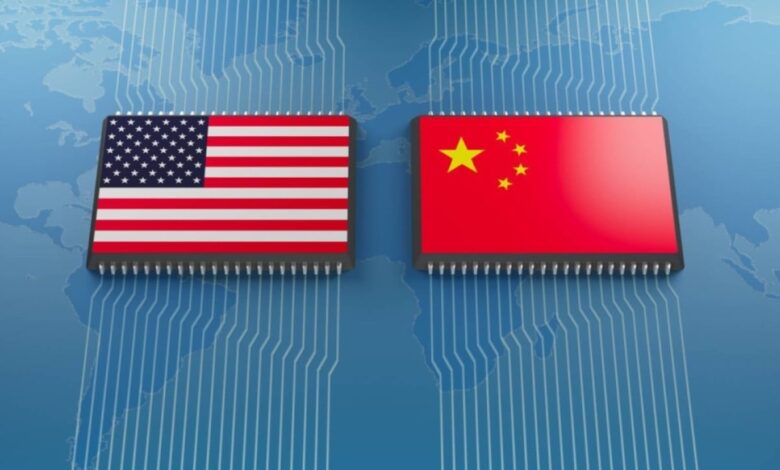
The timing of Huang’s resignation is particularly sensitive for geopolitical observers. The US-China technology rivalry is at a pivotal point, with Washington’s policy on advanced AI chip exports under intense legislative review. US lawmakers are currently debating an annual defense authorization bill, amid growing calls to tighten restrictions on China’s access to cutting-edge semiconductor technology. Ling Chen, an associate professor of political economy at Johns Hopkins University, noted that the abrupt departure raises fresh questions about the future of US-China technology ties and the potential fallout from these export controls. The controversy highlights the vulnerabilities in corporate security when senior executives are targeted by foreign intelligence operations, or when personal indiscretions intersect with national security interests.
Corporate governance experts have also weighed in on the structural failures revealed by the scandal. Nell Minow, Chair at ValueEdge Advisors, expressed surprise that Nvidia lacked an independent board chair and a formal succession plan. Her comments underscore a broader concern in the market: the absence of robust governance structures left the company exposed to a leadership crisis of this magnitude with no clear, pre-established path for transition. The lack of an independent chair means that the board’s oversight of the CEO was potentially compromised, particularly given the direct reporting lines involved in the alleged affair with Kimberly Powell.
The industry reaction has been mixed, with some prominent figures offering support to the departing executive. Elon Musk, CEO of SpaceX, hinted toward supporting Huang on social platform X, writing, “That would be an honor,” in response to financial news reports prior to the resignation. However, such social media commentary does not mitigate the operational and reputational damage to Nvidia, a company central to the global AI infrastructure buildout.
For investors and partners, the immediate concern is continuity. Nvidia’s influence extends beyond its own products to the entire ecosystem of cloud partners, such as Megaspeed, which relies on access to Nvidia’s chips. The FBI’s ongoing investigation into Alice Huang’s activities will likely determine whether any data breaches or intellectual property leaks occurred. Until the Justice Department concludes its inquiry, the full extent of any national security implications remains unknown. The board must now navigate the dual challenge of stabilizing corporate leadership while cooperating with federal authorities to address potential security lapses that could impact US export control regimes.