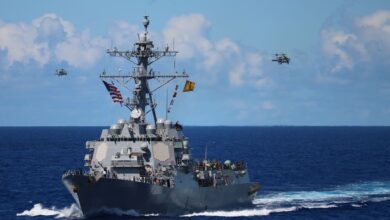
This confirmation comes as the United States significantly increases its military presence in the region. On August 20, Ecuadorian Defense Minister Gian Carlo Loffredo announced that two U.S. warships equipped with interceptor boats would patrol out of the port city of Manta. Fleet trackers indicate that the USS San Antonio and the Arleigh Burke-class destroyer USS Gridley recently entered the eastern Pacific, assigned to Joint Task Force-Western Hemisphere. In a related incident on Sunday, U.S. forces struck a vessel in the eastern Pacific allegedly involved in narcotics trafficking, resulting in the deaths of two individuals. U.S. Southern Command (SOUTHCOM) confirmed the strike, noting it was the first under the new Joint Task Force-Western Hemisphere command structure, which replaced Joint Task Force-Southern Spear.
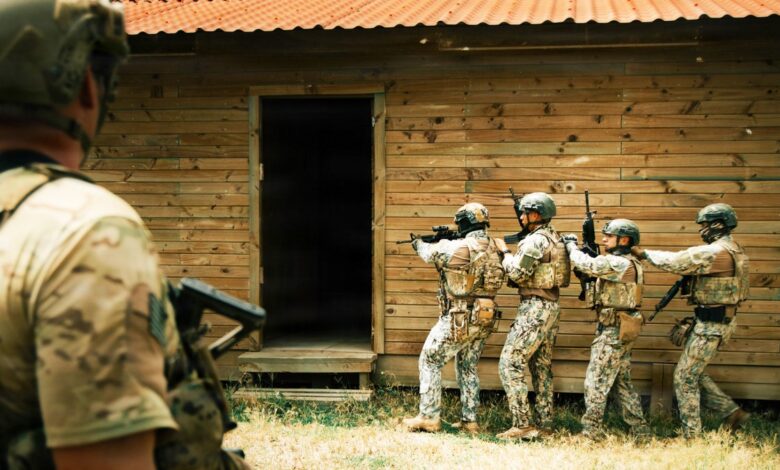
The expansion of military activity follows a direct U.S. airstrike in March 2026 on an alleged training camp inside Ecuador near the Colombian border. That operation was the first direct U.S. military action within Ecuadorian territory since joint operations were announced. Since September 2025, the U.S. campaign targeting alleged drug boats has resulted in the deaths of more than 220 people. The Trump administration has designated these groups as “narco-terrorists,” though the U.S. has offered limited public evidence regarding the specific vessels struck in this campaign.
While military assets are surging, the security partnership has drawn sharp criticism from human rights organizations. A 94-page report documents serious human rights violations in a rural community on the Colombia-Ecuador border. The report details an incident described by the United States as a “partnered operation,” during which Ecuadorian forces allegedly tortured and arbitrarily detained four farm workers before burning and striking a dairy farm. Additionally, the report cites attacks on fishing vessels near the Galápagos Islands by drones of unknown origin, which injured several crew members, while a third vessel remains missing. These incidents raise questions about the accountability and oversight mechanisms within the U.S.-Ecuador security framework.
U.S. military officials have declined to comment on the specific reports from Ecuador, citing operational security. However, the broader strategic context includes the deployment of over 1,000 Marines from the 24th Marine Expeditionary Unit to Puerto Rico earlier this spring, tasked with disrupting networks utilized by designated terrorist organizations. Defense Secretary Pete Hegseth stated in June that the U.S. was prepared to carry out additional strikes on land, emphasizing that forces in the region are focused on deterring and defeating threats. The next phase of this cooperation will likely involve continued joint patrols in the eastern Pacific and sustained special operations activities in border regions, though specific timelines for further deployments remain undisclosed.