A Dynastic Challenge
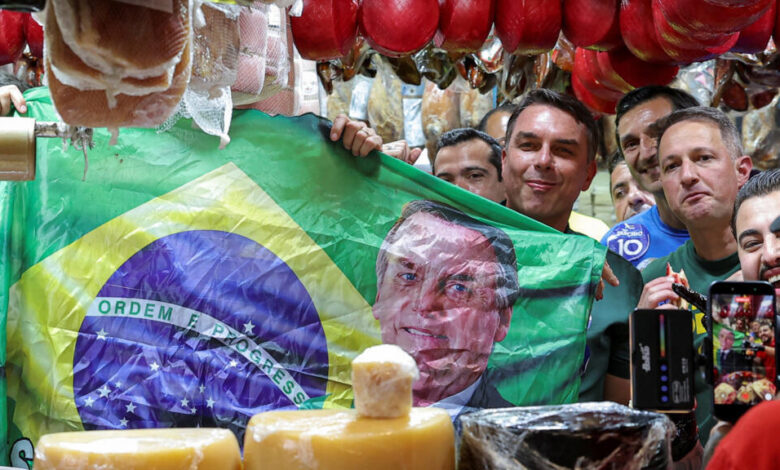
The central dynamic of this election is the direct opposition between the current head of state and the heir to the previous one. This is not a standard incumbent-versus-challenger dynamic; it is a clash of political eras. Lula, seeking to consolidate his return to power, faces a candidate who embodies the ideological continuity of the Bolsonaro movement. Although Flavio Bolsonaro lacks the specific personal magnetism that drove his father’s electoral success, he carries the same radical ideological baggage. This forces Lula’s campaign to navigate not just a single opponent, but the broader political infrastructure and voter base that supported the former president.
The significance of this matchup extends beyond the immediate vote. It represents a test of the durability of the political polarization that has characterized Brazilian politics in recent years. By fielding a family member, the Bolsonaro camp signals an intent to maintain their grip on the right-wing electorate, while Lula’s presence as the incumbent represents the established counter-weight to that influence. The election, therefore, is not merely about policy differences, but about the future direction of the ideological balance in the country.
Shadows of External Interference
Amidst this domestic contest, a critical and growing concern has emerged regarding the integrity of the electoral process. Brazilian officials have expressed increasing alarm over the possibility of United States interference in the presidential vote. This anxiety is not abstract; it is a tangible fear that is shaping the political environment leading up to the first round. The concern suggests that the election is being viewed through a lens of geopolitical vulnerability, where external actors, specifically the U.S., might seek to influence the outcome.
This fear of interference adds a layer of complexity to the campaign. It implies that the stakes are not purely domestic, but are entangled with international relations and the perception of Brazil’s sovereignty in its own democratic processes. For Lula, the incumbent, this poses a dual challenge: he must defeat his domestic opponent while simultaneously defending the integrity of the vote against allegations or threats of foreign meddling. The presence of U.S. interference as a “fear” indicates that the political establishment in Brazil is closely monitoring cross-border political dynamics, viewing them as a direct threat to the legitimacy of the upcoming results.

The interplay between the domestic race and these external concerns creates a heightened state of political tension. The candidates are not only competing for votes but also for the narrative of a free and fair election. For Lula, any suggestion of foreign influence could be leveraged by opponents to cast doubt on the results, while for the Bolsonaro camp, the issue may serve as a rallying point for those skeptical of the current administration’s handling of international relations. The fact that officials are “increasingly concerned” suggests that this is not a fleeting rumor but a sustained political issue that is impacting governance and public trust.
Uncertainty and the Road Ahead
As the election approaches, several uncertainties remain. The extent to which U.S. interference, if it occurs, will manifest is not yet clear. Whether this involves digital manipulation, diplomatic pressure, or other forms of influence is a subject of ongoing concern among Brazilian officials. Furthermore, the electoral viability of Flavio Bolsonaro, given his lower charismatic appeal compared to his father, remains a variable. Can the ideological radicalism and the name recognition of the Bolsonaro brand be sufficient to overcome a lack of personal magnetism in a head-to-head contest with Lula?
The political significance of this election lies in its potential to either stabilize Brazil’s democratic institutions or deepen the fissures created by recent years of polarization. If Lula secures a strong mandate, it may signal a rejection of the radical right and a reaffirmation of the current political order. Conversely, a strong showing by Flavio Bolsonaro would indicate that the Bolsonaro movement’s ideological base remains potent and capable of sustaining itself beyond its original leader. The fear of U.S. interference complicates this narrative, suggesting that the outcome may be contested not just by voters but by external geopolitical forces.
Ultimately, the first round of this election is a pivotal moment for Brazil. It is a test of the incumbent’s ability to navigate a complex domestic and international landscape. The clash between Lula and Flavio Bolsonaro is a microcosm of the larger struggle for the soul of Brazilian politics, where ideological purity meets pragmatic governance, and where the fear of external manipulation looms large. As voters prepare to cast their ballots, the outcome will not only determine the next president but also the future of Brazil’s democratic resilience in an increasingly interconnected and politically charged world.