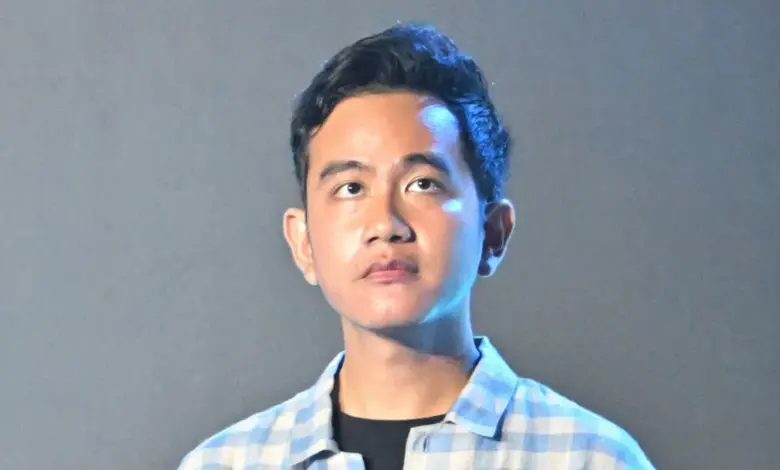
The case centers on whether Gibran, 38, completed the equivalent of senior high school, a statutory requirement for presidential and vice-presidential candidates in Indonesia. Former Deputy Law Minister Denny Indrayana and 11 other petitioners argue that Gibran failed to meet this minimum education threshold. They have asked the court to invalidate his candidacy and, by extension, his subsequent inauguration as vice-president in 2024.
During the hearing on September 21, Indrayana stated that information surrounding Gibran’s education had been “withheld and not provided, even until now.” He claimed that new evidence had been discovered that could substantiate the petitioners’ arguments. However, the court declined to admit this new evidence or allow for a change in the lineup of witnesses, a procedural decision that limits the scope of the current trial to previously submitted documents and testimony.
The dispute hinges on Gibran’s academic history, which includes studies in Singapore and Australia. Records from Indonesia’s General Elections Commission (KPU) indicate that Gibran attended Orchid Park Secondary School in Singapore from 2002 to 2004. He subsequently continued his education at Insearch, a college affiliated with the University of Technology Sydney (UTS).
In 2019, Indonesia’s Ministry of Education issued a certificate stating that Gibran had completed Grade 12 at UTS Insearch in 2006. The certificate assessed his knowledge as equivalent to that of an Indonesian vocational high-school graduate. The petitioners have challenged the basis of this assessment, questioning what specific documents were used to verify that his overseas studies met the domestic legal standard for presidential eligibility.
The General Elections Commission has characterized the lawsuit as an “impeachment” equivalent, suggesting that the legal challenge threatens the legitimacy of the vice-presidential office. In contrast, a government minister described the litigation as an “unethical maneuver,” framing the petition as a political rather than a purely legal contest. The petitioners maintain that the case is a straightforward legal inquiry into whether a candidate met the constitutional prerequisites for office.
The court’s denial of the witness change and new evidence request leaves the petitioners to rely on the existing docket. The next step in the proceedings will involve the court’s review of the established facts regarding the 2019 Ministry of Education certificate and the KPU’s eligibility verification. A final ruling is expected to determine whether Gibran’s inauguration was legally valid or if his lack of recognized high-school completion renders his vice-presidential mandate void.