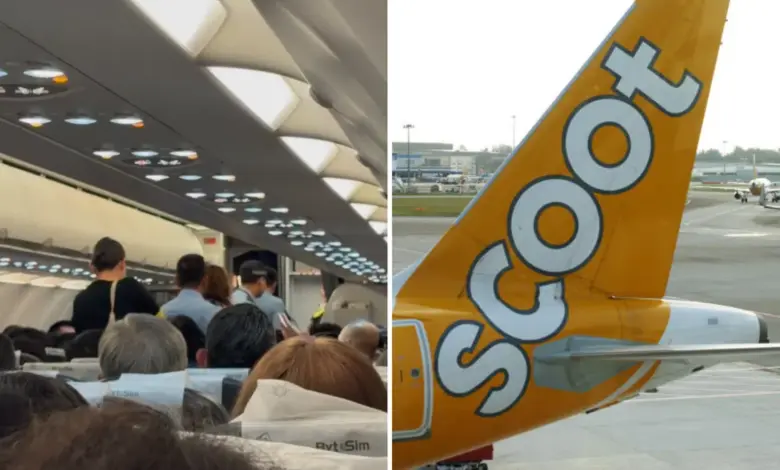
The flight, scheduled to depart the Macau terminal at 6.45 pm local time, ultimately took off at 8.46 pm. According to Scoot, the delay was necessitated by the time required to remove the disruptive individual from the plane, a process that included waiting for local authorities to arrive and the offloading of the passenger’s checked baggage. The aircraft subsequently touched down in Singapore at approximately 12.30 am.
Video footage of the removal, posted on the Chinese social media platform Xiaohongshu on September 28, offers a glimpse into the scene on board. The clip shows a woman exiting the aircraft flanked by uniformed officers resembling Macau police personnel, as well as Scoot flight attendants. In the footage, the woman is seen raising her hands in a “peace” sign gesture as she is escorted down the aisle by at least four security personnel. A flight attendant is also visible retrieving a handbag from a seat, presumably belonging to the removed passenger, before following the group off the plane.
The reaction from the remaining passengers was notably supportive of the crew’s decision. In the background of the video, audible applause can be heard from fellow travellers, with one man enthusiastically clapping. The social media post, which has since garnered over 980 likes and more than 80 comments, drew curiosity from users who inquired about the specific nature of the behaviour that led to the removal. The user who posted the video, who declined to be named, confirmed that the passenger was removed only after boarding was completed.
Scoot addressed the incident in a statement on October 1, confirming that the passenger was escorted off the aircraft before departure and handed over to local authorities at Macau International Airport. The airline did not disclose specific details regarding the passenger’s conduct on board, citing privacy or operational discretion. In its response, Scoot apologised for the disruption and inconvenience caused to the other passengers, while emphasising the paramount importance of the safety and well-being of both customers and crew.
Operational and Security Implications
The handling of the incident highlights the standard operating procedures for managing disruptive behaviour on international flights. The two-hour delay reflects the logistical complexities involved in removing a passenger from an aircraft at a foreign airport, including the coordination with local law enforcement and the security screening of the passenger’s belongings. For the 173 other passengers on board, the delay resulted in a significant change to their travel schedules, with the flight arriving in Singapore past midnight instead of late evening.
As of the latest updates, Macau police have not issued a specific public statement detailing the charges or legal actions taken against the passenger. Scoot’s decision to keep the remaining passengers on board and serve them refreshments during the wait time suggests an attempt to mitigate discomfort and maintain order during the security lapse. The incident serves as a reminder of the security protocols in place to ensure that a single individual’s disruptive actions do not compromise the safety of the broader passenger manifest or the crew.
The widespread sharing of the video on social media platforms underscores the modern dynamic of aviation incidents, where passenger-generated content often precedes official statements. While the airline has confirmed the facts of the removal and the subsequent delay, the specific triggers for the passenger’s behaviour remain undisclosed. The case will likely continue to draw attention until local authorities in Macau provide further details or the legal process concludes. For the airline, the incident reinforces the necessity of robust in-flight security measures and clear communication with passengers during unexpected disruptions.
As the next phase of the incident unfolds, attention turns to the legal proceedings in Macau and any potential regulatory review of the airline’s response time. The two-hour delay, while manageable in the grand scheme of aviation operations, serves as a tangible metric of the time and resources required to enforce in-flight conduct standards. For future travellers on similar routes, the incident serves as a cautionary tale regarding the consequences of disruptive behaviour, while for the airline, it highlights the ongoing challenge of balancing passenger safety with operational efficiency.