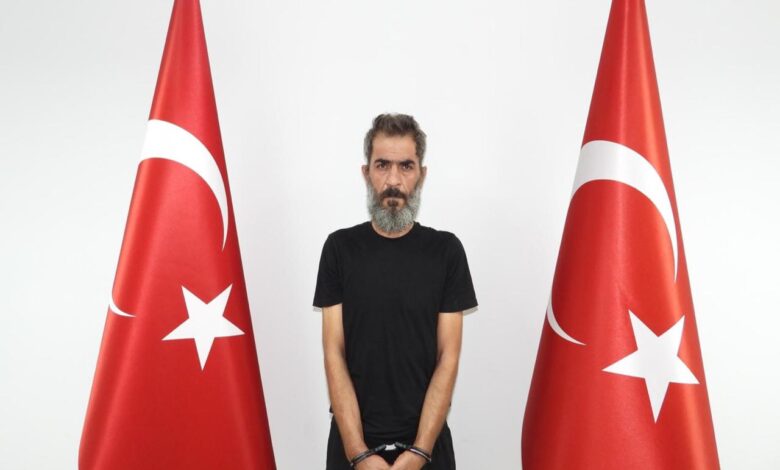
Al-Khatib, who is subject to an Interpol red notice, is accused of playing a central role in planning and organizing the 2013 attack. According to security sources, he coordinated between the bombers and intelligence officials loyal to former Syrian President Bashar al-Assad. The Reyhanli bombings, which occurred on May 11, 2013, remain the second-deadliest terror attack in Türkiye’s history, surpassed only by the 2015 Ankara bombing.
Investigative details released by authorities indicate that in February 2013, al-Khatib and Yusuf Nazik entered Türkiye through Hatay province to identify target locations. The sources stated that al-Khatib brought Nazik together with Kifah Melhem, who was then head of the Latakia branch of Syria’s military intelligence, known as Amn al-Askari. The specifics of the attack were reportedly finalized during these meetings, with approval subsequently received from Melhem in Latakia.

The execution of the attack involved the procurement of explosives from the same Latakia intelligence branch. In May 2013, al-Khatib and Temir Dükancı collected materials for the bombs. Dükancı and Nazik then drove the explosives-laden vehicle to Reyhanli, where it was detonated remotely. Following the detonation, al-Khatib transported Dükancı and Nazik, who had fled to Syria, back to the Latakia intelligence branch, where the perpetrators were reportedly rewarded with a large sum of money by the Assad regime.
Legal Proceedings and Convictions
The capture of al-Khatib adds to a series of legal outcomes in the Reyhanli case. In recent rulings, the Ankara 9th High Criminal Court sentenced three men—Memet Gezer, Temir Dükancı, and Cengiz Sertel—to 53 aggravated life sentences and 3,921 years in prison each. The court convicted them of charges including intentional murder, attempted murder, and attempting to destroy the unity and territorial integrity of the state. The defendants denied involvement during their final statements and have been ordered to remain in pretrial detention pending appeal.
The court’s detailed reasoning, released in recent weeks, described the attack as an operation directed by intelligence elements linked to the Assad regime. The ruling stated that evidence showed instructions for the attack were received directly from Syrian intelligence-linked operatives, involving members of the THKP-C/Acilciler militant group. The court found that explosives were smuggled from Syria into Türkiye through five separate maritime shipments using fishing boats, with materials concealed in sacks under the supervision of individuals linked to Syrian intelligence.
Previous convictions in the case include the 2019 sentencing of Yusuf Nazik, who was captured in Syria in 2018, to 53 aggravated life terms. Memet Gezer, accused of ordering the attack, was brought to Türkiye from the United States in 2022. Cengiz Sertel was captured in December 2024, and Temir Dükancı was captured in Syria in February 2025 while allegedly preparing to flee to Lebanon. Mohammad Dib Korali was captured in Syria in January 2025, though his case has been separated from the others to allow time for his defense.
The arrests and convictions highlight the ongoing efforts by Turkish authorities to hold accountable those involved in one of the deadliest attacks on Turkish soil. The case has long been scrutinized for potential intelligence failures, with rights groups and victims’ families criticizing the investigation for not pursuing certain leads prior to the 2013 explosion. With the fall of the Assad regime in December 2024, the legal pursuit of suspects linked to its intelligence apparatus has intensified.