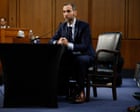
Smith, who secured two indictments against Trump in 2023—one concerning the mishandling of classified documents and the other relating to his role in the January 6 attack—emphasized the procedural integrity of his office. He stated that his decisions were made “without regard” for Trump’s political association activities, beliefs, or candidacy in the 2024 presidential election. By framing his actions as strictly evidentiary, Smith sought to counter narratives that the prosecutions were politically motivated.
The hearing, however, was defined as much by its procedural friction as by its substantive legal arguments. Republican members of the committee challenged Smith’s credibility and the impartiality of his investigations, leading to an exchange that devolved into a dispute over specific factual details. Senator Eric Schmitt, a Republican from Missouri, raised perjury allegations against Smith, an accusation that appeared to hinge on a textual discrepancy regarding Smith’s location during a specific period in 2024.
In his questioning, Schmitt presented a text message to Smith, suggesting it proved that Smith was in Atlanta attending a basketball game. The premise of the accusation relied on the assumption that the game involved the Atlanta Hawks. However, as the exchange unfolded, it became apparent that Schmitt had confused the identities of the teams involved. The documentation actually referenced the University of Iowa Hawkeyes, not the Atlanta Hawks. This mix-up resulted in a heated exchange of conflicting information, where the senator’s initial claim of perjury was undermined by the error in identifying the sporting event.
The incident highlighted the broader tension within the committee, where legal arguments were frequently interwoven with partisan rhetoric. Beyond the basketball mix-up, the hearing featured a range of accusations from Republican senators, including references to the tooth fairy and other forms of invective, as they pressed Smith on his conduct. These exchanges contrasted sharply with Smith’s composed defense, where he maintained that his office adhered to standard legal protocols and did not target individuals based on their political affiliations or conservative group associations.
Smith’s testimony served to reiterate the central legal question that has persisted since his departure from the Justice Department: whether the investigations were lawful exercises of prosecutorial discretion or improper political targeting. By asserting that the evidence met the threshold for indictment, Smith reinforced the judicial basis for the cases, even as the political fallout continued to dominate public discourse. The former special counsel rejected the claims that his probes improperly targeted Republicans, maintaining that the charges were the result of a rigorous investigative process.
For the parties involved, the hearing served as a public stage to articulate their positions on the legitimacy of the Trump indictments. For Smith, it was an opportunity to clarify the record, particularly regarding the impartiality of his decision-making. For the opposing senators, it was a platform to challenge the credibility of the former prosecutor, albeit with mixed success in the specific instances of factual accuracy.
As the hearing concluded, the focus remains on the wider legal implications of the investigations Smith oversaw. While the specific charges against Trump have been a subject of intense legal and political debate, the testimony from Tuesday adds another layer to the narrative, with Smith firmly standing by the evidentiary basis of his actions. The next steps in the legal process will continue to unfold as the courts and political bodies navigate the aftermath of these high-profile cases, with the integrity of the special counsel process remaining a central point of contention.