
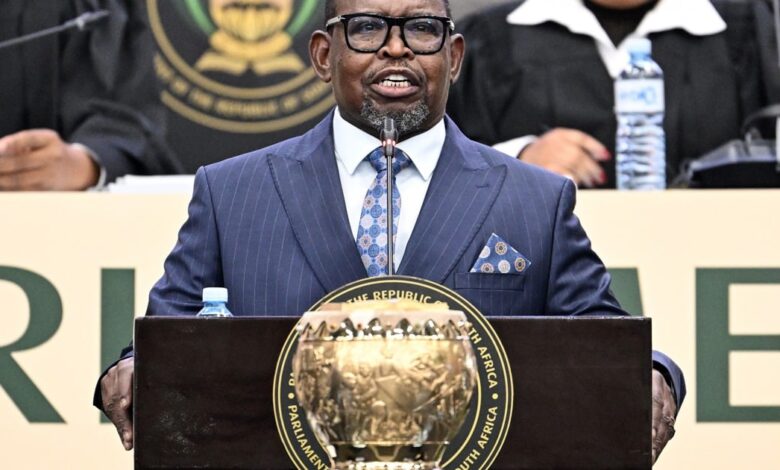
The diplomatic hiatus follows South Africa’s tenure as G20 president from December 2024 to November 2025, during which it hosted the leaders’ summit in Johannesburg. The United States did not attend that summit and, upon assuming the presidency, announced that South Africa would not participate in the 2026 G20 meetings. Tensions have been exacerbated by disagreements over land reform policies, foreign policy stances, and South Africa’s legal action against Israel at the International Court of Justice. Furthermore, US Secretary of State Marco Rubio recently announced visa restrictions targeting certain South African nationals involved in policies Washington characterizes as enabling uncompensated land seizures or racial discrimination. Godongwana’s remarks serve as a formal acknowledgment of this diplomatic pause, with the return to the G20 marking a potential, though cautious, step toward normalization.
Turning his attention to domestic governance, Godongwana outlined a rigorous three-year plan aimed at rectifying fiscal mismanagement in local government, with a specific focus on Johannesburg. Speaking to the National Assembly, the minister warned that municipalities can expect a significant shake-up in their budgeting and spending processes following the upcoming local government elections. The core of this initiative involves clamping down on the authorized spending of conditional grants, which are funds designated for specific purposes. Godongwana indicated that detailed announcements regarding these reforms will be tabled when the Medium-Term Budget Policy Statement is presented in three weeks’ time.

The urgency of this intervention stems from previous actions taken by the Treasury. In July, the department withheld the equitable share from 69 municipalities that failed to comply with guidelines designed to bring their finances into order. Godongwana stated that this punitive measure was not taken lightly, emphasizing a desire to avoid penalizing residents while ensuring fiscal discipline. He revealed that the Treasury is exploring various instruments to enforce compliance, which may include laying criminal charges. “We are exploring all of those options so that we do not penalise the residents,” Godongwana said, suggesting a shift toward more severe legal consequences for financial malfeasance.
The minister acknowledged the political sensitivity of introducing budgetary changes during an election period but noted that a plan is already being formulated. This new framework will require municipalities to provide the Treasury with detailed cost drivers, enhancing transparency and accountability. “Once new leadership is appointed in the new municipalities, we will ramp up the process,” Godongwana stated, signaling that the administration intends to leverage the post-election period to enforce stricter oversight. The Financial and Fiscal Commission has previously expressed a dim view of the Treasury withholding funding, but the minister’s comments suggest a continued commitment to enforcing fiscal discipline, even if it creates short-term friction with local authorities.

Godongwana’s dual focus on domestic fiscal reform and international diplomatic positioning reflects the broader challenges facing the South African government. He warned that geopolitical tensions and trade fragmentation are creating uncertainty for economies and financial markets globally. “We’ve come through a period in which the global economy has had to absorb a succession of shocks,” he noted, highlighting how renewed inflationary pressures, financial market volatility, and higher energy and food prices are placing strain on households. These global factors compound the domestic challenges of debt servicing, food costs, and housing affordability, creating a complex environment in which the government must navigate both internal governance failures and external diplomatic pressures.
The confirmation of the G20 return on December 1 and the impending medium-term budget policy statement will be the next critical milestones. For domestic policymakers, the focus remains on whether the proposed municipal reforms will be implemented effectively without disrupting essential services. For the international community, the resumption of South Africa’s G20 participation will be watched closely as an indicator of whether the diplomatic rift with the United States is beginning to thaw or if the tensions will persist beyond the symbolic return to the forum.